

Audio By Carbonatix
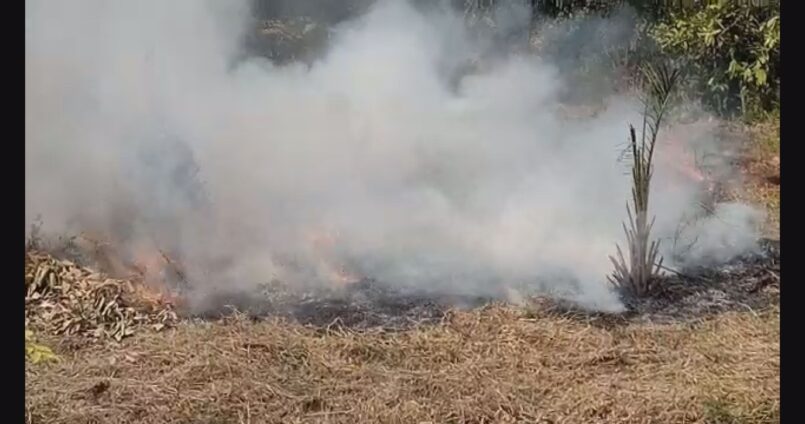
Asutsuare (Shai Osudoku District) - Experts are raising urgent concerns over the widespread practice of burning crop waste and trees to clear farmlands across Ghana, warning that it is fueling a growing public health and environmental crisis.
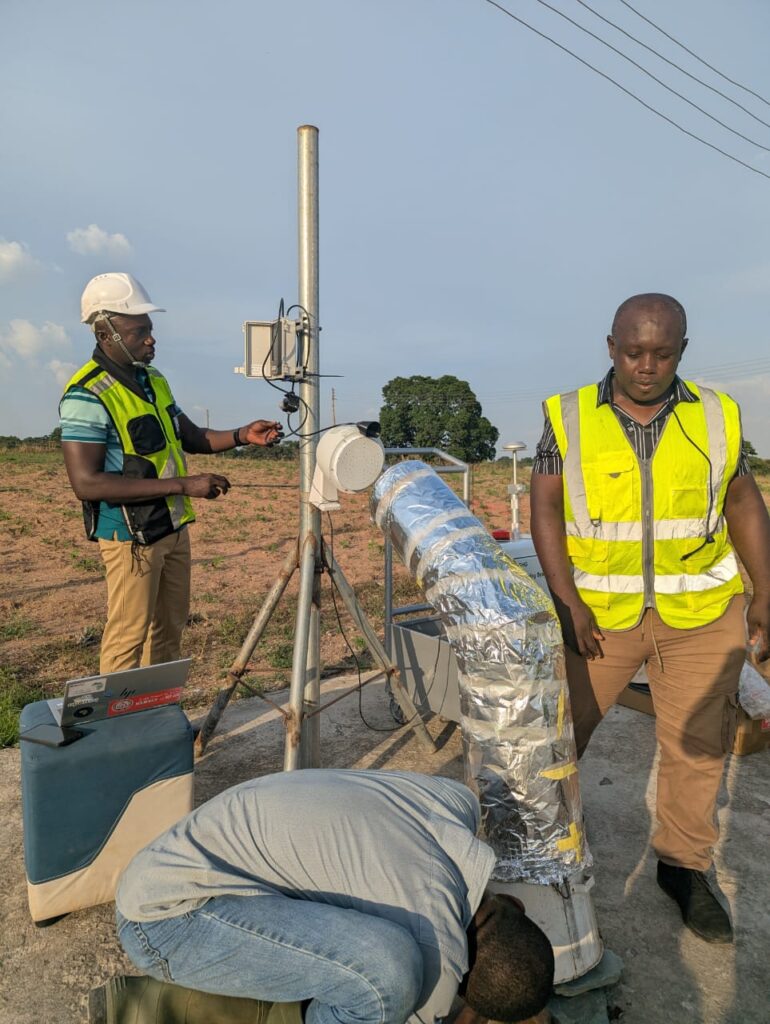
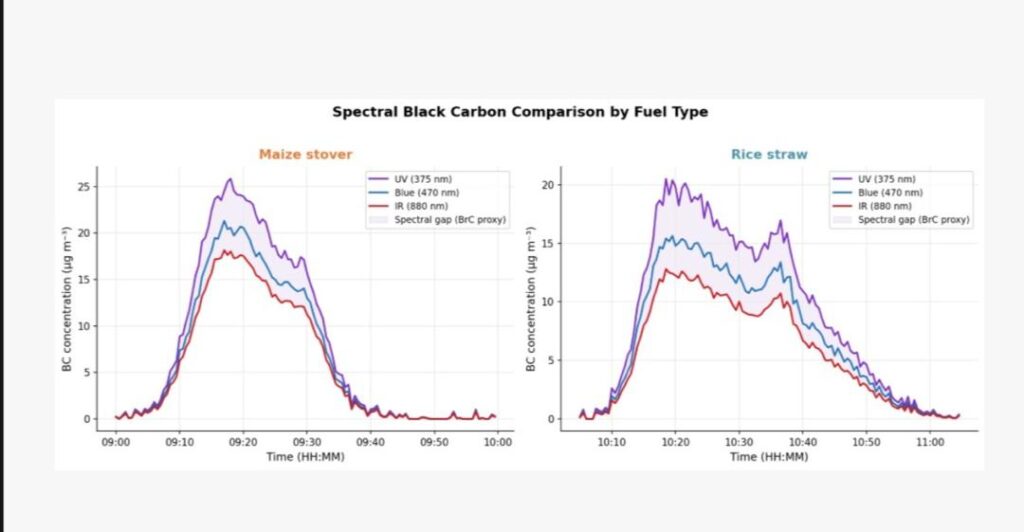
Burning just one kilogramme of crop residue produces smoke levels more than 100 times higher than the safety threshold set by the World Health Organization, according to a forthcoming study by the Council for Scientific and Industrial Research, causing a range of illnesses and deaths for people exposed to it, risking the country’s food systems and adding to climate change.
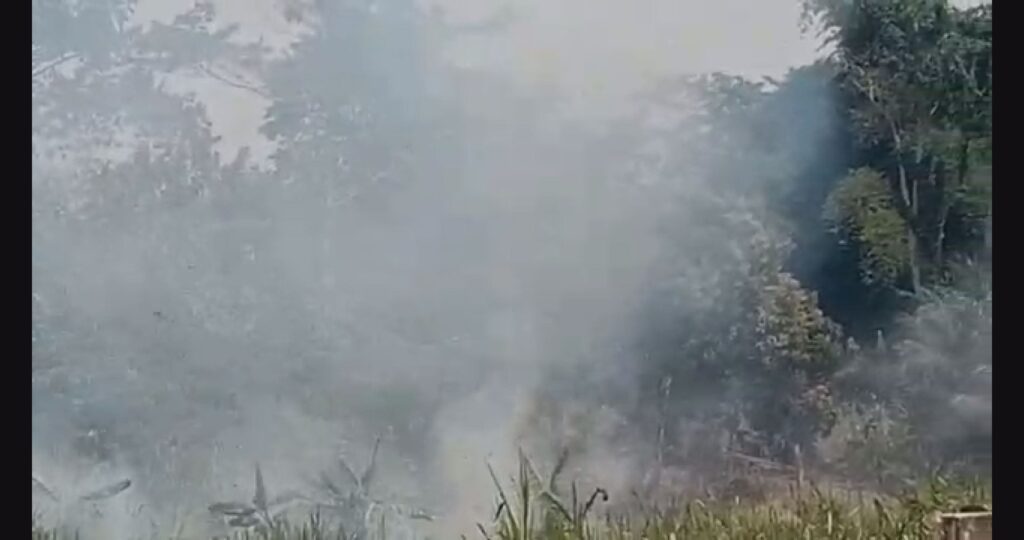
“This shows why open burning harms communities,” says Dr Kwaku Onwona-Hwesofour Asante, one of the study authors, in an interview. “Reducing or stopping bush burning could significantly cut air pollution and help lower heat levels in the atmosphere.”
Experts warn that all forms of burning in agriculture — including the burning of crop waste and slash and burn farming — are causing long-term damage to Ghana's land, air, and environment.
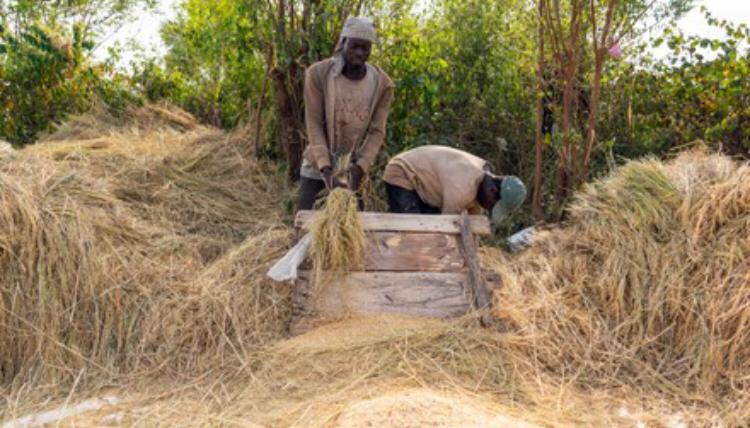
Slash and burn farming is a practice where farmers cut down trees and vegetation on a piece of land and then set fire to it to clear it for planting. The ash left behind acts as a natural fertilizer, making the soil rich enough to grow crops like maize and cassava. But the burning does not stop there. Once the harvest is done, many farmers also burn the leftover stalks, leaves and husks — known as crop waste or crop residue — to quickly clear their fields before the next planting season.
Together, these two practices mean that fire is used at both ends of the farming cycle: to prepare the land and to clean it up afterwards.
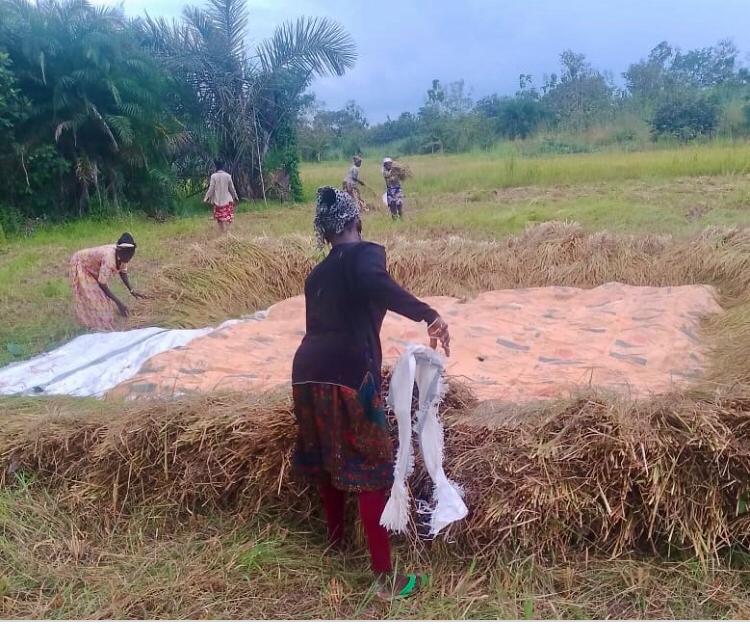
Many smallholder farmers across West Africa rely on these methods because they are cheap, fast, and require no expensive machinery or chemicals. However, both practices come with serious dangers. The smoke releases pollutes into the air and can cause chronic health problems, especially for children and the elderly living nearby.
Over time, burning the same land strips it of its nutrients, making the soil weak and unproductive. It also destroys the homes of animals and contributes to the cutting down of forests.
Many farmers have seen the dangers firsthand.
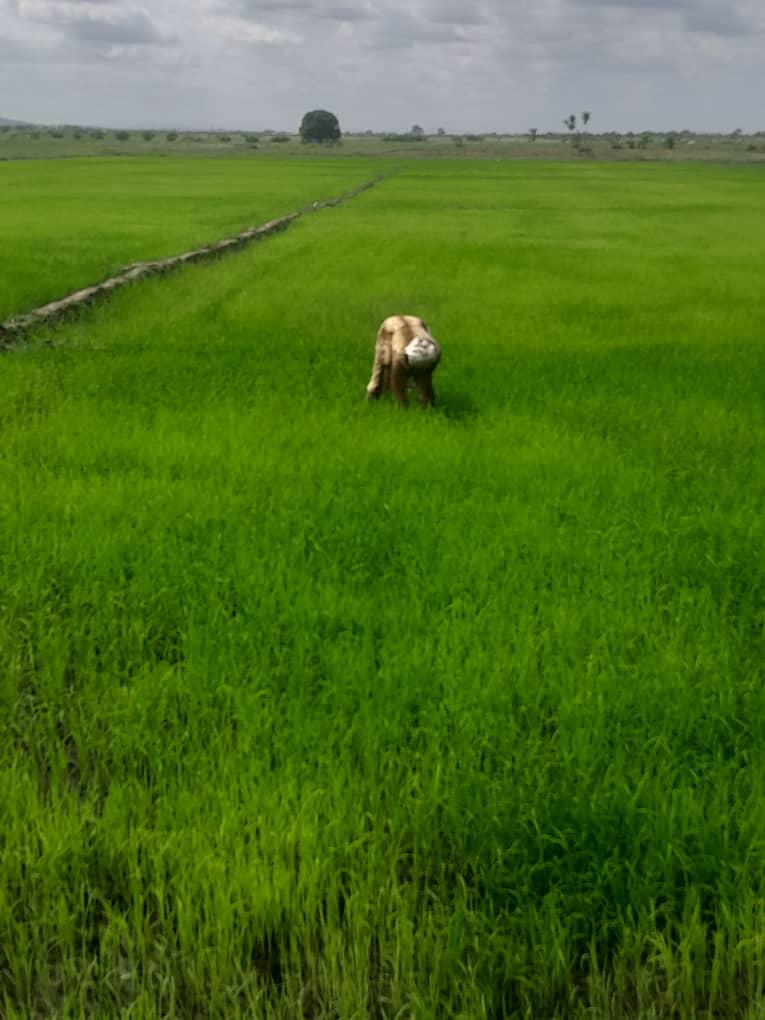
Cecilia Teye Ameh, a rice farmer here, has been farming for 15 years. In an interview, the 40-year-old said smoke from bush burning has caused asthma attacks and high blood pressure during periods of heavy smoke, and eye irritation that experts say can lead to vision loss in years to come.
“We don’t have weedicides to use to spray the weeds,” she said in Twi. “It’s too expensive. When I inhale the smoke I get sick and I go to Juapong Hospital for medicine. When it enters my eyes it burns like someone rubbed green pepper in them.”
Ameh recounted one frightening episode when, after working near recently burned fields, she began to feel a tightness in her chest and struggled to breathe. The situation worsened quickly, leaving her dizzy and gasping for air until she rushed to the hospital.
The experience made her realise how dangerous the smoke can be but she feels trapped.
“When the doctors told me I have an asthma attack, I knew it could be from the smoke of the weeds I burn but I cannot stop because that’s how I do my work and get money, and it’s the main work most people do here.”
Mathias Kwame Nunekpeku, a farmer with two decades of experience, said his asthma and diabetes have made everyday farm tasks increasingly difficult—especially when clearing land by burning.
“Anytime I burn the bush, the smoke catches me and my asthma starts at once,” said the 48-year-old in Twi. “My chest gets tight, I start coughing, and sometimes I must lie down before I can breathe well. There are days I can’t finish what I planned because of the wheezing.”
Managing diabetes has also reduced his stamina. “It has taken my strength. I tire quickly and if I don’t eat well or rest, I feel weak on the farm,” he said. “Farming is all I have. When my body is slow, everything suffers. I lose time, I lose money.”
The high cost of weedicides also leaves him without a choice.
“We burn the weeds because cattle keep coming onto our farms,” he said. “They destroy the crops and bring weeds. Burning clears the land quickly before we plant.”
Asthma and lung issues are major risks according to Dr Asante. “When polluted air mixes with oxygen and is inhaled into the body, it can have serious health effects,” he said. “It can trigger asthma attacks, and with prolonged exposure, increase the risk of lung cancer.”
He cites the high cost of weedicides as a major barrier to adopting safer alternatives, such as manual weeding, mulching, cover cropping, crop rotation, and the use of less toxic or bio-based herbicides. These options can reduce health and environmental risks, but they often require more labour, time, or upfront investment, making them less accessible to many farmers.
Benson Owusu, a public health specialist, said that long-term exposure to smoke from bush burning may lead to a range of illnesses including asthma, reduced lung function, high blood pressure, diabetes, infertility, and stillbirths. He said that these effects extend beyond farmers to include residents and children of nearby communities who are exposed to the smoke.
“This is a public health issue,” said Owusu. “The smoke from bush burning can expose whole communities—not just farmers—to dangerous air pollution.”
The impact is already being felt in health facilities.
Data from the Ghana Health Service shows a sharp increase in respiratory diseases in the Greater Accra Region, according to Dr Robert Amesiya, Greater Accra Regional Director of the Ghana Health Service.
He said outpatient visits in Ayawaso West Municipality alone saw a near doubling of Chronic Obstructive Pulmonary Disease, a lung disease strongly linked to air pollution, to nearly 26,000 in the two years to 2023. He linked the rise partly to worsening air pollution.
Health officials warned that poor air quality, worsened by seasonal open burning on farmlands, is a significant contributing factor.
Beyond health risks, bush burning is damaging Ghana’s ecosystems.
A 2023 study on crop residue management among smallholder farmers in northern Ghana found that about one in every four farmers burn crop residues as part of land preparation. The practice is particularly widespread in the northern regions because the long dry season makes burning an easy way to clear land quickly, where the number goes as high as 60 percent.
The CSIR report found that fires over the past decade have devastated vast lands, with serious environmental consequences. It destroys soil nutrients, reduces fertility, contaminates water bodies, and accelerates land degradation. The long term risks to food security are serious.
“We are destroying the very foundation of our food systems,” said Charles Nyaaba, former secretary of the Peasant Farmers Association, an in interview. “Burning kills the living organisms in the soil that support plant growth. This is why we now depend heavily on imported fertilizers and even food.”
Nyaaba advocated for a transition to agroecological farming methods, using practices like mulching instead of burning, crop rotation, cover cropping, and organic fertilizers to improve soil health and reduce reliance on fire and chemicals. He says farmers cannot afford to continue the practice.
“Agroecology is the best path forward. Bush burning only increases costs and introduces long-term health risks.”
Experts say weak enforcement undermines progress.
Ghana’s Bushfire Prevention and Control Act restricts uncontrolled fires and approves safe, regulated practices. The Ghana National Fire Service reports that it has trained over 6,000 fire volunteers to educate farmers on fire control practices, including early burning and fire belt creation.
“We are intensifying community education and will begin enforcing by-laws more strictly. Offenders will be arrested and prosecuted,” said Desmond Ackah, public relations officer of the Ghana National Fire Service.
Until now enforcement has been poor, complains Nyaaba. He said the Fire Service lacks the personnel and resources to monitor rural areas, so farmers often burn land without permit or consequences.
Dr Robert Amesiya, Greater Accra Regional Director at the Ghana Health Service, called for urgent collaboration between government agencies and local actors to address the problems.
“We need stronger public education on the dangers of exposure to smoke from bush burning. People must also take precautionary measures, including wearing nose masks when air quality is poor,” he said.
This story was a collaboration with New Narratives, with funding from the Clean Air Fund. The donor had no say in the content of the story.
Latest Stories
-
Today’s front pages: Friday, September 18, 2026
2 hours -
Prof Kwaku Asare questions legal basis of case against senior nursing officer linked to ‘Ghana Jollof’
2 hours -
Financial inclusion must go hand in hand with investor protection – BoG Governor
2 hours -
Ablakwa rewards six North Tongu WASSCE best performers with MacBooks, scholarships
3 hours -
Gender Ministry touts gains in LEAP, school feeding and disability support
3 hours -
72 vessels, 17,336 fishing hours: The monitoring gap at Ghana’s first Marine Protected Area
4 hours -
Ansa-Asare questions rush to lower presidential age to 30
4 hours -
Minority challenges claim all 431 government-sponsored World Cup travellers have returned
4 hours -
No evidence linking government, NDC members to cocaine probe – Kwakye Ofosu
4 hours -
Minority demands full breakdown of GH¢58.9m spent on Ghana’s World Cup participation
4 hours -
Stay away from negative peer influences – MP warns SHS students
4 hours -
Mahama to commission Agbogbloshie waste evacuation to Nsawam landfill today
5 hours -
Kwadaso NDC supporters demonstrate to demand removal of MCE
5 hours -
GSA records 18% revenue growth in 2025
5 hours -
2027 Budget to target nine sectors to create jobs – Mahama
5 hours