

Audio By Carbonatix
Mobile phones have become an essential part of everyday life in Ghana. Beyond communication, they now serve as tools for financial transactions, access to government services, education, and digital identity verification. Because of this increasing dependence on mobile connectivity, SIM card registration has become an important policy for strengthening security and accountability within the telecommunications sector.
Ghana first introduced mandatory SIM card registration in the early 2010s under the supervision of the National Communications Authority (NCA). The primary objective was to ensure that every SIM card could be traced to a verified individual, thereby helping combat crimes such as mobile fraud, cybercrime, and other illegal activities carried out using anonymous phone numbers.
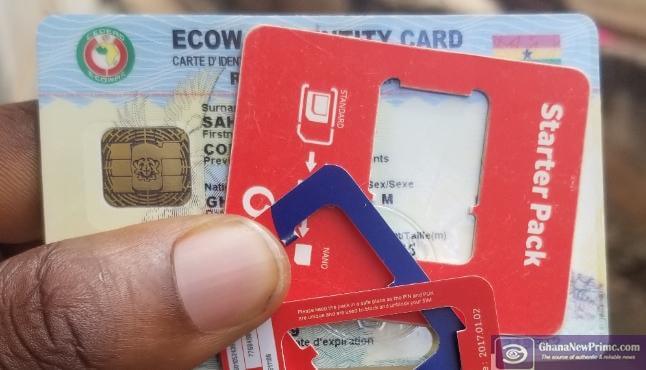
Over the years, the policy has evolved in response to technological advancements and emerging security concerns. The most comprehensive SIM re-registration exercise took place between 2021 and 2022 when the government required all mobile subscribers to link their SIM cards to the national identity card issued by the National Identification Authority (NIA). The identity document, popularly known as the Ghana Card, became the primary means of verifying SIM card users' identities across the country.
The objective of this exercise was to strengthen national security, reduce identity-related fraud, and improve trust in Ghana’s growing digital economy. However, while the policy goal was widely supported, the implementation process revealed several challenges that created stress for millions of mobile subscribers.
In major urban centres such as Accra, Kumasi, and Tamale, large crowds gathered at telecom service centres to complete biometric verification. Many people had to spend long hours in queues in order to finalise their registration. Workers, traders, and students often had to interrupt their daily activities to meet regulatory deadlines.
Additional difficulties emerged in areas where access to registration equipment was limited. Some subscribers were unable to complete the process because they had not yet received their Ghana Cards, while others encountered network interruptions during biometric capture. These operational constraints eventually forced authorities to extend the registration deadlines several times.
Although digital tools such as self-service registration applications were introduced later in the process, many subscribers still had to visit physical service centres for biometric verification. The experience demonstrated that while the policy objective was sound, the implementation process could be significantly improved through better use of technology.
As Ghana continues to pursue a national digital transformation agenda, there is a strong opportunity to modernise SIM registration systems to reduce customer stress while maintaining regulatory integrity.
One key improvement would be the full integration of telecom operator systems with the national identity database managed by the National Identification Authority. With secure digital integration, telecom operators could instantly verify subscriber information using Ghana Card records without requiring repeated biometric capture. This would significantly reduce processing time and eliminate the need for many in-person verification visits.
Another important innovation would be the expansion of remote digital verification technologies. Modern identity systems allow individuals to confirm their identity through secure facial recognition and encrypted authentication tools using
smartphones. If implemented effectively, many mobile subscribers could complete SIM verification remotely from their homes or workplaces.
At the same time, digital solutions must remain inclusive. A considerable number of Ghanaians still rely on basic mobile phones rather than smartphones. Therefore, registration platforms should continue to support USSD and SMS-based processes to ensure that citizens in rural communities are not excluded from the system.
Emerging technologies such as artificial intelligence can also enhance regulatory oversight. AI-based systems can automatically detect suspicious patterns such as multiple SIM cards linked to a single identity or unusual registration activities that may indicate fraud. This approach allows regulators to focus on problematic cases without placing unnecessary burdens on compliant subscribers.
Furthermore, integrating SIM registration systems with device identity technologies—such as a Central Equipment Identity Register—could help authorities identify and block stolen or counterfeit mobile devices. Such integration would strengthen Ghana’s digital ecosystem while improving consumer protection.
Ultimately, SIM registration policies must balance national security objectives with the convenience of citizens. Public policies that affect millions of people should be implemented through systems that are efficient, accessible, and technologically advanced.
Ghana has already made significant progress in digital governance through initiatives such as the Ghana Card and other digital public infrastructure projects. By investing in modern verification technologies and improving institutional coordination, the country can build one of the most efficient and user-friendly SIM registration systems in Africa.
Future SIM registration exercises should therefore move beyond queues and deadlines toward a more streamlined digital process that protects citizens while respecting their time and convenience. Using technology effectively will ensure that SIM registration in Ghana becomes not only a regulatory requirement but also a model of efficient public service delivery.
*********
The author, Bright Appiah, is a PhD candidate in the Faculty of Computing and Information Systems (FoCIS) at Ghana Communication Technology University, Accra.
Latest Stories
-
Don’t let speed of information become your judgement – CJ tells new lawyers
28 minutes -
World Cup visa scandal: People have leveraged public office to facilitate fraud – Senyo Hosi
33 minutes -
Glut! Farmers count losses as prices crash, customers happy
1 hour -
GSA postpones auction of unserviceable vehicles
1 hour -
Man charged with attempted murder after stabbing
1 hour -
World Cup visa scandal: Senyo Hosi says issue goes beyond calls for Sports Minister’s resignation
1 hour -
Yaw Ampofo Ankrah hasn’t taken or received any money to facilitate visas – Lawyer insists
2 hours -
World Cup visa scandal: Senyo Hosi urges focus on constitutional accountability
2 hours -
La Beach demolition: Senyo Hosi condemns lack of consultation
2 hours -
Russian glide bomb attack on Zaporizhzhia kills at least 15 people
2 hours -
Jinapor warns underperforming energy sector CEOs of consequences, says no protection for failure
2 hours -
Fire destroys head of tipper truck on Lower Volta Bridge
2 hours -
Palmer signs new Chelsea contract until 2034
2 hours -
World Cup visa scandal: Mahama will act on corruption allegations – Abass Nurudeen
2 hours -
Abass Nurudeen accuses Minority of ‘scandal scavenging’ over World Cup visa controversy
2 hours