

Audio By Carbonatix
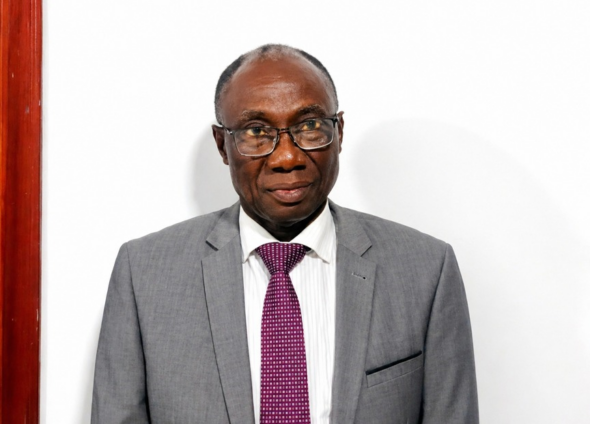
Former Chairman of Parliament’s Energy and Mines Committee, Dr Kwabena Donkor, has proposed a new ownership model for Ghana’s mining industry that would enable the state to retain a greater share of the benefits derived from the country’s mineral resources.
According to Dr Donkor, the model would allow the state to maintain ownership of mining assets while contracting indigenous companies to undertake mining operations.
He argued that Ghana has reached a stage in its development where it possesses the technical expertise, managerial capacity and local business ecosystem required to retain a larger share of the value generated from its mineral wealth.
To achieve this, Dr Donkor is advocating the revival of the State Gold Mining Corporation (SGMC) as a lean asset-holding entity that would own mining assets on behalf of the Ghanaian people while subcontracting operations to local firms.
“I strongly recommend that the State Gold Mining Corporation be revived, but in a limited capacity as an asset owner rather than an operator,” he said.
Dr Donkor clarified that he is not proposing a return to state-run mining, which he acknowledged had performed poorly in the past. Instead, he envisages a structure in which the state retains ownership of mining assets while private Ghanaian contractors undertake the actual mining, milling and other operational activities.
According to him, the arrangement would mirror the model already employed by many large-scale mining companies, where foreign firms retain ownership rights while local contractors carry out much of the operational work.
He cited the Tarkwa Mine as an example.
“This is consistent with current practice. Gold Fields handles the administration and ownership, while the actual mining operations are undertaken by subcontractors. The Ghanaian state can adopt the same model,” he noted.
Under the proposed framework, the state-owned corporation would focus on strategic oversight, long-term planning and the protection of national interests, while maintaining a streamlined structure with a limited workforce.
Dr Donkor’s proposal is rooted in his conviction that Ghana has matured into a globally competitive mining nation. He pointed out that expatriate participation in the country’s large-scale mining sector has significantly declined, with most engineers, geologists, metallurgists, chemists and mine managers now being Ghanaians.
Indeed, he described Ghana as a net exporter of mining expertise, with local professionals increasingly being recruited by mining companies in countries such as Australia and Canada.
“We are a net exporter of highly skilled human capital in the mining space,” he said.
He further noted that indigenous companies have acquired the technical expertise, equipment and operational capacity required to undertake large-scale mining activities.
According to Dr Donkor, the key challenge facing Ghana’s mining sector is no longer operational capability but ownership and value retention.
He argued that substantial sums continue to leave the country through dividend payments and other financial outflows associated with foreign ownership structures.
Using the Tarkwa Mine as an example, he estimated that hundreds of millions of dollars are repatriated annually to foreign investors.
Dr Donkor maintained that Ghana’s technical competence and industry maturity justify a reconsideration of ownership arrangements in order to retain a larger share of the wealth generated from its natural resources.
However, he was quick to distinguish his proposal from nationalisation, which he warned could have serious economic consequences.
He stressed that resource ownership should not be confused with state operation and argued that Ghana has every right to reassess ownership arrangements when mining leases expire naturally.
Referring to the Tarkwa Mine, whose lease is expected to expire next year, he said a decision not to renew the lease would not constitute nationalisation but rather an exercise of the state’s constitutional responsibility as custodian of the country’s mineral resources.
“I am not calling for nationalisation because that is a political move with potentially serious economic consequences. Resource nationalism is not necessarily the same as nationalisation. In the case of Tarkwa, the lease expires early next year. If we decide not to renew it, we have not nationalised the mine,” he explained.
Addressing concerns about financing, Dr Donkor said local operators could raise capital through commercial banks, development finance institutions, capital markets and regional lenders, supported by guarantees from the state-owned asset holder and future gold production.
He believes the proposed model would enable Ghana to retain greater value from its mineral resources while preserving operational efficiency and leveraging the expertise of indigenous mining firms.
Ultimately, Dr Donkor argued that Ghana’s mining industry has reached a level of maturity that warrants a new ownership structure—one that keeps strategic mining assets under Ghanaian ownership while allowing local private-sector operators to drive production, innovation and growth.
Latest Stories
-
Tonto Dikeh celebrates Bobrisky as birthday tribute sparks online reactions
32 minutes -
Peter Okoye tells court he received over $800,000 in P-Square royalties
41 minutes -
I’ve never had problems with artistes – Rema addresses alleged fight with Davido
52 minutes -
I was mocked for getting pregnant out of wedlock as pastor’s daughter – Davido’s baby mama
1 hour -
Young John rejects collaboration request from Blaqbonez over old tweet
1 hour -
Trump administration to admit primarily Afrikaners under new refugee proposal
1 hour -
They should have Ghana first – Ntim Fordjour warns MPs against politicising drug crisis
2 hours -
We got more than 15% – Ntim Fordjour confirms support for Parliament recall over cocaine scandal
2 hours -
Wherever there is money laundering, it is linked to terrorism – Ntim Fordjour warns over drug crisis
2 hours -
Parliament Recall: Ntim Fordjour expects emergency sitting over drug-trafficking crisis
3 hours -
Oil falls on increased Gulf supply and hopes for US-Iran talks
3 hours -
South Sudan’s Kiir dissolves government, clears hurdles to delayed election
3 hours -
Ntim Fordjour accuses government of failing to act on Ghana’s drug crisis
5 hours -
Autopsy shows Hayden Panettiere died from a drug overdose
5 hours -
Earl Spencer should pull Diana book from shelves, Piers Morgan says
5 hours