

Audio By Carbonatix
As healthcare systems across North America and Europe grapple with rising chronic disease rates, ageing populations, and persistent workforce shortages, experts are increasingly pointing to the growing contribution of African healthcare professionals as a critical factor in sustaining quality care delivery.
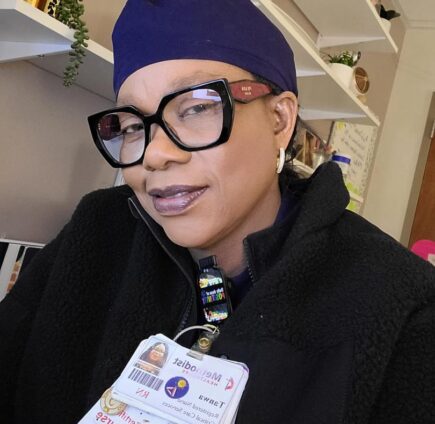
These issues were at the centre of a virtual interview with healthcare professional and innovator Tanwa Sola Lawal, who discussed the evolving healthcare landscape in the Western world and the expanding role Africans are playing in addressing some of its most pressing challenges.
According to Lawal, the conversation around healthcare in developed nations is no longer limited to medical advancements alone. Instead, healthcare leaders are being forced to confront growing rates of cardiovascular disease, diabetes, respiratory illnesses, and other chronic conditions that continue to place immense pressure on hospitals and healthcare workers.
“Healthcare systems today are managing a level of complexity that requires more than clinical expertise,” Lawal said. “The challenge is not simply treating diseases; it is ensuring that healthcare delivery remains coordinated, responsive, and sustainable.”
Lawal noted that African healthcare professionals have increasingly become part of that solution. Across hospitals, research institutions, and healthcare organisations, African physicians, nurses, administrators, and innovators are helping strengthen patient care and operational efficiency.
“The contribution of African professionals extends far beyond filling workforce gaps,” he stated. “Many are helping introduce new perspectives on patient management, healthcare coordination, and quality improvement.”
The discussion also highlighted the importance of innovation in modern healthcare environments. Lawal emphasised that effective healthcare systems must combine clinical excellence with technologies and operational frameworks that improve communication, decision-making, and patient outcomes.
“The future of healthcare will belong to systems that successfully integrate people, processes, and innovation,” he said. “No nation can address today's healthcare challenges in isolation.”
As disease patterns continue to evolve globally, experts believe international collaboration will become increasingly important. For Lawal, the growing influence of African healthcare professionals represents not only a workforce trend but a broader shift toward a more interconnected global healthcare ecosystem.
“The healthcare challenges facing one region ultimately affect us all,” he concluded. “The solutions must be equally global.”
Latest Stories
-
Dorimon E-Block project nears completion after decade-long stall
4 hours -
GTA 6 leaks – a nightmare or a blip for the biggest video game of the year?
4 hours -
Two injured in stabbing attack at Canada Sikh temple
5 hours -
Modi spent years building his strong image – why is he making Gen Z reels now?
5 hours -
Canada ‘should fight’ as US trade deadline looms, Manitoba premier says
5 hours -
Man Utd agree £70m fee for Brighton’s Baleba
5 hours -
Inter-Agency Football Gala: YEA organize event as part of National Youth Month celebration
5 hours -
Receiver fights High Court order to hand over No.1 Oxford Street Hotel to Cheddar’s company
6 hours -
Partey begins new chapter in Saudi Arabia with Al Shabab
6 hours -
NSMQ 2026: St. Francis Xavier deny debutants Pentecost SHS one-eighth spot
6 hours -
One killed in sword attack at Swedish school
6 hours -
NSMQ 2026: Tamale SHS sweep aside Kalpohin, Wenchi Methodist to reach one-eighth stage
6 hours -
Tupac murder accused told police in 2008 his nephew fired fatal shots
7 hours -
Heart of the Beast to Practical Magic 2: 10 of the best films to watch this September
7 hours -
NSMQ 2026: Tears of relief as Labone SHS survive Notre Dame Sem. in thriller to secure one-eighth spot
7 hours