

Audio By Carbonatix
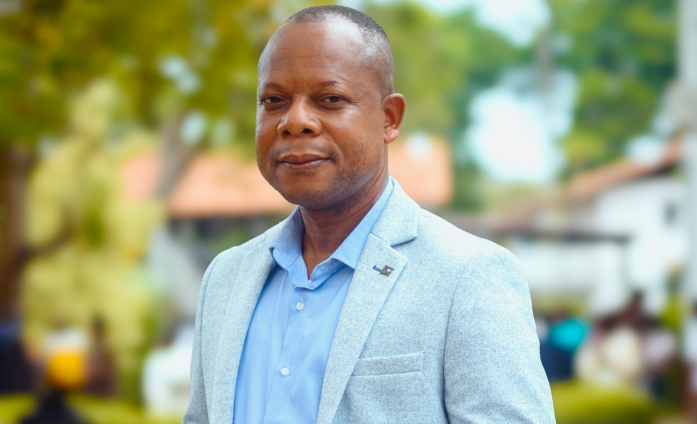
A governance, security and international relations expert, Dr David Agbee, has submitted a formal policy proposal to President John Dramani Mahama, Cabinet and all relevant Ministries, Departments and Agencies, urging the Government of Ghana not to renew the mining lease of Gold Fields Ghana Limited over the Tarkwa Gold Mine when it expires in 2027.
Instead, he is proposing that the state assume sovereign majority ownership of one of Africa's most productive gold mines.
The proposal, titled Sovereign Ownership and State-Led Development of the Tarkwa Gold Fields, comes at a critical time, as Gold Fields Ghana Limited has formally applied for a 20-year extension of its concession. The application has attracted opposition from some civil society groups, academics and community advocates, including the Institute of Economic Affairs (IEA).
"Ghana's gold must build Ghana's future," Dr Agbee said.
"This is a generational moment – the moment when the people of Ghana, through their elected government, can decide that the gold beneath Tarkwa soil belongs, in the fullest and most meaningful sense, to Ghana."
The Tarkwa concession, located in the Western Region, has been in production for more than a century. Gold Fields Limited, a South African multinational mining company, has operated the mine since 1993, transforming it into a large-scale open-pit operation that currently produces between 427,000 and 550,000 troy ounces of gold annually and employs more than 7,000 Ghanaians.
Despite the mine's scale and profitability, Dr Agbee argues that Tarkwa and its surrounding communities continue to grapple with deteriorating roads, inadequate access to healthcare and potable water, loss of agricultural land and environmental degradation resulting from mining activities.
According to the proposal, Ghana currently captures only a five per cent royalty on revenue, alongside corporate taxes and a minority dividend stake through the Minerals Income Investment Fund (MIIF), an arrangement he describes as insufficient compensation for the depletion of the country's non-renewable mineral resources.
"The fiscal revenues Ghana receives do not adequately compensate the nation for the permanent depletion of its gold reserves. This structural deficit must be decisively corrected," the proposal states.
Proposed Ownership Structure
At the centre of the proposal is a public-private partnership model under which the Government of Ghana, acting through MIIF or a newly created Ghana Gold Corporation (GGC), would hold a 60 per cent equity stake in Tarkwa's capital assets and mining infrastructure, including processing plants, mining equipment, power facilities and water systems.
The remaining 40 per cent would be opened to qualified Ghanaian investors, pension funds and strategic foreign partners through a competitive process to provide operational financing and technical expertise.
Dr Agbee proposes that state financing for the acquisition be sourced from the Ghana Heritage Fund, currently estimated at about US$1.376 billion, the Ghana Stabilisation Fund, sovereign bonds backed by projected gold revenues and concessional financing from institutions such as the African Development Bank and the International Finance Corporation.
Legal Basis for the Proposal
The proposal cites Article 257(6) of Ghana's 1992 Constitution, which vests all minerals in their natural state in the President in trust for the people of Ghana, as well as the Minerals and Mining Act, 2006 (Act 703) and the Minerals Income Investment Fund Act, 2018 (Act 978).
"This is not reckless resource nationalism," Dr Agbee said.
"It is a thoughtful, legally sound and commercially structured path to sovereign ownership – one in which Ghana takes its rightful place not as a landlord receiving rent, but as an owner building generational wealth."
The proposal draws lessons from countries such as Botswana, where the state holds majority ownership in Debswana, Chile's state-owned mining company CODELCO and Norway's management of its oil wealth through Equinor and its sovereign wealth fund.
It also notes that countries such as Zambia and Tanzania have increased state participation in their extractive sectors and argues that Ghana, as Africa's leading gold producer, is well positioned to pursue a similar path.
Community and Environmental Proposals
Dr Agbee is also proposing the establishment of a mandatory Community Development Fund, ring-fenced at not less than three per cent of gross gold revenue and governed by a board of trustees comprising traditional authorities and community representatives.
The proposal further recommends a binding Environmental Management and Rehabilitation Plan, to be developed in collaboration with the Environmental Protection Authority, including an independently managed rehabilitation bond to guarantee funding for mine closure and environmental restoration.
"This structural injustice is not merely a moral failure. It constitutes a political risk, a source of community unrest and a long-term threat to the social licence to mine. Any successor arrangement must reverse this historic inequity," the proposal states.
Three-Phase Transition Plan
The proposal outlines a three-phase implementation plan spanning 2026 to 2028.
The first phase would involve the establishment of a High-Level Tarkwa Transition Committee under the Office of the President and the passage of enabling legislation.
The second phase would focus on asset acquisition, investor onboarding and a seamless operational handover with no interruption to production.
The final phase would see the full operationalisation of the Ghana Gold Corporation and the commencement of Community Development Fund disbursements from 2028 onwards.
Dr Agbee has also recommended that Ghana retain independent international legal counsel specialising in mining law and investor-state disputes before issuing any formal notice to Gold Fields.
Describing the impending expiry of the mining lease as a "generational moment", he urged the Presidency and Parliament to act decisively.
"Ghana has the constitutional mandate, the legal instruments, the institutional capacity through MIIF and the Minerals Commission, and the moral authority rooted in decades of unfulfilled promises to Tarkwa communities to act decisively. “The time to act is now,” he said.
Latest Stories
-
Nearly GH¢6m spent to fix Kpong-Tema transmission lines to improve water supply – GWL
2 minutes -
Dr Olukoya-backed MFM rules Nigerian women’s basketball
4 minutes -
THE LAW 101: Before you fly that drone
6 minutes -
Wa West DCE, MP hand over and commission health, education, and hospitality projects
10 minutes -
Drone ownership does not give unrestricted right to fly anywhere – Anyenini
16 minutes -
GFA confirms two-legged format for FA Cup final
17 minutes -
GWL assures of efforts to improve water supply in Tema, Ashaiman amid shortages
30 minutes -
Community 25 residents demand answers over two-month water shortage
48 minutes -
Ampem Darkoa Ladies and Hasaacas Ladies clash in 2026 Women’s Champion of Champions
54 minutes -
Business dies when luxury takes over leadership
1 hour -
No family should lose everything to save a loved one – GMTF administrator
1 hour -
Bawumia has the dignity to lead and the vision Ghana needs – Gabby
1 hour -
GOC, GFA chart Olympic qualification roadmap for Black Queens, Black Meteors
1 hour -
Absa InspireMe 2026 highlights opportunities for women-led business growth
1 hour -
The only thing that flows regularly is THE BILL
2 hours