

Audio By Carbonatix
History suggests an uncomfortable truth: sustainable economic transformation is rarely achieved through governments alone. The most successful societies built prosperity not merely through policies and institutions, but through citizens whose attitudes, behaviours, and values consistently reinforced national progress. Could one of our greatest mistakes be expecting governments to deliver what only governments and citizens can build together?
The Convenient Explanation We Prefer to Believe
Whenever nations struggle economically, politically, or socially, public attention almost instinctively turns towards those who occupy positions of authority. Citizens look towards presidents, prime ministers, ministers, parliamentarians, judges, and public officials. Newspapers analyse government failures. Radio stations debate policy shortcomings. Social media becomes a courtroom where leadership is tried, convicted, and sentenced daily.
Leadership matters. Effective institutions matter. Sound public policy matters. No serious observer would suggest otherwise.
- Yet beneath these legitimate concerns lies a deeper question that societies often avoid because it is far less comfortable than criticising those in power.
- What if sustainable economic transformation depends less on who occupies public office and more on the collective attitudes of those outside those offices?
- What if governments are not the sole architects of national prosperity but merely one part of a much larger equation?
- What if the most important ministry in any nation is not located in a government building but exists in the minds, habits, and daily conduct of its citizens?
The question is unsettling because it shifts part of the responsibility away from leaders and places it closer to home.
NyansaKasa (Words of Wisdom): A government can build the road, but it cannot walk the journey on behalf of the people.
The wisdom embedded in that observation deserves careful reflection. Governments can create opportunities, establish laws, provide infrastructure, and formulate strategies. Yet governments cannot force discipline. They cannot manufacture integrity. They cannot legislate hard work into existence. They cannot compel citizens to care about public property as much as they care about private property.
At some point, every nation's future becomes less dependent on government intentions and more dependent on citizen behaviour.
The Lesson History Keeps Repeating
History is remarkably consistent in its teachings, even when societies repeatedly refuse to learn.
When observers examine some of the world's most successful economic transformations, they often focus on famous leaders, landmark policies, and major reforms. What receives less attention is the role played by ordinary citizens whose behaviours quietly supported those transformations.
Japan's recovery after the devastation of the Second World War is frequently celebrated as one of history's greatest economic miracles. Yet Japan's success was not built solely in government offices. It was built in factories where workers embraced quality. It was built in schools where discipline was valued. It was built in communities where collective responsibility was understood. It was built by citizens who accepted that rebuilding a nation required more than political leadership.
The same lesson emerges from South Korea's extraordinary transformation from poverty to prosperity. Government planning mattered, but so did a culture that valued education, hard work, sacrifice, and long term thinking.
Singapore's rise from a small resource poor island to a global economic powerhouse tells a similar story. Strong leadership was important, but leadership alone could never have delivered the transformation. Citizens embraced standards of discipline, cleanliness, efficiency, and responsibility that became part of the national character.
The Nordic countries, often admired for their quality of life and strong institutions, provide another example. Their success rests not only on policies but also on high levels of trust, civic responsibility, and social cooperation.
These nations differed in geography, culture, politics, and history. Yet they shared something fundamental.
Their citizens understood that prosperity was not something delivered by government. It was something created by society.
NyansaKasa (Words of Wisdom): Nations do not become prosperous because governments dream. They become prosperous because citizens wake up.
That observation may sound simplistic. It is not. It points to one of the most overlooked truths in development. The most sophisticated economic strategy can fail if citizens refuse to support it. The best infrastructure can deteriorate if people abuse it. The strongest institutions can weaken if citizens undermine them through indifference or misconduct.
The Mirror Many Societies Avoid
Perhaps one of humanity's most remarkable talents is identifying the shortcomings of others.
- We recognise corruption in public office but often overlook smaller forms of dishonesty in our own lives.
- We criticise inefficiency in government while arriving late for appointments.
- We complain about environmental degradation while contributing to littering and waste.
- We demand accountability from leaders while resisting accountability ourselves.
The irony would be amusing if it were not so costly.
There are moments when entire societies resemble football teams in which every player blames the referee while nobody discusses their own missed opportunities. The goalkeeper blames the defenders. The defenders blame the midfielders. The midfielders blame the striker. The striker blames the weather. The supporters blame the coach. Everybody identifies a problem. Nobody examines the mirror.
The humour may provoke a smile. The lesson should provoke discomfort.
NyansaKasa (Words of Wisdom): The easiest problem to solve is often somebody else's.
That may explain why meaningful transformation proves so difficult. It is emotionally satisfying to believe that all problems originate elsewhere. It is far more challenging to acknowledge that societies sometimes participate in creating the very outcomes they criticise.
Why Attitude May Be the Most Important Resource of All
When economists discuss development, conversations usually revolve around natural resources, infrastructure, technology, investment, and capital.
These factors are undoubtedly important.
Yet history suggests that another resource may be equally important, if not more so.
Attitude.
- The attitude towards work.
- The attitude towards excellence.
- The attitude towards public responsibility.
- The attitude towards time.
- The attitude towards learning.
- The attitude towards accountability.
Countries blessed with abundant natural resources have often struggled. Others with relatively limited resources have prospered beyond expectation. The difference is frequently found not beneath the ground but within the mindset of the population.
NyansaKasa (Words of Wisdom): Natural resources may create opportunities. Human attitudes determine whether those opportunities become prosperity.
This is why some societies transform adversity into progress while others transform opportunity into disappointment. The deciding factor is often not what they possess but how they behave.
What Must Change If We Are Serious About Change
If sustainable economic transformation is largely sustained by citizen attitudes, then meaningful reform must begin with a different understanding of responsibility.
Citizens must stop viewing themselves merely as beneficiaries of development and begin seeing themselves as co-creators of it. Education systems must place greater emphasis on civic responsibility alongside academic achievement. Communities must celebrate contribution as enthusiastically as consumption. Integrity must become socially admired rather than selectively tolerated. Long-term thinking must replace the culture of immediate gratification.
Most importantly, societies must recognise that governments and citizens are not opposing forces. They are partners in the same national project.
NyansaKasa (Words of Wisdom): A nation changes fastest when citizens stop asking, "What is government doing?" and start asking, "What am I doing?"
The question is uncomfortable because it removes excuses.
It also creates possibilities.
What Is Wrong with Us?
Perhaps we have finally arrived at the most difficult question.
- What is wrong with us is not a lack of intelligence. Our societies possess immense talent.
- What is wrong with us is not a lack of ambition. Ambition is abundant.
- What is wrong with us is not a lack of potential. Potential surrounds us.
- What is wrong with us is that too often we expect governments to deliver outcomes that require citizen participation. We expect prosperity without discipline, accountability without responsibility, transformation without behavioural change, and national success while preserving habits that undermine it.
NyansaKasa (Words of Wisdom): The nation we complain about each day is often the nation our daily habits are quietly creating.
And perhaps that is the most inconvenient truth of all.
The future of a nation is rarely decided solely in presidential palaces, parliamentary chambers, cabinet meetings, or courtrooms. It is decided in homes, schools, workplaces, communities, markets, and countless everyday interactions between ordinary citizens.
History repeatedly demonstrates that governments may initiate change, but citizens sustain it.
The most successful societies understood this long ago.
The question is whether we are finally prepared to understand it, too.
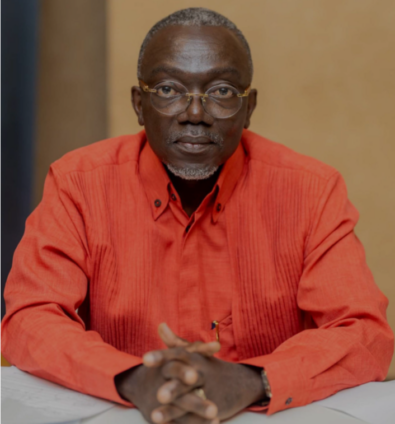
About Ing. Professor Douglas Boateng
Ing. Professor Douglas Boateng is a pioneering international industrial, manufacturing, and production systems engineer, governance strategist, and Pan-African thought leader whose work continues to shape boardroom thinking, supply chain transformation, and industrialisation across both the continent and globally. As Africa’s first appointed Professor Extraordinaire in Supply Chain Management, he has consistently championed the integration of procurement, value chain, industrialisation strategy, and governance into national and continental development agendas, aligning practice with purpose and long-term impact. An International Chartered Director and Chartered Engineer, he has received numerous lifetime achievement awards and authored several authoritative books. He is also the scribe of the globally acclaimed and widely followed daily NyansaKasa (Words of Wisdom), which continues to inspire reflection, accountability, and purposeful living among audiences worldwide. His work is driven by a simple yet powerful belief: Africa’s transformation will not come from rhetoric but from deliberate action, strong institutions, and leaders willing to build for future generations.
Latest Stories
-
In Photos: Day Two of ‘SYPALA 2026’ focuses on governance, economic freedom and youth leadership
3 minutes -
Wontumi withdraws from NPP chairmanship race, urges support for Bawumia
22 minutes -
UCC-IEPA, CEGRAD launches free digital skills programme to empower 1,000 women in education
28 minutes -
NPP dismisses extortion allegation against Afenyo-Markin, says focus remains on GoldBod losses
46 minutes -
Guinness Ghana DJ Awards 2026 set for December 4 as ‘All Out’ era begins
49 minutes -
GhIE inducts 183 engineers, calls for stronger action on galamsey and infrastructure
55 minutes -
Thousands of children receive free specialist care at Asafo-Boakye Specialist hospital fair
59 minutes -
I’m yet to receive official confirmation of Wontumi’s Chairmanship withdrawal – Opare Ansah
1 hour -
Independent voices must be part of gold programme probe – Dr Rasheed Draman
1 hour -
ACEPA backs full probe of Domestic Gold Purchase Programme from inception
1 hour -
KNUST Statutes update sparks fresh debate as staff challenge official narrative
1 hour -
NUTE must strengthen 49 colleges, not become another public university – Eduwatch
2 hours -
Awal Mohammed files for Nasara Organiser, vows to rebuild NPP Nasara structures ahead of 2028
2 hours -
IERPP demands answers as GoldBod reports disappear from website
2 hours -
Country music legend Dolly Parton dies
2 hours