

Audio By Carbonatix
Ghana’s next major export opportunity may not come from another gold mine, oil field or traditional commodity boom. It may come from avocado.
Avocado offers Ghana more than a farming opportunity. It offers a test of whether the country has finally learned how to turn raw production into industrial wealth.
The Old Commodity Trap
For decades, Ghana has produced raw commodities while other countries captured the greater value through processing, branding, manufacturing and global distribution. Cocoa remains the clearest example. Ghana produces one of the world’s most important cocoa beans, yet the larger value in chocolate, beverages, cosmetics and processed cocoa products is created elsewhere.
Gold, timber and crude oil have followed a similar pattern. Ghana produces. Others refine. Others package. Others brand. Others earn the bigger margins.
Breaking the Cycle
Avocado gives Ghana a chance to break that cycle — but only if the country treats it as an industrial value chain, not just another farming activity.
The €2 billion Value Chain and Job Opportunity
With about 150,000 acres under structured commercial cultivation, Ghana’s avocado value chain could generate between €1.5 billion and €2 billion annually and this could create more than 150000 direct and indirect jobs across farming, nurseries, irrigation, harvest, processing, exports and support services. That would also place avocado among the country most important non-traditional export opportunities, with the potential to create jobs, support factories, attract investment and strengthen foreign exchange earnings.
A 35-Year Revenue Comparison
A well-managed cocoa investment may generate annual revenue of about $4,000 to $7,000, with a 35-year revenue potential of roughly $140,000 to $245,000. Cocoa will remain central to Ghana’s economy, but its earnings are still heavily exposed to global commodity prices and limited local value addition.
Oil palm offers stronger industrial use. A commercial oil palm investment may generate about $6,000 to $10,000 annually, with lifetime revenue of about $150,000 to $300,000 over a productive life of 25 to 30 years.
Residential real estate, often regarded as a safe investment, also tells an interesting story. A $100,000 residential property earning about $300 a month would generate about $3,600 a year and roughly $126,000 over 35 years, before maintenance, taxes, repairs and vacancy costs.
Avocado changes the comparison
A commercial avocado orchard supported by modern production systems could generate annual revenue of about $15,000 to $30,000, with lifetime revenue potential of about $525,000 to $1.05 million over 35 years.
That means avocado could generate several times the long-term cash flow of a comparable rental property, outperform cocoa and oil palm on revenue potential, and still support a wider industrial economy beyond the farm.
The point is not that Ghana should abandon cocoa, oil palm or real estate. Each has a place in wealth creation. The point is that avocado deserves serious national attention because it can combine what many other assets do separately.
A house generates rent.
Cocoa generates export earnings.
Palm oil feeds industry.
Feed the Industries
Avocado can generate farm income, processing activity, factory jobs, export revenue, cosmetic inputs, health products, animal feed, branded goods and long-term rural wealth.
That is why the fruit itself is not the prize.
The real prize is the value chain.
Fresh avocado exports may open the market, but they should not become the final ambition. Ghana must not build another raw commodity story around avocado. If the country only exports fresh fruits for others to process, package and brand, it will repeat the same mistake it made with cocoa and other commodities.
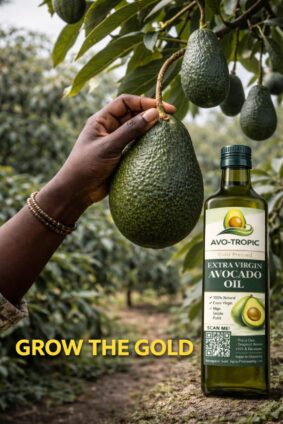
The stronger opportunity lies in processing. Avocado farms must feed factories. Those factories must produce premium avocado oil, skincare ingredients, food products, nutraceutical inputs, animal feed and export-ready brands for regional and international markets.
That is where the real money will be made. That is where the jobs will be created. That is where rural communities will feel the impact.
The Alternate Financing Model
But building a €2 billion avocado industry will require more than enthusiasm.
It will require long-term financing from institutions such as GIRSAL, Development Bank Ghana, EXIM Bank, pension funds, private investors and export-focused financiers. Short-term loans cannot build long-term tree-crop industries. Ghana will need patient capital that understands agriculture, processing and export development.
There is also room for new financing models, including tree-crop investment platforms and tokenisation, to allow institutional investors, the diaspora and retail investors to participate in productive agricultural assets.
If properly organized, avocado can become the anchor of a wider exotic crops economy built around macadamia, citrus, coconut, pineapple, mango, passion fruit, dragon fruit, cashew and other high-value crops. Over the next 10 to 15 years, such an economy could generate €3 billion to €4.5 billion annually in export revenues and support hundreds of thousands of jobs.
That would make exotic crops a serious economic pillar for Ghana.
Beyond Agriculture
Avocado is not simply an agricultural opportunity. It is an industrial opportunity. It is an export opportunity. It is a youth employment opportunity. It is a rural transformation opportunity.
Most importantly, it is an opportunity for Ghana to stop exporting potential and start exporting value.
Ghana has enough examples of raw commodity regret.
Avocado must not become another one.
Latest Stories
-
Oil extends losses on hopes for Middle East talks to ease supply woes
3 minutes -
Gov’t must put its skin in the game – Chamber of Mines demands tax, power relief for local gold refining
10 minutes -
I was suspended for defending NPP constitution, not opposing Akufo-Addo – Sammy Crabbe
21 minutes -
NPP suffered serious systemic failure in 2024 polls – Sammy Crabbe
27 minutes -
AMA arrests six drivers, mates over alleged overcharging of passengers
30 minutes -
NDC activist backs Sammy Gyamfi, calls for facts in GoldBod $1.7bn debate
33 minutes -
‘Don’t exclude us, then blame us for indiscipline’ – Catholic Bishops on GES Council removal
37 minutes -
Minority accuses Majority of wasting parliamentary time after emergency recall
42 minutes -
Catholic Bishops warn galamsey becoming source of employment for Ghanaian youth
47 minutes -
Can we give refineries more cheap power? – Chamber of Mines pushes energy solution for local gold refining
49 minutes -
Parliament to vet Zanetor Agyeman-Rawlings, Mahama Ayariga today
49 minutes -
Presby Moderator urges government to show political will to end galamsey
55 minutes -
Lower Manya Assembly supports PwDs with livelihood items
1 hour -
Legislation to regulate EV charging in the offing – Energy Minister
1 hour -
Audit Committees inaugurated to strengthen accountability at MMDAs
1 hour