


Audio By Carbonatix
While many developing nations continue to treat public procurement as an administrative process focused on buying goods and services, some of the world's most successful economies increasingly view procurement as a strategic instrument for industrialisation, innovation, job creation and economic sovereignty. The uncomfortable question for Africa is whether we are buying for today or building for tomorrow.
The Remark That Deserved More Attention Than It Received
History has a curious habit of whispering profound truths through seemingly ordinary moments. Unfortunately, societies often become so distracted by political noise, breaking news and electoral drama that they fail to hear those whispers until years later. One such moment occurred on 19 June 2026.
Shortly after securing the Makerfield seat for the Labour Party, former Greater Manchester Mayor Andy Burnham highlighted a truth that many developing economies continue to overlook.
He called for the strategic use of public procurement to industrialise the United Kingdom further, reminding policymakers that every pound spent by government can either create productive capacity at home or unintentionally finance prosperity elsewhere.
To some, it sounded like a routine political statement. It was anything but routine. Beneath those few words sat a lesson that many successful economies have long understood. Public procurement is not merely about buying goods and services. It is about shaping industries, creating jobs, stimulating innovation and determining who participates in economic growth and who remains dependent on it.
The inconvenient truth is that nations rarely industrialise because they desire industrialisation. They industrialise because they deliberately connect procurement, investment, education, technology, infrastructure and long-term national priorities into a coherent economic strategy. Britain understood this during the Industrial Revolution.
The United States understood it while building its manufacturing and technological capabilities. Germany understood it while developing world-class industrial competitiveness. South Korea understood it as it transformed itself from a poor agrarian economy into an industrial powerhouse.
NyansaKasa (Words of Wisdom)
"The village that spends all its money buying from others eventually finances the prosperity of others."
Reflection: Every procurement decision is also an economic development decision. The real question is whether that decision creates productive capacity at home or dependency abroad.
The Industrialisation Tool Hiding in Plain Sight
Perhaps one of the greatest paradoxes in economic development is that many nations spend enormous energy discussing industrialisation while overlooking one of the most powerful industrialisation tools already sitting on their desks: Public procurement.
Across much of Africa, procurement is still too often viewed through a narrow administrative lens. Success is frequently measured by compliance, paperwork, procedural correctness and, unfortunately, the pursuit of the lowest price. While accountability and transparency remain essential, procurement reduced solely to compliance becomes like a farmer who spends all his time counting seeds but never plants them. The result is predictable. Contracts are awarded. Money is spent. Projects are completed. Yet industries fail to emerge, jobs remain scarce and economic transformation remains elusive.
There is humour hidden in this contradiction, although it is the kind of humour that eventually makes one stop laughing. Imagine a thirsty man standing waist-deep in a river while desperately searching for water. The image provokes a smile. Then comes the uncomfortable realisation that many countries are doing something remarkably similar. They are searching for industrialisation while standing inside procurement systems capable of driving industrialisation.
NyansaKasa (Words of Wisdom)
"A hunter who ignores the elephant while chasing butterflies should not complain about hunger."
Reflection: The greatest opportunities for transformation are often hidden in plain sight.
When The Lowest Price Becomes The Highest Cost
The misunderstanding becomes even more apparent when discussions turn to value for money. Far too often, value for money is mistaken for obtaining the lowest possible price. Yet the cheapest option frequently becomes the most expensive outcome.
A bridge that collapses after a few years is expensive. A road that requires constant reconstruction is expensive. A power plant that performs below expectations is expensive. An imported solution that creates no local skills, transfers no knowledge and develops no domestic capability may ultimately become one of the most expensive decisions a nation can make. This is why advanced economies increasingly focus not on price alone but on outcomes. True value for money considers quality, sustainability, resilience, lifecycle cost, economic impact and long-term national benefit.
NyansaKasa (Words of Wisdom)
"The cheapest shoe is often the most expensive when it cannot survive the journey."
Reflection: Cost and value are not twins. They are often distant cousins mistakenly introduced as siblings.
When procurement becomes strategic rather than transactional, entirely different questions emerge. Instead of asking only what should be purchased, governments begin asking what industries can be strengthened through that purchase. Instead of focusing exclusively on today's requirements, they begin considering tomorrow's capabilities.
- Can this project create jobs?
- Can it stimulate local manufacturing?
- Can it transfer technology?
- Can it develop domestic suppliers?
- Can it strengthen national competitiveness?
Suddenly, procurement ceases to be an administrative process and becomes an economic development strategy.
What Successful Economies Understand
The United States, South Korea and Germany have each demonstrated how procurement can be strategically aligned with industrial policy, innovation and national competitiveness. Their experiences reveal that procurement is not merely a spending mechanism but a catalyst for economic transformation. These countries understand something many developing economies continue to underestimate.
Procurement is not expenditure. Procurement is an investment.
The implications for Africa are enormous. The continent's population is expected to exceed 2.5 billion people by 2050. Millions of young people enter the labour market every year. Governments regularly discuss youth unemployment, entrepreneurship and economic transformation. Yet sustainable employment rarely emerges without productive industries, and productive industries rarely emerge without deliberate support. This is where the conversation becomes uncomfortable. Too many nations continue hoping for industrialisation while simultaneously procuring in ways that undermine industrialisation. Too many governments speak passionately about local industries while directing vast procurement expenditures toward imported solutions that create little domestic value.
NyansaKasa (Words of Wisdom)
"A tree does not become a forest because people admire it. It becomes a forest because more trees are deliberately planted."
Reflection: Economic transformation is not the product of aspiration alone. It is the product of consistent strategic action.
The Political Challenge of Long-Term Thinking
Of course, none of this is politically easy.
- Industrialisation operates on generational timelines. Politics often operates on electoral timelines.
- Industrialisation asks what kind of economy a nation wants twenty years from now. Politics frequently asks what will happen in the next election.
The tension is understandable. Investments in local capability take time. Supplier development programmes take time. Technology transfer takes time. Skills development takes time. Building globally competitive industries takes time. Yet history repeatedly demonstrates that nations willing to think beyond electoral calendars almost always outperform those trapped within them.
Singapore did not transform itself within a single election cycle. South Korea did not become an industrial giant within a single administration. Even Britain's industrial rise emerged from decades of deliberate investment, policy alignment and institutional continuity.
NyansaKasa (Words of Wisdom)
"The farmer who plants only for tomorrow's meal eventually starves during next year's drought."
Reflection: Sustainable prosperity requires decisions whose benefits may be harvested by future generations rather than current politicians.
What Must Be Done
- The first requirement is education. Policymakers, procurement professionals, legislators, business leaders and citizens must develop a common understanding of strategic sourcing, industrialisation and value for money.
- The second requirement is capability. Procurement institutions must evolve beyond compliance and embrace strategic outcomes. Procurement professionals should increasingly be recognised as economic architects capable of influencing industrial development.
- The third requirement is policy alignment. Industrialisation strategies, educational systems, infrastructure programmes, local content frameworks and procurement policies must reinforce one another rather than operate in isolation.
- Most importantly, leadership must embrace long-term thinking. Industrialisation is neither a slogan nor a campaign promise. It is a disciplined, patient and often uncomfortable journey that unfolds over decades rather than electoral cycles.
And perhaps that is where Andy Burnham's observation becomes most relevant far beyond Britain's shores. His statement was not merely about procurement. It was about national ambition. It was about understanding that every public expenditure decision contains a hidden economic choice. One path builds domestic capability. The other finances capability elsewhere.
NyansaKasa (Words of Wisdom)
"The future belongs not to the village that buys the most, but to the village that learns how to make what others must buy."
Reflection: Lasting prosperity is created not by consumption but by production, innovation and value creation.
The Hardest Economic Truth of All
The hardest economic truth of all is remarkably simple: nations do not become prosperous by spending more. They become prosperous because they spend strategically. History will not remember how many procurement regulations a nation produced. It will remember whether those procurement decisions built industries, created jobs, transferred knowledge, stimulated innovation and strengthened economic sovereignty. Andy Burnham's observation should therefore not be viewed as a British conversation alone. It is a lesson for every developing economy seeking sustainable prosperity.
The nations that will prosper in the coming decades will not necessarily be those that spend the most public money. They will be those that spend it most strategically. And perhaps that is the most inconvenient truth of all. Public procurement is not merely about purchasing the future. It is about creating it.
By Ing. Prof. Douglas Boateng
Chartered Director UK | Chartered Engineer UK | Fellow Institute of Directors UK | Fellow Ghana Institution of Engineering | Governance, Industrialisation and Supply Chain Strategist
About Ing. Professor Douglas Boateng
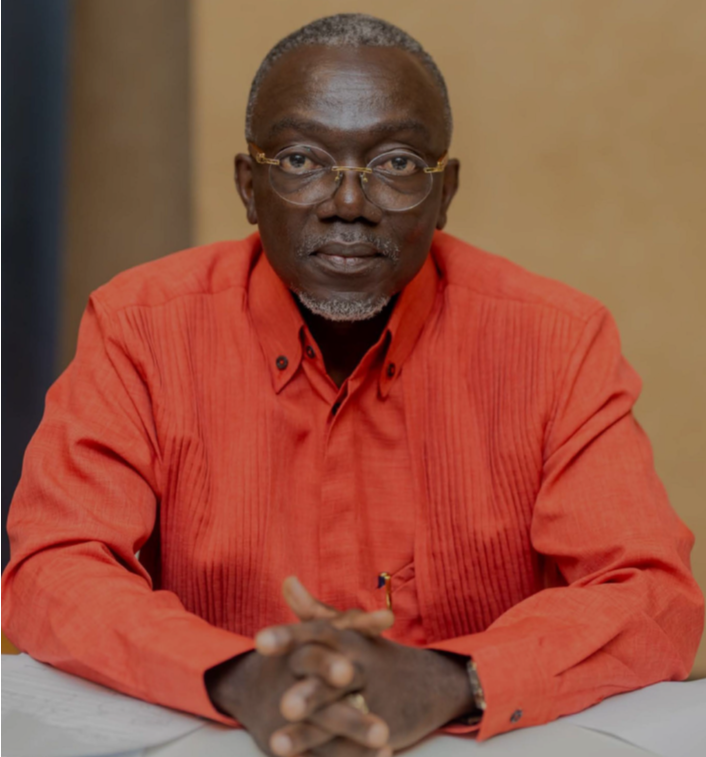
Ing. Professor Douglas Boateng is a pioneering international industrial, manufacturing, and production systems engineer, governance strategist, and Pan-African thought leader whose work continues to shape boardroom thinking, supply chain transformation, and industrialisation across both the continent and globally. As Africa’s first appointed Professor Extraordinaire in Supply Chain Management, he has consistently championed the integration of procurement, value chain, industrialisation strategy, and governance into national and continental development agendas,
Latest Stories
-
Africa’s Road to LA28 begins as Ghana’s Paralympic committee steps up preparations
33 minutes -
Foods you must eat if you have irregular periods
38 minutes -
Fire engulfs storeroom at Apaaso, Kintampo
38 minutes -
Gas tanker accident triggers leak at Fiaso
38 minutes -
BCI urges women to prioritise breast health to reduce cancer cases , deaths in Ghana
38 minutes -
Christians must emulate St Augustine’s virtues — Bishop Kobina Louis
1 hour -
Trassaco, Action Chapel, Caprice and others to experience 8-hour power outage
1 hour -
US deports relative of Afghans who aided military to Africa
2 hours -
Iceland on track to reject EU referendum as counting nears end
2 hours -
Ex-White House teleprompter operator ordered to pay $172,000 for Trump speech bets
2 hours -
At least 37 dead and hundreds evacuated after strike on Kyiv weapons depot
2 hours -
US military families ride ‘roller coaster of emotions’ over six months of Iran war
2 hours -
One dead, several injured, in Swiss shooting incident, police say
2 hours -
Philip Nai: Ghana’s creative industry needs structure, not just talent
2 hours -
Manhunt after woman, 22, killed and five injured in Swiss shooting
2 hours