

Audio By Carbonatix
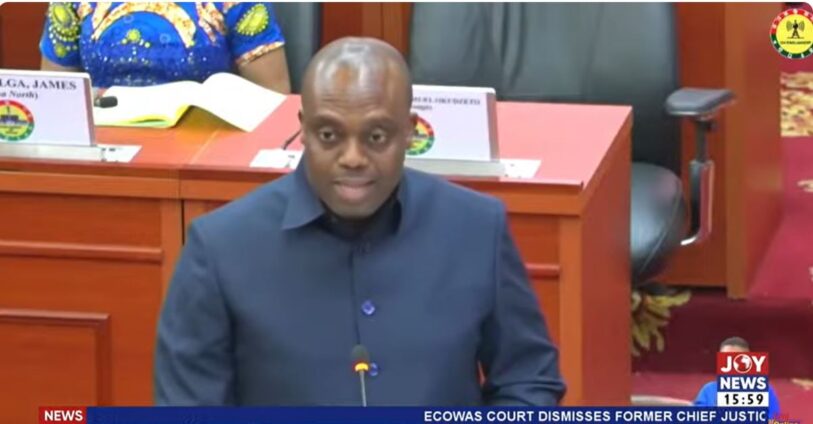
The Deputy Minister of Finance, Thomas Ampem Nyarko, says the indebtedness of the Ghana Cocoa Board (COCOBOD) to suppliers of fertilizers and agrochemicals between 2021 and 2024 forms part of a wider financial challenge inherited within the cocoa sector.
Speaking on the floor of Parliament, Mr. Ampem Nyarko explained that the sector is currently dealing with significant fiscal pressures stemming from procurement commitments that exceeded budgetary allocations in previous crop seasons.
He revealed that for the 2021–2022 crop year, a total of $455.7 million was procured for agrochemicals, while only $312.8 million had been provisioned in the budget for the same period.
According to him, the situation worsened as additional procurement continued in subsequent years despite outstanding payments to suppliers.
“The agrochemicals procured for the 2021–2022 season were not paid for, but COCOBOD continued to procure additional quantities in 2022, 2023, and 2024, all of which were above the budgeted amount in each year,” he stated.
The Asuogyaman MP further disclosed that in the 2023–2024 season alone, while $76.5 million was budgeted, COCOBOD contracted about $668.6 million worth of agrochemicals, raising concerns about fiscal discipline and procurement planning within the cocoa sector.
Mr. Ampem Nyarko noted that the mismatch between expenditure and cocoa output performance has also raised questions among stakeholders.
“While procurement of fertilizers and agrochemicals was increasing, cocoa production was declining, raising questions as to what these fertilizers and agrochemicals were used for,” he said.
He, however, stressed that "COCOBOD’s indebtedness to agrochemical suppliers is part of inherited structural and financial challenges affecting the cocoa sector, rather than an isolated issue."
According to him, government is currently implementing reforms aimed at restoring the financial stability of the cocoa industry and ensuring that COCOBOD meets its obligations in a sustainable manner.
“COCOBOD is approaching the issue systematically. The strategy is to restore its financial capacity so that it can honour its obligations to all creditors, including agrochemical dealers, in a sustainable and transparent manner,” he explained.
According to him, “Government is fixing the system so that suppliers are paid not once, but always, predictably, transparently, and on time,” he assured.
The Deputy Finance Minister emphasised that ongoing reforms are intended to address long-standing inefficiencies and ensure the long-term sustainability of the cocoa sector.
The comments come amid increasing scrutiny of COCOBOD’s financial position and growing calls for tighter oversight of procurement practices in Ghana’s cocoa industry.
Latest Stories
-
Radiation link in flight attendant’s breast cancer, French court finds
1 second -
GARID announces Dr Busia Highway traffic diversions for Kaneshie drainage project
2 minutes -
Trump-backed Darline Graham wins Republican Senate primary in South Carolina
4 minutes -
Man City to make offer for £120m-rated Fernandez
5 minutes -
14 newborn babies killed in hospital fire in Pakistan’s capital
6 minutes -
Frankfurt Airport malaria outbreak claims worker’s life as five others treated
7 minutes -
GARID to build 10m-wide underground drain in Kaneshie from September 7
8 minutes -
MTTD, AMA city guards to manage traffic during Kaneshie drainage works
11 minutes -
GARID announces Kaneshie traffic diversions as major drainage works begin on September 7
14 minutes -
TrafficTech cameras to target motorists speeding above 50km/h in school zones — Police
16 minutes -
“We may be down, but we are not out” — Boakye Agyarko vows to revive NPP as he files for National Chairman
18 minutes -
TrafficTech to reduce roadside encounters between police and motorists — Police
22 minutes -
Study links unofficial Ghana border crossings to documentation gaps, financial hardship
23 minutes -
TrafficTech to issue court notices to speeding motorists based on camera evidence — Police
23 minutes -
Tricycle, motorcycle operators face arrest after August deadline for reflective stickers
33 minutes