

Audio By Carbonatix
The International Finance Corporation (IFC) has called on family-owned businesses to strengthen succession planning and governance structures to ensure their sustainability and long-term survival.
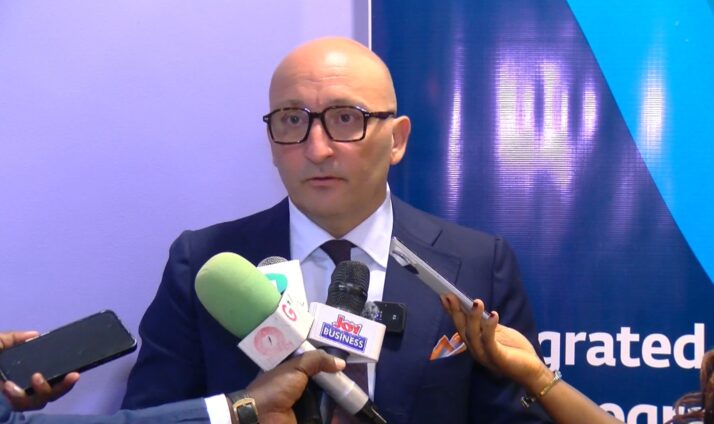
Speaking at the Environmental, Social, and Governance (ESG) Roundtable for Development Partners in Accra, the IFC's Acting ESG Advisory Lead for Africa, Moez Miaoui, warned that many family businesses fail during leadership transitions because successors are often inadequately prepared to take over from founding leaders.
According to him, one of the biggest challenges confronting family enterprises is the lack of deliberate efforts to equip the next generation with the knowledge, experience and leadership capabilities required to manage the business successfully.
"The fact that successors are not well prepared, not well educated about the business and do not have the necessary capabilities is a major challenge," he said. "In many cases, they may have the right educational background, but they do not know the business well enough because they have not been adequately prepared by the family, the business or the current leadership."
Miaoui noted that succession challenges are often compounded by the reluctance of founders and current leaders to relinquish control.
"The other challenge is leaders who are not ready to let go because their identity and the business are one and the same. They find it very difficult to separate themselves from the business, making the transition process particularly challenging," he explained.

He stressed that successful succession requires a structured approach that prepares future leaders while establishing governance mechanisms that support a smooth transfer of leadership and responsibility.
Also speaking at the event, IFC Senior Country Officer, Yewande Giwa, underscored the vital role family businesses play in economic development and job creation across Africa.
She noted that family-owned enterprises are uniquely positioned to contribute to inclusive growth because they often take a long-term view of their impact on communities and future generations.
"About 90 per cent of jobs in Africa come from the private sector, and family businesses are a significant part of that ecosystem," she said.
Giwa explained that unlike many other businesses, family-owned firms tend to focus not only on profitability but also on creating opportunities for their communities and supporting broader economic development.
"When you are a family business, you do not just think about your bottom line. You think about how to influence your community, how to make a difference and how to create more jobs for your immediate family, your extended family and beyond," she stated.
She added that this long-term perspective makes family businesses important partners in efforts to promote economic growth and employment.
"For us at IFC, family governance is very important because we want to see longevity and successful succession. We want to see businesses endure and continue creating value across generations," she said.
The ESG Roundtable for Development Partners brought together leading institutions within Ghana's environmental, social and governance ecosystem, including the World Bank Group, GIZ, KfW, the United Nations Development Programme and other development partners.
The forum served as a platform for stakeholders to discuss strategies for strengthening governance practices, promoting sustainable business growth and enhancing the resilience of enterprises across Ghana and the wider African region.
Latest Stories
-
April 15 ruling brought OSP prosecutions to standstill – Kissi Agyebeng
5 minutes -
The continuity of the self
5 minutes -
Claims OSP has achieved nothing are testable – Kissi Agyebeng
6 minutes -
First National Bank redefines gifting with launch of Investment Gift Cards
9 minutes -
Supreme Court has settled OSP’s prosecutorial mandate – Kissi Agyebeng
10 minutes -
OSP recovered GH¢8.5m, $2m and saved state over GH¢100m through payroll cleanup – Kissi Agyebeng
16 minutes -
World Bank says 56.4% of Ghanaians remain in poverty despite economic growth
19 minutes -
The Inconvenient Truth: The Boardroom is where tomorrow is quietly written or quietly erased
20 minutes -
Personal dislike for OSP leadership behind calls to abolish office – Kissi Agyebeng
20 minutes -
AMA arrests 6 drivers, mates for allegedly charging unapproved fares in Accra CBD
25 minutes -
Attacks on OSP linked to discomfort over its investigative powers – Kissi Agyebeng
25 minutes -
Uefa set to drop Fifa tournament boycott threat
28 minutes -
24-Hour Economy Secretariat partners BOSAG to build Ghana’s outsourcing talent pipeline
29 minutes -
‘Today, I announce the rebirth of the OSP’ – Kissi Agyebeng
30 minutes -
Only 27% of Ghana’s 94,200km road network is paved – World Bank
34 minutes