

Audio By Carbonatix
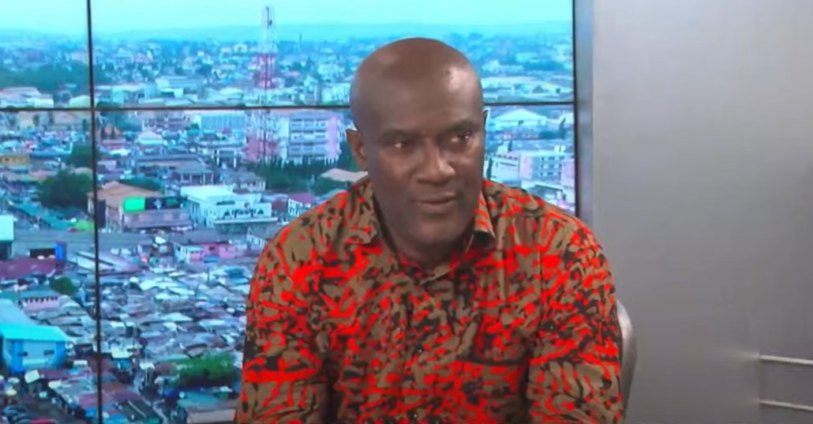
The President of the Ghana Union of Traders' Associations (GUTA), Clement Boateng, has criticised the recent increases in utility tariffs, arguing that the current economic conditions do not justify the adjustments announced by the Public Utilities Regulatory Commission (PURC).
His comment follows PURC’s announcement of its third-quarter tariff review, which raised electricity tariffs by 3.49 per cent and water tariffs by 0.85 per cent.
PURC attributed the latest increase in electricity and water tariffs largely to exchange rate pressures, despite a decline in inflation and stable electricity generation levels.
Speaking in an interview on Joy FM's midday news on Thursday, June 25, Mr Boateng said GUTA is not opposed to tariff reviews in principle, acknowledging that utility service providers require adequate resources to sustain their operations.
However, he maintained that the reasons cited by PURC for the latest increases do not reflect the realities of the current economic environment.
Read also: Exchange rate pressures force utility tariff adjustment despite falling inflation – PURC
"It is not about simply opposing tariff increases because we all know that utility companies need money for their operations. What we are saying is that when you examine the reasons they have provided, the current situation does not support the basis for these increases," he said.
According to him, one of the key justifications cited for the tariff adjustment was the depreciation of the Ghana cedi against major foreign currencies. He argued that the extent of the depreciation was relatively modest and should not have warranted the magnitude of the increase.
"It is true that the exchange rate has experienced some depreciation recently. Between April and May, the average depreciation was about 4.18 per cent. We believe this is insignificant and does not call for an increase in utility tariffs," he stated.
Asked what alternative measures PURC and the utility providers should pursue to address the financial difficulties confronting the sector, Mr. Boateng pointed to operational inefficiencies within the utility companies as the primary source of their challenges.
He cited significant losses within both the Ghana Water Company and the electricity distribution system, attributing them largely to theft, illegal connections and wastage.
Mr. Boateng argued that utility providers should focus on reducing these losses rather than relying on periodic tariff increments to shore up their revenues.
"If you take Ghana Water Company, for instance, they are recording operational losses of between 51 and 52 per cent. In the electricity sector, operational losses are around 32 per cent. These losses arise from theft, illegal connections and wastage within the system," he explained.
Latest Stories
-
DVLA Deputy CEO adjudged overall best student at Ghana Armed Forces Staff College
34 minutes -
IMF urges tighter controls over GoldBod programme amid concerns over BoG losses
51 minutes -
Appointments Committee to vet Zanetor Agyemang-Rawlings today
55 minutes -
GMA strengthens competencies of seafarer examiners, instructors
58 minutes -
‘Crime is crime’ – Mahama Ayariga cautions MPs against shielding politicians from prosecution
1 hour -
IMF cautions Ghana against early return to international capital markets
1 hour -
GoldBod ‘losses’ have helped stabilise Cedi, contain inflation – Mahama Ayariga
1 hour -
NDC formally notifies Speaker of James Agalga’s appointment as Majority Leader
1 hour -
DGPP’s GH¢21.89bn ‘loss’ is accounting adjustment, not cash expense – Sources
1 hour -
Tuba murder: Court adjourns case to September 28, as police prepare to forward docket to AG
1 hour -
Debt restructuring key to Ghana’s economic recovery – IMF
2 hours -
Let’s wait and see – Agalga refuses to take sides on extortion allegation as OSP probe begins
2 hours -
FDA intensifies drive to ensure iodised salt reaches consumers
2 hours -
HTU partners Praise Export to boost student training, employability
2 hours -
Samuel Abu Jinapor proposes independent body to fight galamsey
2 hours