

Audio By Carbonatix
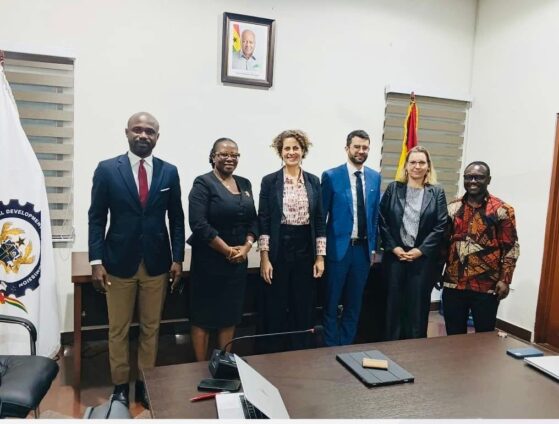
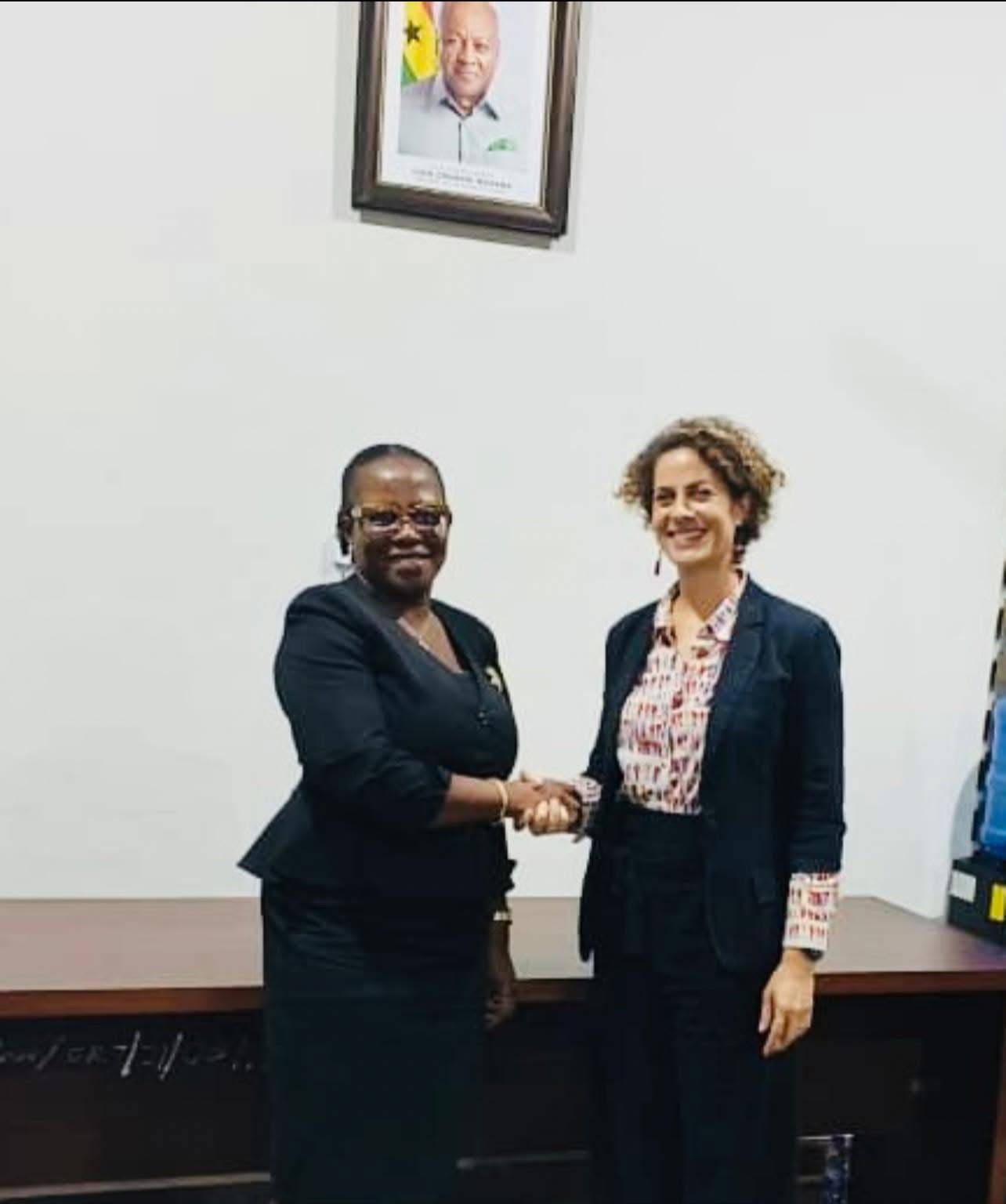
The National Development Planning Commission (NDPC) has held discussions with a delegation from the Agence Française de Développement (AFD) on strengthening cooperation in climate governance, public financial management and sustainable development in Ghana.
The meeting, held on June 24 as part of AFD’s exploratory mission to Ghana, focused on the country’s development priorities, institutional reforms and potential areas for future collaboration.
The discussions also examined opportunities to support climate governance and long-term national development planning.
Speaking during the engagement, the Director-General of the NDPC, Dr Audrey Smock Amoah, highlighted the Commission’s emphasis on data and development indicators in tracking national progress.
She disclosed that the Commission is finalising the results framework for Ghana’s current medium-term national development policy framework to enable institutions to measure performance against established targets.
“Development indicators are identified and agreed upon before the results framework is finalised. The results framework then serves as a comprehensive tool that consolidates all the indicators intended for tracking throughout the implementation period of a development policy or plan,” Dr Amoah said.
She also stressed the need for a long-term development agenda that transcends political cycles, noting that previous initiatives such as Vision 2020, the 40-Year Development Plan, Ghana Beyond Aid, Ghana at 100 and Vision 2057 had faced implementation challenges.
According to her, the country’s consolidated long-term development plan is expected to provide a stable framework to guide successive governments while ensuring periodic reviews of medium-term priorities.
On climate governance, the Director of Research at the NDPC, Mr Richard Tweneboah Koduah, said the existing planning framework supports the integration of climate change considerations into the activities of Ministries, Departments and Agencies as well as local government structures.
He noted that climate-related priorities are increasingly reflected in the national budget and that annual progress reports continue to demonstrate the growing impact of climate change on infrastructure, social services and development outcomes.
“Climate change is recognized as a critical factor that must be addressed to avoid long-term developmental setbacks,” Mr Koduah stated.
He added that the Commission is working with institutions such as the Council for Scientific and Industrial Research (CSIR) to strengthen climate-risk modelling, adaptation planning and national reporting systems.
Speaking on behalf of the visiting delegation, AFD Country Director Ms Clementine Dardy welcomed the alignment between Ghana’s development priorities and the organisation’s areas of support, including energy transition, climate governance, digital governance, natural resource management and infrastructure development.
She reaffirmed AFD’s commitment to supporting Ghana through technical assistance, feasibility studies, grants and other financing instruments, expressing optimism that ongoing discussions with the NDPC would lead to meaningful partnerships in support of the country’s development agenda.
Latest Stories
-
Trump administration moves to impose more than $100,000 fee for H-1B worker visas
1 hour -
Oil prices steady as investors weigh impact of expanded US sanctions against Iran
3 hours -
Trump administration plans to revoke visas of foreigners seeking asylum
3 hours -
US appeals court considers reassigning case from judge over AI use
3 hours -
Trump bought shares in Elon Musk’s SpaceX in June, financial disclosure shows
3 hours -
MTN approves $375 million share buyback after profit rise
4 hours -
Ghana gold buyers went weeks without funds, sources say
4 hours -
Nevada sues to block Trump administration’s Colorado River plan
4 hours -
Tunisian hospital receives 19 bodies after migrant boat sinks
4 hours -
Oil drops more than $2 despite new US sanctions on Iran
4 hours -
Dangote refinery drives seven-fold rise in Nigeria petroleum product exports, EIA says
4 hours -
Zambia closes courts on last day to file election challenge
5 hours -
Nearly three million Teslas recalled in China over hidden door handles
5 hours -
China probes use of formaldehyde to keep cabbages fresh
5 hours -
Veteran Nollywood actor Taiwo Hassan ‘Ogogo’ dies at 65
5 hours