

Audio By Carbonatix
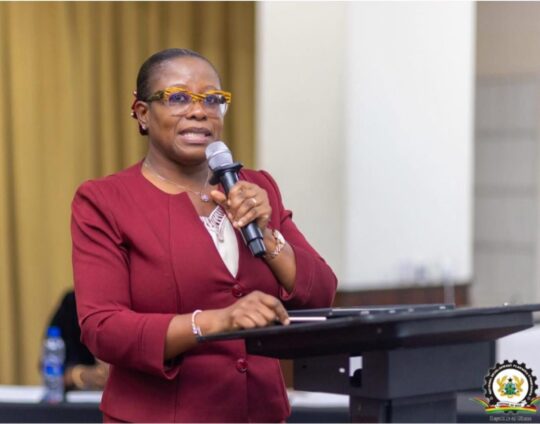
On 23 June 2026, the Director-General of the National Development Planning Commission (NDPC), Dr Audrey Smock Amoah, called on Ghanaians to take personal responsibility for addressing the country's sanitation challenges, emphasising that meaningful transformation begins with individual action.
Speaking at the 5th Executive Breakfast Conversation on Sanitation, organised by World Vision Ghana at the Alisa Hotel in Accra, Dr Amoah stressed that sustainable change requires the active participation of every citizen.
“You are the change. We are all part of the change. Even our children must understand that they, too, are the change,” she stated.
She observed that the persistent sanitation challenges in many communities reflect weaknesses in environmental management and urged institutions to effectively execute their respective mandates to deliver tangible improvements.
Dr Amoah disclosed that all 261 Metropolitan, Municipal and District Assemblies have prepared certified Medium-Term Development Plans for the 2026–2029 period, with sanitation interventions deliberately integrated into the planning process.
She underscored the importance of monitoring, evaluation and accountability, noting that, “People do not simply do what you expect; they do what you inspect.”
She further highlighted the critical role of the Regional Coordinating Councils (RCCs) in coordinating, harmonising and monitoring the implementation of district level development interventions, stressing that effective oversight at the regional level is key to achieving improved sanitation outcomes.
She also commended the RCCs, alongside relevant coordinating institutions, for their efforts in ensuring alignment and effective implementation across districts.
Dr Amoah emphasised that stronger civic responsibility, patriotism and behavioural change must complement institutional reforms to achieve lasting progress.
In her concluding remarks, the Director-General highlighted the importance of coordinated action among ministries, departments and agencies, local authorities, development partners and communities.
Reflecting on her experience working with World Vision in the early 2000s, she recalled how communities attributed significant improvements in schools and social amenities to the organisation's interventions.
“We must pool our resources and efforts together to ensure that we deliver on key indicators, particularly in water and sanitation,” she said, adding that good governance should be reflected in cleaner, healthier and more sustainable communities across Ghana.
Earlier, the Country Director of World Vision Ghana, Dr Tina Mukunda, welcomed participants and commended the Government's decision to make sanitation a key performance indicator for Metropolitan, Municipal and District Chief Executives, as well as its commitment to allocate 10 per cent of the District Assemblies Common Fund to environmental sanitation initiatives.
Quoting Dr Martin Luther King Jr, she reminded participants that, “Our lives begin to end the day we become silent about things that matter.” She described Water, Sanitation and Hygiene (WASH) as “a game changer, the foundation upon which healthy families, thriving communities and prosperous nations are built,” and urged all stakeholders to seize the opportunity to accelerate progress towards a cleaner, healthier and more resilient Ghana
Latest Stories
-
Bond market: Activity weakens as turnover fell by 58%
54 seconds -
Ghanaian defender Oscar Naasei to join Real Madrid
5 minutes -
Interior Ministry introduces TraffiTech to track and penalise road traffic offenders
16 minutes -
Rising demand for T-bills to be sustained, yields to compress further
18 minutes -
Palmer and Rodgers star in Chelsea win over Fulham
53 minutes -
Mahama to headline 7th Africa Sustainability Report Summit
56 minutes -
UN peacekeepers killed in an ambush in South Sudan
1 hour -
AmCham Ghana, GRA hold U.S.-Ghana dialogue on tax transparency and business confidence
2 hours -
Today’s Front pages: Tuesday, August 25, 2026
2 hours -
Mahama Ayariga to face Appointments Committee vetting on Thursday
2 hours -
Mahama’s announcement of Agalga as Majority Leader did not follow procedure – Bagbin
2 hours -
Zoomlion begins eight-day disinfection exercise across 22 assemblies in Central Region
2 hours -
DVLA Deputy CEO adjudged overall best student at Ghana Armed Forces Staff College
3 hours -
IMF urges tighter controls over GoldBod programme amid concerns over BoG losses
3 hours -
Appointments Committee to vet Zanetor Agyemang-Rawlings today
4 hours