

Audio By Carbonatix
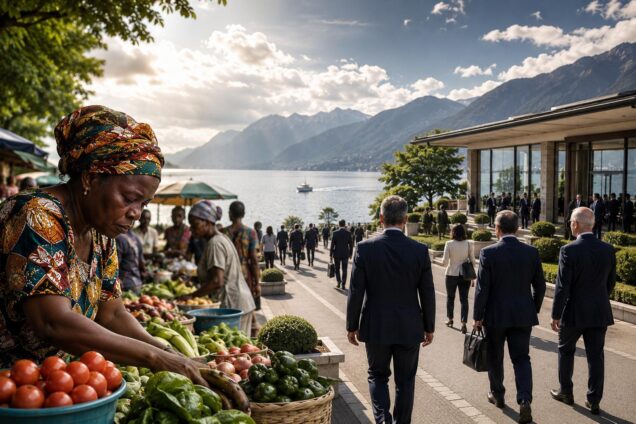
From a market stall in Ghana to the shores of Lake Geneva, the effects of global decisions often reach communities far removed from the rooms where those decisions are made.
As leaders prepare to gather for the 2026 G7 Summit in Évian-les-Bains, the central question is not only how to respond to today’s crises, but also how to navigate an era marked by economic uncertainty, geopolitical tensions, rapid technological change, and climate pressures.
Several years ago, while reporting on the rising cost of living in Ghana, I met a market trader frustrated by soaring prices and shrinking incomes. She had little interest in economic theory or international diplomacy. Instead, she asked a simple question:
“Why does life become harder when decisions are made so far away from us?”
Her question has stayed with me because it reflects a reality that extends far beyond any single marketplace. Over the years, I have interviewed entrepreneurs navigating volatile markets, graduates uncertain about the future of work, and families adapting to rising living costs. Their experiences differ, yet they point to the same conclusion: local lives are increasingly shaped by global developments.
That is why the G7 Summit matters.
The meeting in Évian-les-Bains comes at a pivotal moment for the international community. Among the issues expected to feature prominently are economic resilience, international security, artificial intelligence, the energy transition, climate action, trade, and the future of global cooperation. While these discussions take place among the world’s leading industrialised democracies, their implications often extend far beyond the countries represented.
Power today is no longer defined solely by military strength or economic size. Increasingly, influence is shaped by innovation, technological leadership, resilient economies, secure supply chains, and the ability to forge effective international partnerships. Artificial intelligence is transforming industries faster than many institutions can adapt, while cybersecurity, energy security, and climate-related risks continue to reshape national priorities.
The question facing leaders is not whether the world is changing. It is whether international cooperation can keep pace with that change.
History shows that periods of profound technological and geopolitical transformation place extraordinary pressure on institutions designed for a different era. The discussions in Évian are therefore about more than managing immediate crises. They are also about how governments adapt international cooperation to an increasingly interconnected world.
For Africa, these conversations are particularly significant. Home to one of the world’s youngest populations and several of its fastest-growing economies, the continent is increasingly central to discussions about investment, technology, trade, and sustainable development. Decisions on global finance, digital governance, energy, and economic cooperation can shape opportunities far beyond the G7.
As a journalist, I have learned that the most important international stories are rarely about the meetings themselves. They are about the choices made behind closed doors, the priorities that shape public policy, and the impact those decisions have on people who may never sit at the negotiating table.
At a time when misinformation spreads rapidly and trust in institutions is strained, journalism has an essential role to play. It cannot solve global challenges, but it can help citizens understand them. It provides context amid confusion, scrutiny where there is power, and a vital link between international affairs and everyday life.
When leaders gather in Évian-les-Bains, headlines will focus on speeches, negotiations, and diplomatic symbolism. Yet the summit’s significance will ultimately be measured not only by its final communiqué, but also by whether its discussions help shape a more stable, cooperative, and resilient international order.
For millions of people far from the shores of Lake Geneva—including market traders, entrepreneurs, students, and workers—the consequences of global decisions are never abstract.
They are lived. That is why the G7 Summit 2026 matters.
Latest Stories
-
DVLA to end third-party number plates; begins local production
2 hours -
Shatta Wale: ‘I don’t have any best-performing Mahama appointee’
2 hours -
John Dumelo joins corporate Ghana at upcoming JoySports Invitational Tournament 2026
3 hours -
Preview: JoySports Invitational Tournament 2026 promises a day of sport, fitness and big prizes
3 hours -
Shatta Wale endorses Mahama’s vision, questions appointees
3 hours -
“Gov’t owes me GH¢5m” — Shatta Wale fumes over “total disrespect”
4 hours -
NSMQ 2026: Accra Academy books quarter-final spot, sends Holy Child packing after fierce battle
4 hours -
NSMQ 2026: University Practice stages late comeback to retain seed as Presby SHS, Adeiso suffer one-point heartbreak
4 hours -
The Luckiest CEO Adutwum eyes back-to-back CEO shootout crown at JoySports Invitational
4 hours -
NSMQ 2026: Tie-break agony as Bishop Herman steals quarter-final spot from Asanteman SHS
4 hours -
Ahmadiyya elders urged to lead moral crusade in digital age, warns against rising religious tensions
5 hours -
Baptist Church equips youth to navigate AI and digital era with Biblical values
5 hours -
When giving life becomes a matter of life and death: Ghana’s maternal mortality crisis
5 hours -
SankofaFresh uses technology to cut post-harvest losses and connect farmers to markets
6 hours -
Democracy Is Not For Sale: EC Deputy Director warns against money, bribery in elections
6 hours