

Audio By Carbonatix
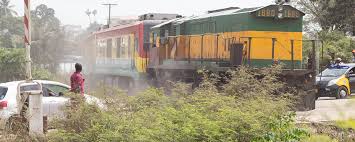
The Minority Transport Policy Committee of the New Patriotic Party (NPP) has questioned the government's acquisition of two refurbished diesel locomotives and 20 freight wagons, calling for full disclosure of their age, cost, operational history and long-term value to Ghana's railway sector.
In a statement issued on June 25, the Committee said that although it supports investments aimed at revitalising rail transport, improving freight movement and reducing pressure on the country's road network, the government has failed to provide sufficient information for Ghanaians to properly assess the procurement.
The Committee described the locomotives as "toys fit for the museum," arguing that transparency is essential to determine whether the acquisition represents value for money.
According to the Committee, available information indicates the locomotives are refurbished British Rail Class 56 diesel-electric engines originally manufactured in the United Kingdom between 1976 and 1983 and previously operated by Colas Rail.
It noted that only a small number of the original fleet remains in operation worldwide.
"While refurbished locomotives can still provide useful service life when properly maintained, Ghanaians deserve full transparency regarding the age, operational history, refurbishment scope, expected remaining service life, and total lifecycle costs associated with these assets," the statement said.
The Committee acknowledged that the Class 56 locomotives were designed for heavy freight operations and had earned a reputation as powerful engines, but argued that equipment built more than four decades ago would inevitably require higher maintenance and operating costs than modern locomotives.
The Minority also questioned the sustainability of maintaining the locomotives, noting that the withdrawal of most Class 56 units from mainstream service internationally could make spare parts increasingly difficult and expensive to source.
It called on the government to disclose Long-term spare parts supply arrangements; whether critical replacement components have been procured; existing technical support agreements with the refurbishment contractor; and plans to train Ghanaian engineers and technicians to maintain the locomotives locally.
The Committee contrasted the acquisition with the procurement of Diesel Multiple Units (DMUs) from Polish manufacturer PESA under the previous NPP administration.
It said those trains were supplied as newly manufactured rolling stock and included a five-year maintenance and technical support package designed to ensure operational reliability while building local technical capacity.
"The key lesson is that successful railway investment extends beyond the purchase price of equipment. Long-term operational sustainability, maintenance support, training, and technology transfer are equally important considerations," the statement noted.
Beyond the locomotives themselves, the Committee questioned whether the Tema-Mpakadan railway corridor is adequately prepared for sustained freight operations.
It cited concerns over the availability of cargo-handling infrastructure, including mobile harbour cranes, reach stackers, container handling systems and bulk cargo loading facilities at the Mpakadan railhead.
The Committee also called on the government to publish freight demand projections, off-take agreements and revenue forecasts, arguing that railway investments can only be commercially viable if sufficient cargo volumes are guaranteed.
The Minority further questioned the government's commitment to broader railway expansion, pointing to what it described as a relatively modest allocation of about GH¢70 million to the railway sector in the 2026 Budget.
According to the Committee, the allocation appears inconsistent with the government's stated ambitions to expand the country's rail network, including the development of the Western Railway Line.
While reiterating its support for genuine efforts to modernise Ghana's railway sector, the Committee maintained that transparency, sustainability and commercial viability should underpin every procurement decision.
Latest Stories
-
AU Chairperson reaffirms commitment to global African unity
4 minutes -
Air Pollution in Accra is not random; it is a burden carried by the poor
10 minutes -
GEXIM Bank grows loan portfolio to GH¢1.56bn as equity hits GH¢2.1bn in 2025 – SIGA Report
28 minutes -
Ghana Shippers’ Authority grows surplus by 272% as assets reach GH¢979.92m
36 minutes -
Government designates 13 blocked-out areas for small-scale mining to curb illegal mining
37 minutes -
Number of advertised jobs increased significantly in half-year 2026 – BoG
37 minutes -
GAFM demands retraction from GTEC over ‘unrecognised universities’ listing
43 minutes -
Saltpond residents renew call for return of Founders’ Day celebrations
47 minutes -
Consumer spending records mixed performance in 5-months of 2026, but manufacturing activities improved – BoG
50 minutes -
Passenger arrivals at airport increased by 3.7% in 5 months of 2026
54 minutes -
NSMQ 2026: St. Augustine’s College reach third straight semifinal after seeing off Aburi Girls, St. John’s Grammar
58 minutes -
Re: Mahama backs crackdown on airport workers begging visitors for tips
58 minutes -
Photos: 6th Akwasidae Festival in the U celebrates Asante heritage and Ghanaian unity
59 minutes -
Ghana, India explore armwrestling collaboration as Golden Arms prepare for World Armwrestling Championship in New Delhi
1 hour -
What Is Wrong With Us: We sign off on value for money before we have even defined it
1 hour