

Audio By Carbonatix
The government has announced plans to recruit 550 Arabic teachers over the next several months to help address the critical shortage of instructors in Islamic schools across the country.
The first batch of 50 teachers is expected to be recruited by the end of July, while an additional 500 permanent Arabic teachers will be employed through the Ghana Education Service in January 2027.
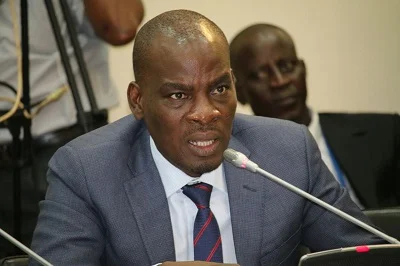
The announcement was made by the Minister for Education, Haruna Iddrisu, during a meeting in Accra with a delegation from the Conference of Regional Chief Imams.
According to a statement issued by the Conference and copied to the Ghana News Agency, the Minister assured the delegation of the government's commitment to strengthening Islamic education and improving teaching and learning in Islamic basic schools.
He also reaffirmed the government's readiness to work closely with the Conference of Regional Chief Imams and the Islamic Education Unit to improve access to quality Islamic education nationwide, while commending the Conference for its continued engagement with the government on issues affecting the Muslim community.
The delegation was led by the Chairman of the Conference of Regional Chief Imams, Sheikh Abdul Rashid Iddi, and included Regional Imams of Ahlussunna Wal-Jama'a, Regional Imams of the Ghana Muslim Mission, representatives of the Islamic Education Unit, and officials from the Office of the National Chief Imam.
Explaining the purpose of the visit, Sheikh Rear Admiral Muniru Tahiru (Rtd) said the meeting was initiated at the request of the National Chief Imam, Sheikh Dr Osman Nuhu Sharubutu, over growing concerns about the shortage of Arabic teachers and its impact on the quality of Islamic education in Ghana.
During the discussions, General Manager of the Islamic Education Unit, Abdul Karim Bapuni, disclosed that Ghana currently has 1,299 Islamic basic schools but requires about 3,033 Arabic teachers to adequately serve pupils.
He revealed that only 706 Arabic teachers are currently on the government payroll, leaving a nationwide deficit of about 2,512 teachers. Mr Bapuni also highlighted other challenges confronting Islamic schools, including the absence of a standardised Arabic curriculum and textbooks at the primary level, inadequate resources for monitoring and supervision, and poor office infrastructure, all of which continue to affect educational standards and learning outcomes.
Latest Stories
-
Internet banking transactions hit GH¢383.82bn in 2025
35 minutes -
NAIMOS arrest 10 illegal miners, seize equipment
41 minutes -
Total value of payment transactions increased to GH¢9.45trn in 2025, but cheque transactions fall
44 minutes -
Misinformation, deepfakes pose serious threat to Ghana’s democratic stability – NCCE
47 minutes -
Mahama congratulates Hichilema on his re-election as President of Zambia
52 minutes -
Media freedom is a security strategy, not a security threat – Kwakye Ofosu
59 minutes -
Interior Minister inspires schoolchildren to persevere to pursue academic laurels
1 hour -
Nigeria’s economy expands by 4.4% in Q2, lifted by oil and non-oil sectors
1 hour -
UN committee says countries must consider reparations for slave trade
2 hours -
Oil prices rise as latest fighting resurrects Middle East supply disruption risks
2 hours -
Kenya airport staff strike delays thousands of passengers
2 hours -
OSP Act lacked checks to rein in Special Prosecutor, Kpebu says
2 hours -
Public trust crisis around Special Prosecutor is fueling attacks on OSP – Kpebu
2 hours -
South African airline defends low-altitude aerial stunt over packed stadium
3 hours -
Special Prosecutor needs adult supervision – Martin Kpebu
3 hours