

Audio By Carbonatix
The Israeli government has released a comprehensive cache of previously classified documents detailing the 1976 military rescue of over 100 hostages held in Uganda. This archive provides an unprecedented look into the deliberations of then-Prime Minister Yitzhak Rabin’s government during a crisis that has since become a cornerstone of Israeli security lore. The release arrives ahead of the operation’s 50th anniversary on July 3 and as the nation continues to navigate the profound trauma of the October 7, 2023, Hamas attack, which saw 251 people taken into captivity in Gaza.
The crisis at Entebbe Airport
On June 27, 1976, Palestinian and German militants hijacked an Air France flight travelling from Tel Aviv to Paris after a stopover in Athens. After a brief detour in Libya, the aircraft was forced to land at Entebbe Airport in Uganda. Backed by the regime of President Idi Amin, the hijackers—comprised of members from the Popular Front for the Liberation of Palestine and West Germany’s Revolutionäre Zellen—demanded the release of prisoners held in multiple countries. They warned they would start killing hostages if talks had not been delivered by their self-imposed deadline.
The newly public files contain transcripts of cabinet sessions and ministerial meetings, offering a view of a government operating under intense pressure. In one early session, Rabin informed his ministers of the hijacking. He stated, "It appears the plane has been hijacked," and added that he intended to hold France accountable. When his bureau chief, Eli Mizrahi, suggested updating the cabinet secretary, Rabin responded, "There is no need for that. My intention is to place the French government as the party responsible for the fate of Israelis flying on Air France and not to release the French government from that responsibility."
Weighing negotiation against force
While popular history often frames Entebbe as a swift rejection of negotiations, the documents reveal a more complex, two-pronged strategy. The government initially maintained a strict public policy against bargaining with militants. However, as the standoff stretched across six days and pressure from families mounted, Israeli leaders became increasingly flexible.
The archives include memos that highlight the urgency of the moment. One document from Rabin’s crisis team noted, "The zero hour is approaching … We believe that a supreme effort must be made and break the ultimatum." Officials simultaneously explored diplomatic channels, including conversations between Colonel Baruch Bar-Lev and Idi Amin, while finalising blueprints for a high-risk long-range military strike. The military prepared to fly commandos thousands of miles over multiple hostile territories to launch a nighttime raid.
The rescue and its aftermath
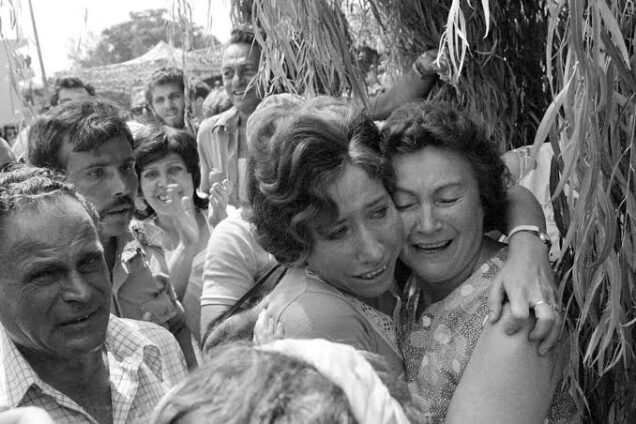
The final operation lasted less than an hour. Commandos stormed the terminal, killing all the hijackers and dozens of Ugandan soldiers. All but three of the hostages were saved, though the raid claimed the life of Lieutenant Colonel Yonatan Netanyahu, the brother of current Prime Minister Benjamin Netanyahu.
For many hostages, the experience was harrowing. The documents include an interview with survivor Yitzhak David, who described the separation of Israeli and non-Israeli passengers as a moment that evoked deeply painful memories of his experience as a Holocaust survivor. Despite the tactical success of the mission, which was widely celebrated as a triumph, the government remained cautious about the implications for future security.
Rabin provided a sobering assessment in one of the newly released memos. He wrote, "Let us not deceive ourselves. It was an extraordinary operation and achievement. However, the problem is not over. Terrorism continues to operate. What other problems terrorism will pose to us and what lessons we must learn from this matter, it is too early to say. We have finished one battle, but the war continues."
Historical context and global scrutiny
The release features thousands of pages of material, including 26 recorded telephone calls, diplomatic cables, and correspondence regarding the subsequent United Nations Security Council debates. The cache also includes letters from world leaders and private citizens sent to Rabin’s office in the aftermath of the raid. Additionally, the collection contains photographs whose copyright restrictions have now lapsed.
The operation drew immediate international rebuke at the time. Idi Amin and the Organisation of African Unity, the predecessor to the African Union, criticised the raid. They viewed the intervention as a violation of Uganda’s sovereignty during a period when the state claimed to be negotiating for the release of the captives.
A legacy of complex security decisions
By making these records public, the Israeli State Archives provide a detailed historical record of how a nation balances the immediate necessity of saving lives with the broader, persistent challenges of national security. The documents illustrate a government that was forced to pivot between diplomacy and military intervention, ultimately deciding that the risk of a long-range rescue was the only viable path to securing the safety of its citizens.
The 50-year-old files serve as a poignant reminder that the dilemmas faced by policymakers in 1976 continue to echo in the contemporary security challenges of the Middle East, highlighting the enduring tension between state-level diplomacy and the imperative to protect vulnerable citizens. Ultimately, the declassified record underscores a fundamental truth of statecraft: while specific military operations may resolve immediate crises, the broader conflict often persists, requiring a continuous and evolving strategic response from those in leadership.
Latest Stories
-
“We are one house – let’s settle this at home” – Atomaase Royal family calls for unity, rallies behind Twafohene
2 hours -
The Missing Middle and the Overlooked Small: Why Ghana Must Serve Both the ‘S’ and ‘M’ in MSME’s
3 hours -
Mahama returns from Angola after AU extraordinary summit
3 hours -
Ghana qualifies for quarterfinals of Africa Volleyball Nations Cup after beating Zambia
3 hours -
WAFU B WCLQ: Ampem Darkoa Ladies come from behind to beat Edo Queens
4 hours -
Photos: National Youth Authority Festival
4 hours -
Bawumia commissions St Jude’s Catholic Church he funded to completion at Weija
4 hours -
Government defends new beer exercise rates; sliding scale has not been abolished
4 hours -
Bolgatanga Assembly denies blanket ban on events beyond 8pm
4 hours -
Photos: Ghana Immigration Service removes 1,055 street beggars from Accra, Kumasi streets
4 hours -
‘He always comes to our aid’ – Fr. Campbell recounts Bawumia’s support for Church, poor
4 hours -
Remittances drop marginally year-on-year to US$3.65bn in half-year 2026
5 hours -
T-bills: Government exceeds target by 139%, interest rates tumble
5 hours -
Why Chelsea need more than a new goalkeeper to be title challengers
5 hours -
Outlook of Ghana’s external sector remains positive for second-half of 2026 – BoG
5 hours