

Audio By Carbonatix
The Greater Accra Resilient and Integrated Development (GARID) Project has had its implementation period extended to 2027 following additional financing from the World Bank, the project’s coordinator has confirmed.
Speaking on Joy FM’s Super Morning Show, GARID Project Coordinator Ohene Sarfoh said the extension follows Ghana’s successful bid for additional funding to expand the scope of the programme.
“We were going for additional financing, [and] the project period was extended to 2027,” he said.
He explained that the additional financing amounts to $150 million, approved in 2023, on top of the project’s original funding envelope.
Dr Sarfoh noted that the project’s total envelope stands at $285 million, although $65 million was earlier reallocated to support Ghana’s COVID-19 response, leaving a reduced core allocation for flood and drainage works before the additional funding was approved.
Expanded timeline and scope of works
The extension means the project will now run two years beyond its original 2025 completion date.
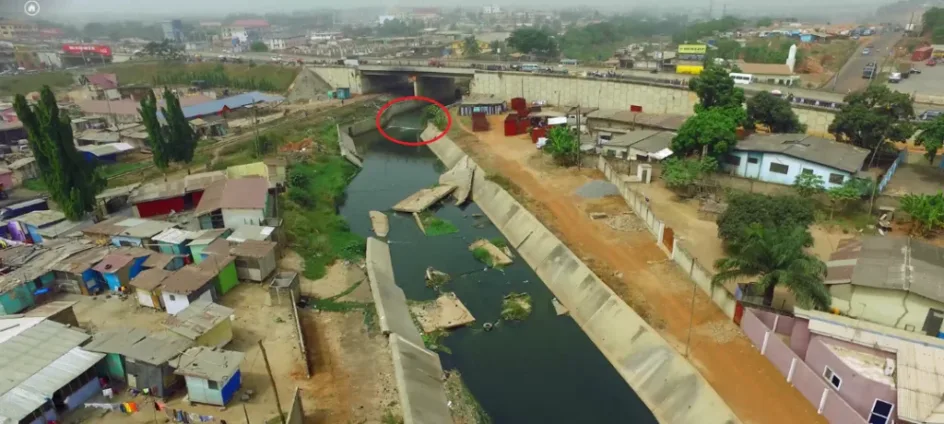
Dr Sarfoh said the longer timeline reflects the scale and technical complexity of ongoing works, including dredging of the Odaw River, widening of major drainage channels, and addressing infrastructure bottlenecks such as bridges that restrict water flow.
He added that the project has now received approval to proceed with previously delayed contracts and is advancing procurement processes for additional works.
Funding and disbursement status
World Bank records show that the additional financing agreement was signed on June 27, 2024 and has since become effective.
As of September 2024, total disbursement stood at US$127.1 million, representing 36.3 percent of total project financing and 63.6 percent of the original credit. The original credit is also reported to be 93.5 percent committed.
Flood context
The extension comes at a time when Accra continues to face recurrent flooding.
Heavy rains on June 28 and 29, 2026, submerged several parts of the capital, affecting major roads and low-lying communities. President John Dramani Mahama indicated that preliminary estimates showed rainfall levels of about 140 millimetres, with at least three deaths reported in Alajo following electrocution incidents linked to floodwaters.
The GARID Project remains Ghana’s flagship urban resilience programme, developed in response to the 2015 Accra floods and fire disaster, and designed to strengthen flood control, drainage systems, waste management and climate resilience across the Greater Accra Region.
With the extension now confirmed, attention is expected to remain on whether the expanded timeline will accelerate delivery of critical infrastructure needed to reduce the capital’s recurring flood risks.
Latest Stories
-
Central Regional Minister lauds Gomoa Central Assembly for effective utilisation of Common Fund
3 minutes -
What must gov’ts do to make food systems drive job creation in Africa? – Fareeda Mustapha asks Rwanda’s Kagame
7 minutes -
Gender Minister calls for equitable gender roles to support girls’ development
8 minutes -
Prioritise rural businesses in Women’s Bank – NETRIGHT urges gov’t
14 minutes -
Guinea backs Morocco’s Sahara autonomy plan as ‘sole solution’ to dispute
17 minutes -
NDPC, Youth Empowerment Ministry collaborate to mainstream youth into National Development Planning
19 minutes -
Mahama calls for rebranding of Ghanaian football
25 minutes -
Emeritus Prof John Bright Kobla Aheto, Esq
28 minutes -
GTA CEO honoured at Africa Brain Bank Summit and Awards
31 minutes -
CHRAJ urges stakeholder collaboration, intensified public campaign
36 minutes -
$350m project to end Weija Dam flooding to commence this year
41 minutes -
24-Hour Economy’s job creation push yet to gather speed – Nii Moi Thompson
46 minutes -
Why I rejected political offers that could have made me billionaire – Omotola Jalade
1 hour -
Singer Davido sternly warns those trying to move like him
1 hour -
Davido reveals secret bond between Dangote and his family
1 hour