

Audio By Carbonatix
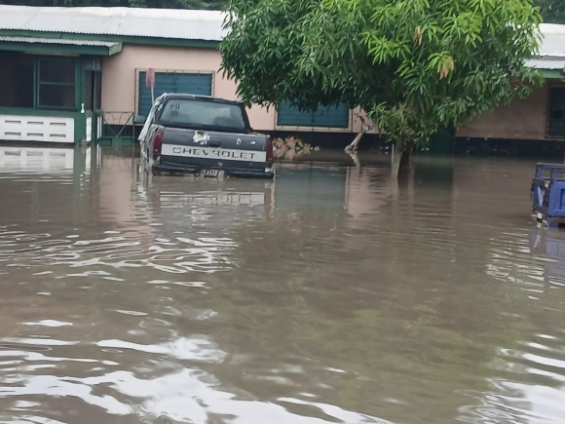
The Greater Accra Resilient and Integrated Development (GARID Project) has raised fresh concerns over persistent flooding in Accra, warning that newly constructed drainage systems are being filled with refuse shortly after rainfall, undermining ongoing government investments in flood control.
Communications Specialist for the project, Philip Dornyo, says the situation highlights a growing behavioural challenge among residents, despite years of investment in drainage infrastructure aimed at reducing flood risks in the capital.

Speaking during the fourth edition of the Loud and Green XSpaces on JoyNews’ X platform, Mr Dornyo said engineers continue to encounter large volumes of waste in drains immediately after rainstorms.
“Government has been making a lot of effort… But one thing that I’ve noticed is that no matter what government does, especially when it comes to the construction of the drains, people pack their solid waste, wait for the rain, and as soon as the rain sets in, they dump that solid waste into the drains,” he said.
He explained that this practice obstructs water flow and contributes directly to recurring floods in several parts of Accra, even in areas where drainage works have recently been completed.
According to him, recent inspections at Kaneshie revealed significant accumulation of refuse in newly constructed drains following rainfall events.
“The heap of solid waste that came when the first rain actually occurred was mind-boggling,” he added.
Mr Dornyo noted that GARID was established following the June 3 flood disaster to strengthen flood resilience within the Odaw River Basin, with support from the World Bank. The project is currently implementing drainage works across flood-prone communities including Kaneshie, Achimota, Bubuashie and Akweteyman, spanning 17 metropolitan, municipal and district assemblies in Greater Accra.
However, he stressed that engineering solutions alone cannot resolve Accra’s flooding challenges if poor waste disposal practices continue.
“Part of the issue is that all these solid waste make it difficult for the free flow of water, and the result is what we are seeing in the city,” he said.
The warning comes as Accra continues to grapple with seasonal flooding, with authorities repeatedly citing both infrastructure gaps and human behaviour as key contributing factors.
GARID says long-term flood prevention will require a combination of improved drainage systems and stronger public discipline in waste management, as government efforts risk being reversed by illegal dumping habits immediately after rainfall.
Latest Stories
-
WAFU B WCLQ: Ampem Darkoa Ladies thrash Dynamique FC to reach final
18 minutes -
Chief Justice should avoid partisan political arena – Prof Kwaku Asare
22 minutes -
GMTF Administrator hails Mintah Akandoh’s support as Fund marks first year
30 minutes -
GPHA honours 410 staff for outstanding service
44 minutes -
BoG slashes September FX support to $500m as GoldBod boosts dollar supply
48 minutes -
GNFS rolls out automated fire compliance system
50 minutes -
SOE profit at GH¢19.8bn: I call it a miracle, but it’s not operational efficiency – Dr Atuahene
52 minutes -
SHS violence: Government must review discipline policy – IFEST
60 minutes -
Nana Akomea leads NPP First Vice Chairman race in new poll
1 hour -
Ato Forson begins groundwork for Mahama’s $10bn New Economy agenda
1 hour -
SHS violence: Peter Anti demands intelligence-led security in schools
1 hour -
‘Presidents can’t have unfettered powers’ – Sophia Akuffo
1 hour -
Kwame Agbodza cuts Wenchi-Bole road contracts by 25km over slow work
1 hour -
Ghana’s borrowing costs plunge as inflation eases sharply – World Bank
1 hour -
Unnecessary appeals delaying justice – Sophia Akuffo calls for tighter Supreme Court limits
1 hour