

Audio By Carbonatix
Real estate professionals across Ghana have been urged to strengthen due diligence measures and uphold ethical standards to prevent the sector from being exploited for money laundering and other illicit financial activities.
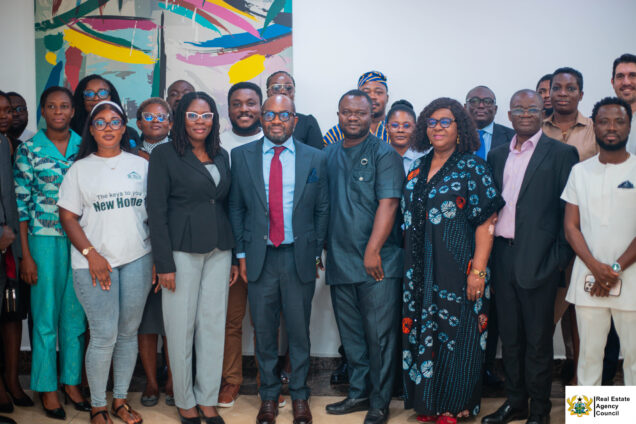
The call was made at a one-day workshop organised in Accra on Tuesday, June 30, by the Global Financial Integrity (GFI) in collaboration with the Real Estate Agency Council (REAC).
The event brought together brokers, property agents, developers and mortgage service providers to discuss the growing risks of illicit financial flows (IFFs) within the country's real estate sector and the collective responsibility required to address them.
Speaking at the opening ceremony, the Acting Chief Executive Officer of the Real Estate Agency Council, Mr Emmanuel Jeffery, described the real estate industry as a critical pillar of Ghana's economic development.
"The real estate sector occupies a strategic position within Ghana's economy. Beyond providing housing and facilitating investment, it contributes significantly to economic growth, employment creation and wealth generation," he said.
He, however, warned that the sector's attractiveness to legitimate investors also makes it susceptible to criminal abuse.
"However, the sector's attractiveness to legitimate investors also makes it vulnerable to abuse by persons seeking to conceal or legitimise proceeds derived from unlawful activities," he added.
Mr Jeffery noted that the workshop provided an important platform for stakeholders to reflect on their responsibilities, share experiences and identify practical measures to protect the integrity of the industry.
"Today's dialogue provides an important opportunity for us to reflect on our collective responsibilities, share experiences, discuss emerging risks, and identify practical measures that will enable real estate professionals to effectively contribute to the fight against illicit financial flows," he stated.
He challenged participants to examine their role within the sector.
"The question before us is simple yet profound: Are we gatekeepers protecting the integrity of the real estate sector, or are we unknowingly creating opportunities for illicit financial activities?
"The answer will depend on our commitment to due diligence, transparency, ethical conduct, and compliance with the laws that govern our profession," he emphasised.
In an interview after the event, the Manager of Compliance at the Financial Integrity Centre, Madam Mary Shireen Ofosu, underscored the importance of the workshop, noting that the real estate industry remains a key target for money laundering activities.
She explained that criminals often exploit property transactions as a means of disguising illicit wealth and integrating illegally acquired funds into the formal economy.
According to her, strengthening awareness among industry players is crucial to preventing such practices and safeguarding public confidence in the sector.
Madam Ofosu also advised prospective property buyers and the general public to transact only with licensed real estate operators to avoid becoming victims of fraud or inadvertently participating in unlawful activities.
She stressed that greater transparency and compliance with regulatory requirements would help reduce vulnerabilities within the industry and support national efforts to combat illicit financial flows.
The programme was held under the auspices of Mr Maxwell Kpebesaan Kuu-ire of Global Financial Integrity, who reiterated the organisation's commitment to supporting collaborative initiatives aimed at strengthening accountability and integrity in Ghana's property market.
Participants were taken through various topics, including the legal obligations of real estate professionals under Ghanaian law, emerging trends in financial crimes, expert presentations on compliance mechanisms, and practical experiences from industry practitioners.
The workshop also provided a platform for experience sharing and discussions on best practices for identifying and reporting suspicious transactions.
At the end of the event, participants pledged to play their respective roles in curbing illicit financial flows in Ghana's real estate sector and to work collectively towards building a transparent, accountable and resilient industry.
The engagement forms part of broader efforts by regulators and financial integrity institutions to ensure that Ghana's rapidly growing property market remains a driver of economic development rather than a conduit for financial crime, Mr Maxwell Kpebesaan Kuu-ire said.
Latest Stories
-
Barcelona close to deal for Arsenal’s Jesus
51 minutes -
Three-week international break a concern – Mourinho
1 hour -
Bellingham scores as Mourinho’s Real win again
1 hour -
Tech trouble leaves Chelsea game ref without comms
1 hour -
Wife of man who died after turbulence sues airline
1 hour -
Russia says it helped to repel Niger attempted coup
2 hours -
Michail Antonio helps young Ghanaians chase Premier League dreams
3 hours -
Zambian opposition leader charged with treason
3 hours -
Iceland votes against restarting EU membership talks
4 hours -
WhatsApp chat used to launder cash for crime and extremism
4 hours -
US judge blocks Pentagon’s Anthropic blacklisting
4 hours -
Tinubu files case in US court to block release of alleged drug trafficking record – Lawyer
4 hours -
‘Powder Guy’ denies $32,000 visa fraud charges
4 hours -
Two suspects arrested over lynching at Daboya
4 hours -
Mobile phones contributing to Christians’ spiritual decline – Bishop Patu
5 hours