

Audio By Carbonatix
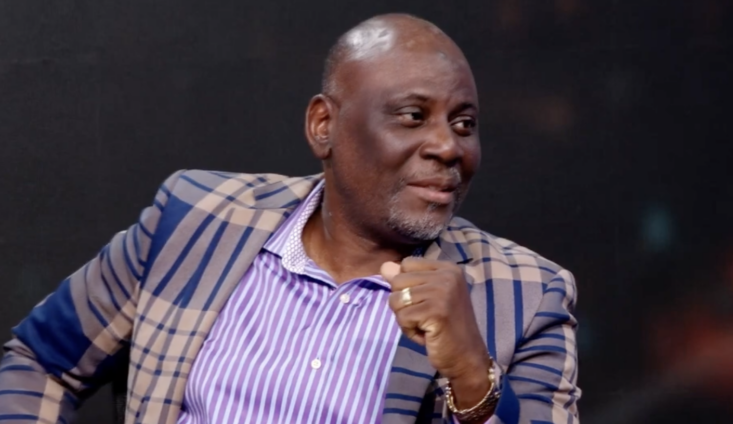
The Vice President of the Ghana Union of Traders Association (GUTA), Joseph Paddy, has criticised the process leading to the recent announcement of utility tariff increases.
He insisted that government and regulators failed to engage key stakeholders before taking the decision.
Speaking on Joy News’ PM Express on Tuesday, Mr Paddy said the lack of consultation undermines what he described as basic principles of good governance.
“We slept one night, woke up in the morning, and we heard announcements that they’re going to be a tariff adjustment increase, and we’re like, why so when we were not engaged.
"And for good governance, you need stakeholder engagement and participation. So if you’re going to increase tariffs, you need to engage,” he said.
He argued that the justifications cited for the increases do not reflect current economic conditions, which he says are showing signs of stability and improvement.
“In the letter, all the proposals they put in place- fluctuation of the cedi, about four issues they cited- we see they are all in a positive direction. If they are in a positive direction, then why do you want to increase utility tariffs?” he questioned.
Mr Paddy pointed to recent performance of key macroeconomic indicators, including the exchange rate and interest rates, as evidence that pressure on businesses should be easing rather than increasing.
“Now we have stability of the cedi against the dollar for some time now, for over 15 to 16 months, which we think today, when I was taking dollars to cedi, is about 11.25 or so, which is in a positive direction,” he said.
He contrasted this with previous periods of economic strain, when the cedi depreciated significantly against the dollar.
“Once upon a time, it was around ¢17 to $1,” he noted.
According to him, borrowing conditions have also improved, with interest rates trending downward.
“Today, interest is moving around 12%. The exchange rate has also dropped. So, putting all these factors together, we were thinking that if anything should, if there is going to be an announcement at all, it’s be a reduction, not an increase,” he said.
Mr Paddy maintained that given the combination of a more stable currency, lower interest rates, and improved macroeconomic indicators, businesses expected relief rather than additional cost pressures.
He stressed that without proper engagement, such decisions risk eroding trust between policymakers and the business community.
For GUTA, the concern is not only the tariff adjustment itself but the process behind it, which the association insists must be anchored in consultation, transparency, and shared understanding of economic realities.
Latest Stories
-
10 arrested in illegal mining operations at Kpali
27 minutes -
“Styrofoam ban is first phase of single-use plastics crackdown” – EPA
39 minutes -
US Treasury’s Bessent faces G20 diplomacy test amid tariffs, Iran war, bond turmoil
40 minutes -
One dead, several injured as fire ravages parts of Abotaose Market
42 minutes -
Accra ranks among world’s top 20 cities for nightlife in 2026
2 hours -
Police arrest two suspects over murder of Yidani chief and son
2 hours -
How Albert Bondah, Fredima, Socrate Safo, Counselor Lutterodt engineered Dan Kwaku Yeboah’s comedy show
2 hours -
Yidani chief’s murder: Police arrest two suspects following intelligence tip-off
3 hours -
Government to connect 206 Volta communities to national grid within six months – Energy Minister
3 hours -
Petrol, diesel and LPG prices expected to rise marginally in September – COPEC
3 hours -
Canada installs large Lake Ontario sign in latest jab at US
3 hours -
Energy Minister commends Roads Minister for massive road projects in Volta Region
3 hours -
Executive support professionals must reposition as strategic partners – Centre for Executive Development
4 hours -
Ablakwa calls for end to African conflicts, urges leaders to create jobs
4 hours -
NSMQ 2026: Prempeh College withstands late Keta SHTS push to grab first semi-final spot
4 hours