

Audio By Carbonatix
More than 6,000 applicants seeking recruitment into the country's security services were found to have used illicit drugs when they were subjected to mandatory drug screening for the first time this year.
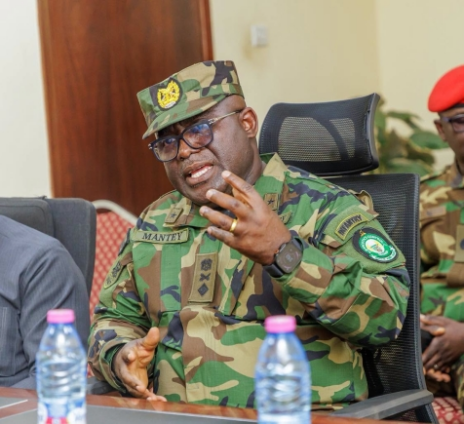
The Director-General of the Narcotics Control Commission (NACOC), Brigadier General Maxwell Obuba Mantey, disclosed that the applicants, representing about seven per cent of all candidates screened for recruitment into the Ghana Police Service, Ghana Prisons Service, Ghana National Fire Service and the Ghana Ambulance Service, tested positive for substances such as cannabis, cocaine, methamphetamine, opiates and tramadol.
Brig. Gen. Mantey said the outcome called for sustained preventive interventions to protect the youth from substance abuse.
“If we cannot secure the people who guard our streets, how do we secure the country?
This is not a cause for despair. It is a call for urgent, systematic action," he said.
Brig. Gen. Mantey said this at the national commemoration of the International Day Against Drug Abuse and Illicit Trafficking held in Accra last Friday, June 26, on the theme: "The World Drug Problem: Persisting Issues, New Challenges, Innovative Responses".
Brig. Gen. Mantey said the 2025 World Drug Report estimated that about 316 million people globally used illicit drugs, while the illicit drug trade generated hundreds of billions of dollars annually for organised criminal networks.
He said criminal organisations continued to develop new methods of manufacturing and trafficking drugs through new routes, encrypted digital platforms and sophisticated concealment methods, adding that Ghana had recently uncovered methamphetamine concealed in bags of charcoal.
He said Ghana was increasingly being confronted with synthetic drugs and new psychoactive substances that were more potent, more addictive and harder to detect, while traffickers continued to exploit digital technology, encrypted communications and commercial trade routes.
He explained that between 2025 and April this year, NACOC had recorded 2,217 arrests and 165 prosecutions, while more than 8.5 tonnes of narcotic drugs had been seized.
He added that the commission had confiscated 45.4 million tramadol tablets between 2025 and this year, saying the quantity was enough opioid doses to medicate every Ghanaian once and over.
The Director-General further stated that the country had evolved from being merely a transit point for illicit drugs to becoming a destination for their distribution and consumption, saying the trend required stronger and smarter responses.
Brig. Gen. Mantey said the government had strengthened NACOC's operational capacity by expanding its district operational commands from fewer than 10 to 77 across all 16 regions.
He added that in collaboration with the government of the Kingdom of the Netherlands, the replacement of body scanners at the Accra International Airport was underway, with the new system expected to become operational by August this year.
City & Local Guides
Brig. Gen. Mantey said the government had also initiated the establishment of a modern forensic laboratory for NACOC, adding that the facility was expected to become operational by the end of September this year to enhance the analysis of controlled substances, support investigations and improve successful prosecutions.
The Chief of Staff, Julius Debrah, delivering an address as the keynote speaker, said the fight against drug abuse and illicit trafficking should be pursued through a balanced approach that combined prevention, treatment, rehabilitation, recovery and law enforcement.
He said although criminal organisations engaged in illicit drug trafficking must be dealt with firmly, people battling addiction deserved compassion and support.
"We must be uncompromising in our response to criminal organisations that traffic illicit drugs, recruit vulnerable young people, and profit from human suffering. But we must also recognise that many of those struggling with addiction are themselves victims," he said.
Mr Debrah said the government would not allow criminal enterprises to undermine communities, endanger the youth or compromise the country's national security.
He added that lasting success would depend largely on preventing young people from becoming involved in drugs through education, employment opportunities and community support.
The Minister for the Interior, Muntaka Mohammed-Mubarak, said the illicit drug trade continued to prey on vulnerable people, destroy families and undermine communities.
He said NACOC and its partner agencies had continued to play a key role in combating drug-related crimes, and called on parents, teachers, faith-based organisations and traditional leaders to complement government efforts through education and guidance.
Addressing students at the event, the minister said they should stay away from drugs and remain focused on achieving their ambitions.
"Do not allow drugs to diminish your ambition, cloud your judgment or divert you from your purpose. Let your choices reflect the human promise and potential within you," he said.
The National Chief Imam, Sheikh Osman Nuhu Sharabutu, called on parents, particularly mothers, to pay closer attention to the upbringing of their children to prevent them from becoming drug addicts.
He said parents must teach their children good values, monitor the kind of friends they kept, and guide them to make responsible decisions.
"The subject should not be limited to a hall like this. It must go beyond this hall and reach the communities where this phenomenon is most prevalent," he said.
The Chief Imam also called for intensified public education on the dangers of drug abuse and prayed for divine guidance for officers of NACOC and other stakeholders leading the fight against illicit drugs.
Latest Stories
-
Barcelona close to deal for Arsenal’s Jesus
2 hours -
Three-week international break a concern – Mourinho
2 hours -
Bellingham scores as Mourinho’s Real win again
2 hours -
Tech trouble leaves Chelsea game ref without comms
2 hours -
Wife of man who died after turbulence sues airline
3 hours -
Russia says it helped to repel Niger attempted coup
3 hours -
Michail Antonio helps young Ghanaians chase Premier League dreams
4 hours -
Zambian opposition leader charged with treason
4 hours -
Iceland votes against restarting EU membership talks
5 hours -
WhatsApp chat used to launder cash for crime and extremism
5 hours -
US judge blocks Pentagon’s Anthropic blacklisting
5 hours -
Tinubu files case in US court to block release of alleged drug trafficking record – Lawyer
5 hours -
‘Powder Guy’ denies $32,000 visa fraud charges
5 hours -
Two suspects arrested over lynching at Daboya
5 hours -
Mobile phones contributing to Christians’ spiritual decline – Bishop Patu
6 hours