

Audio By Carbonatix
Flooding has become one of Ghana's most persistent urban challenges, claiming lives, destroying property, disrupting businesses and imposing enormous costs on the national economy. While heavy rainfall is often blamed, the underlying problem lies in how many of the country's cities have developed over the decades.
Unplanned settlements, rapid urbanisation, construction on waterways, the destruction of wetlands, and inadequate drainage infrastructure have combined to make many communities highly vulnerable to flooding.
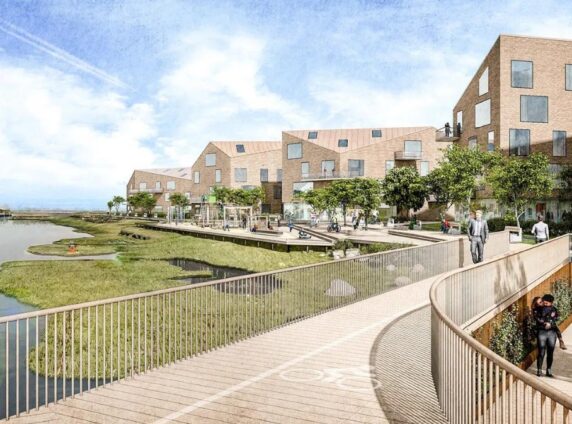
Although improving drainage systems remains essential, Ghana must also rethink its housing model. One long-term solution is to embrace modern multi-storey apartment developments as part of a broader urban planning strategy.
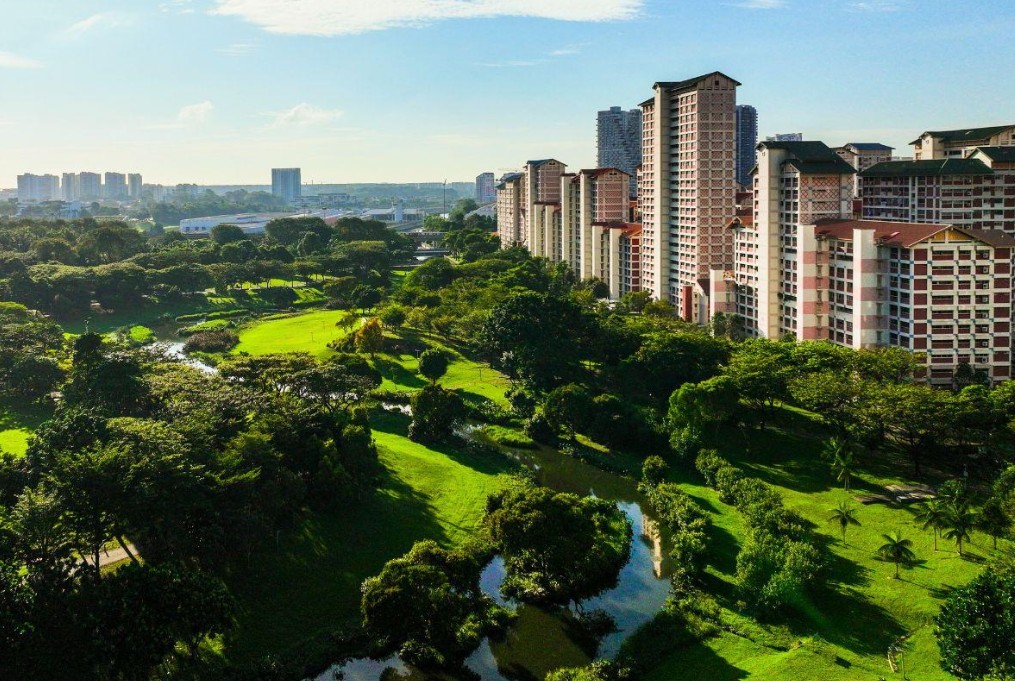
Countries such as Singapore, the Netherlands, Germany, Japan and South Korea have successfully accommodated growing urban populations by building upwards rather than outwards. This approach allows cities to preserve land for drainage infrastructure, green spaces, wetlands and other natural flood-control systems.
Building vertically preserves valuable land
Most urban housing in Ghana consists of detached or single-storey buildings spread across large parcels of land. While this has traditionally been the preferred housing model, it consumes valuable space that could otherwise serve as drainage corridors, retention ponds, parks and wetlands.
Modern apartment buildings can accommodate hundreds of families on land that would otherwise house only a handful of detached homes. By increasing housing density, cities can preserve more open land capable of absorbing rainwater and slowing stormwater runoff.
Protecting natural waterways
As Ghana's cities expand, rivers, streams, wetlands and floodplains are increasingly encroached upon by development. These natural systems play a critical role in carrying excess rainwater safely away from communities.
Many developed countries protect such areas through strict planning laws and zoning regulations. Higher-density apartment developments reduce pressure to build across environmentally sensitive areas, making it easier to preserve natural drainage channels and floodplains.
Designing buildings for resilience
Modern apartment developments are typically designed with flood resilience in mind.
In many countries, residential units are constructed above elevated podiums or raised foundations that keep living spaces above expected flood levels. Ground floors are often reserved for parking, commercial uses or utility areas that can better withstand occasional flooding.
Critical infrastructure such as electrical systems, generators and water pumps is also located above potential flood levels, reducing the risk of extensive damage.
Integrating sustainable stormwater management
Well-planned apartment developments often incorporate modern stormwater management systems, including:
- Underground stormwater storage tanks
- Rainwater harvesting systems
- Wide drainage channels connected to municipal networks
- Permeable pavements
- Rain gardens and bioswales
- Retention and detention ponds
- Landscaped green spaces
These features slow the movement of rainwater, reduce pressure on public drainage systems and minimise flooding downstream.
Creating more green spaces
Building upwards allows cities to dedicate more land to parks, trees, playgrounds and recreational areas.
These green spaces function as natural sponges, absorbing rainfall, reducing surface runoff and helping to cool urban environments.
Rather than covering every available plot with concrete, cities can become healthier, greener and more resilient to climate change.
Improving infrastructure delivery
Higher-density housing also makes public infrastructure more efficient.
Water supply, sewerage systems, electricity, waste collection, fibre-optic internet, schools, healthcare facilities and public transport can all be delivered more cost-effectively when populations are concentrated within planned communities.
Instead of extending infrastructure across sprawling developments, governments can invest in better-quality services that are easier to maintain.
Preserving agricultural land
As Ghana's cities continue expanding horizontally, valuable farmland is steadily being converted into residential neighbourhoods.
Encouraging vertical development can reduce unnecessary urban sprawl, protect agricultural land, strengthen food security and accommodate population growth more sustainably.
Long-term affordability
Although multi-storey developments require higher upfront investment, they often become more economical over time.
Shared walls, plumbing systems, security services, parking facilities and maintenance reduce costs per household compared with constructing separate detached homes.
Government-private partnerships and affordable housing schemes could help make quality apartment living accessible to middle- and low-income households.
Strengthening planning and building standards
For this model to succeed, Ghana must modernise its urban planning framework and building regulations.
Future apartment developments should incorporate:
- Elevated foundations or podium structures
- Underground stormwater storage systems
- Rainwater harvesting facilities
- Proper drainage connected to city networks
- Green roofs where appropriate
- Solar energy systems
- Landscaped public spaces
- Fire safety systems and emergency exits
- Adequate parking
- Pedestrian-friendly streets
- Energy-efficient and environmentally sustainable construction
Equally important is the strict enforcement of planning regulations to prevent development on waterways, wetlands and floodplains.
A broader solution to flooding
Modern apartment buildings alone will not solve Ghana's flooding problem. Effective flood management also requires better drainage infrastructure, regular desilting of drains, protection of wetlands, improved waste management, stronger planning enforcement and greater public compliance with environmental laws.
However, integrating vertical housing into a comprehensive urban planning strategy would significantly reduce pressure on land, improve stormwater management and create more resilient cities.
As Ghana's urban population continues to grow, cities such as Accra, Kumasi, Takoradi, Tamale and Cape Coast have an opportunity to adopt smarter development models that balance housing needs with environmental sustainability.
Building upwards is not merely an architectural choice—it is a strategic investment in safer cities, more efficient infrastructure, climate resilience and sustainable national development.
Latest Stories
-
Mac Allister ‘sad’ at no Liverpool contract offer
33 minutes -
Ghana pays $3.5m to University of Memphis over scholarship debt
42 minutes -
People don’t remember style of play – GFA Comms Director defends Quieroz appointment
1 hour -
Finance Ministry needs ‘refresher course’ in own records over GES recruitment – Adutwum’s spokesperson
1 hour -
Techiman 24-hour market project on course as Regional Minister inspects work, hails construction quality
2 hours -
Bono East Regional Fire Command engages master artisans in fire safety drive
2 hours -
Hitz FM’s Mr Haglah earns 2026 Ghana Entertainment Awards USA nomination
2 hours -
Accra Turf Club to hit the streets over Race Course demolition
2 hours -
Ashanti GJA launches 2025 regional media awards to celebrate excellence in journalism
2 hours -
From doubt to delight: Prang mother who thought GH¢1m win was a scam now celebrates
2 hours -
Energy Ministry says proposed private sector participation in ECG is not privatisation
2 hours -
Sparrow Studios, OldFilm Productions launch three movies for Ghana at 70
2 hours -
Mahama is doing well – UT Bank founder Prince Kofi Amoabeng pledges support
2 hours -
All 6,300 GES staff recruited without clearance have been paid – Finance Ministry
2 hours -
Akwaboa chiefs decry health and economic impact of deplorable roads in the area
3 hours