

Audio By Carbonatix
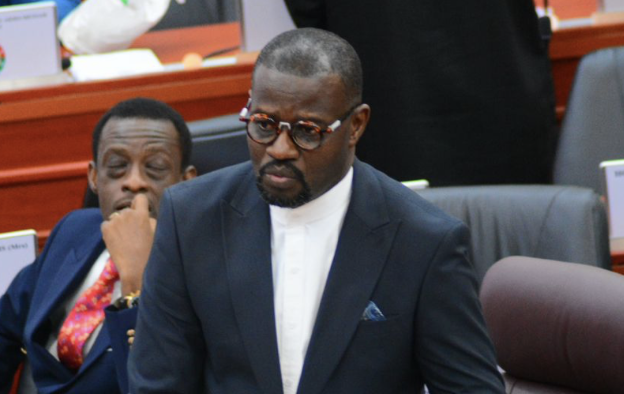
Ghana must not rush into carbon credit deals that could undermine its future climate obligations, Minority Chief Whip, Frank Annoh-Dompreh has cautioned.
The Nsawam-Adoagyiri MP is urging government to place national interest above short-term gains.
Delivering a statement on the floor of Parliament on Thursday, he said the country had made significant progress in positioning itself for the emerging global carbon credit market but warned that success would depend on strong governance and careful policy choices.
He acknowledged the establishment of the Ghana Carbon Market Office under the Environmental Protection Authority and said the country already has the institutional structures needed to support carbon market activities.
“The benefits of a properly managed carbon market are not lost on us, and we have already begun recording dozens of mitigation activities across the energy, agriculture, forestry, and transportation sectors. This demonstrates that Ghana is not starting from zero. The foundations exist.”
Mr Annoh-Dompreh argued that carbon credits should not be viewed simply as another commodity for sale.
“The carbon credit market must not be treated merely as a trading platform for emissions reductions. It must be treated as a national development instrument.”
Read also: The Carbon Credit Market: Another excellent opportunity for Ghana to get it right
He said Ghana’s approach should be driven by the need to deliver “real national value,” including genuine emissions reductions, community benefits and private sector investment.
The Minority Chief Whip called on government to simplify approval processes and provide greater regulatory certainty for investors and project developers.
He said transparent procedures, predictable timelines and clear distinctions between different categories of carbon transactions would strengthen confidence in the market.
He, however, stressed that protecting Ghana’s long-term interests must remain the overriding priority.
“Carbon credits are not ordinary commodities. They are linked to Ghana’s Nationally Determined Contributions (NDCs), international reporting obligations, community assets, land rights, biodiversity, and future development space.”
He warned that authorising international carbon transactions should never come at the expense of Ghana’s own climate commitments.
“We must not sell cheap today what we may need tomorrow to meet our own NDC targets.”
Mr Annoh-Dompreh also urged government to reject low-quality carbon projects that could damage Ghana’s credibility.
“The global carbon market has suffered credibility challenges because of weak projects, inflated claims, double counting, poor community consultation and questionable additionality. Ghana must not become a destination for low-quality carbon projects.”
He insisted every project must demonstrate environmental integrity while ensuring transparent benefit-sharing for communities whose lands and resources make such projects possible.
The Nsawam-Adoagyiri MP further called for greater investment in local expertise, saying Ghana should train its own specialists rather than depend heavily on foreign consultants. He proposed the establishment of a national carbon finance academy linked to the Carbon Market Office, universities and the private sector.
He also advocated strengthening the Ghana Carbon Registry, improving coordination among government institutions and ensuring decisions on carbon projects are processed without unnecessary delays.
While encouraging government to attract credible investors with technology, financing and long-term partnerships, Mr Annoh-Dompreh warned against speculative projects lacking sustainable financing or implementation plans.
“Though the carbon credit market offers Ghana an opportunity, it also carries risk. If poorly managed, it can create confusion, speculation, unfair contracts, and loss of national value. If properly governed, it can position Ghana as a leader in Africa’s green transition.”
He concluded that Ghana should welcome carbon market investment only on terms that protect environmental integrity, national interest, community rights and the country’s long-term development.
Latest Stories
-
Zanetor pledges to turn scientific research into jobs, industrial growth
24 minutes -
Trade Minister inspects site for Cape Coast garment factory
30 minutes -
$270m poultry investment to create 12,000 jobs under 24-Hour Economy
31 minutes -
My petition against Special Prosecutor put on ice after political intervention – Kpebu
32 minutes -
‘Don’t fail our teachers’ – Parents demand full implementation of strike deal
39 minutes -
Ghana Baptist Convention ordains 92 ministers, urged to live above reproach
39 minutes -
SIGA’s GH¢19.8bn SOE profit claim misleading – Bright Simons
45 minutes -
Kpebu vows to publish full petition if case against OSP is thrown out
50 minutes -
Central Regional Minister inspects projects in Assin South
52 minutes -
Mahama must show stronger leadership in galamsey fight – Prof. Bokpin
59 minutes -
Abu Jinapor defends Domestic Gold Purchase Programme, credits Bawumia with its introduction
59 minutes -
I’ll beat NDC for third time through my development record in Karaga – Amin Adam
1 hour -
Denkyirahene hosts sixth Akwasidae, calls for unity, peace
1 hour -
Edem Agbana outlines development gains, future projects at Ketu North accountability forum
1 hour -
Let’s develop a culture of reading – Tourism Minister
1 hour