

Audio By Carbonatix
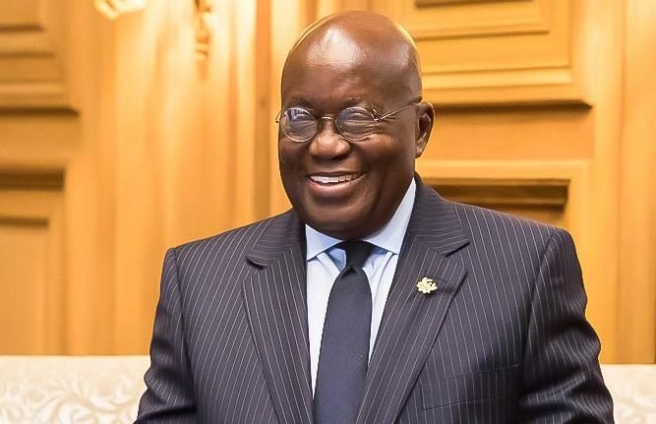
Former President Nana Addo Dankwa Akufo-Addo has challenged young people across Africa to become leading advocates for education, describing access to quality learning as the single most important investment the continent can make to secure sustainable development and prosperity.
Addressing participants as the Special Guest at the Third West Africa Youth Summit in Accra, the former President said Africa's ability to overcome poverty, unemployment and underdevelopment would largely depend on how successfully it educated its youthful population.
He stressed that no nation could attain lasting economic growth or social progress without prioritising education, urging young Africans to use their voices and influence to promote learning within their communities and countries.
Reflecting on his administration's education reforms, Nana Akufo-Addo said the introduction of the Free Senior High School (Free SHS) programme was driven by the need to remove financial barriers that had prevented thousands of qualified students from continuing their education.
He explained that before the policy was introduced, close to one million Ghanaian children had been denied the opportunity to pursue secondary education over a period of about ten years because their families could not afford the cost.
The former President warned that allowing such a large number of young people to remain outside the education system posed a serious threat to the country's future human resource development.
He said the implementation of Free SHS had dramatically expanded access to secondary education, particularly for girls and children from poor and vulnerable households, ensuring that educational opportunities were determined by merit rather than household income.
Recalling one of the many experiences from his time in office, Nana Akufo-Addo narrated how a woman approached him to complain that the Free SHS programme had made it difficult for families to employ young girls as domestic workers because many of them had returned to school.
He said the incident reinforced his conviction that the policy was changing lives and creating opportunities that previously did not exist for thousands of young people.
According to him, the comment illustrated how education was empowering children who might otherwise have been trapped in cycles of poverty and limited opportunity.
The former President emphasised that although investments in roads, hospitals and other physical infrastructure remained essential for national development, none could match the transformative power of education.
He therefore urged delegates attending the summit to become ambassadors for education across West Africa and the continent, arguing that an educated and skilled population would be better equipped to devise practical and lasting solutions to Africa's development challenges.
He said the responsibility of building a prosperous and self-reliant Africa rested largely with its youth and encouraged them to place education at the centre of their efforts to transform their societies.
The West Africa Youth Summit brought together young leaders, policymakers, development practitioners and civil society actors from across the sub-region to discuss strategies for youth empowerment, leadership, innovation and sustainable development.
The gathering also provided a platform for participants to exchange ideas on strengthening regional cooperation and advancing Africa's development agenda through the active involvement of young people.
Latest Stories
-
BOSTenergies pays first-ever GH¢34.2m dividend to government
54 seconds -
Accra–Kumasi Expressway: 170km of corridor cleared, only 6km remains – GAF
9 minutes -
Maritime security and naval cooperation in a changing international order
10 minutes -
Over 8,000 candidates compete for just 800 places at Aburi Girls’ SHS – CSSPS
11 minutes -
‘Did he lie? I don’t see anything political about Chief Justice’s comments’ – Franklin Cudjoe
14 minutes -
NDC’s Hamza Suhuyini accuses NPP of hypocrisy over Chief Justice’s remarks
14 minutes -
Sekondi-Takoradi records 152 new HIV infections in 2025
24 minutes -
Agbodza orders Wa-Bulenga road contractor back to site
25 minutes -
The Last Embers Are Burning: On Ali Mazrui and the scholarship we forgot to save
29 minutes -
GIF calls for more forest guards as attacks on frontline officers escalate
34 minutes -
GMR records 12,172 patient service touchpoints in Ho West medical mission
44 minutes -
NPP warns Chief Justice’s conduct risks eroding confidence in Judiciary
48 minutes -
A Chief Justice swears allegiance to the Constitution, not the President – NPP
52 minutes -
How travel influencers can put a spotlight on Ghana’s hidden tourism gems
1 hour -
Iran war escalation raises concern over civilian death toll
1 hour