


Audio By Carbonatix
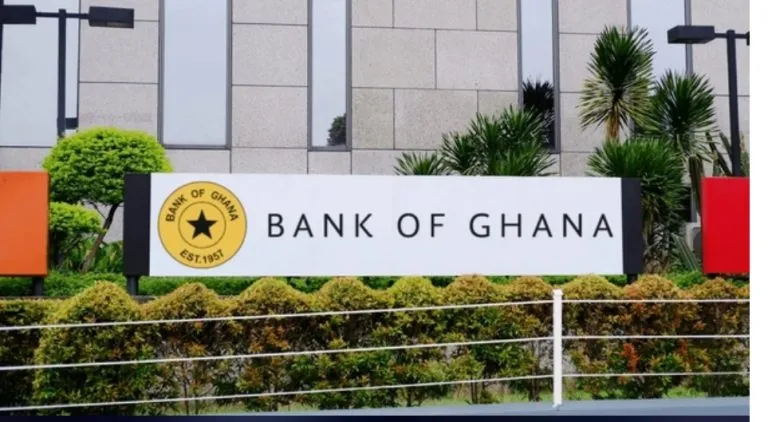
The Head of Fintech and Innovation at the Bank of Ghana, Elhanan Owureku Asare, is calling for a coordinated industry-wide system to combat fraud across banks, mobile money operators, fintech companies and non-bank financial institutions.
He says separate fraud-control systems are inadequate in an interconnected financial ecosystem where transactions can move through several institutions within a short period.
“I know our recommendation is to make sure that we have an industry-wide solution to prevent fraud. So, a solution that will deal with the banks, a solution that will deal with the fintechs, a solution that will deal with non-bank financial institutions. I think we need to have a 360-degree solution, not one that is siloed. All these are connected. So, when you have a solution that is siloed, then it becomes a problem,” Mr. Asare said.

His comments come as Ghana’s digital financial ecosystem records rapid growth alongside rising fraud.
Data from the Bank of Ghana’s 2024 fraud report show that banks, specialised deposit-taking institutions and payment service providers recorded 16,733 fraud cases in 2024, up from 15,865 in 2023.
The total value at risk increased by 13 per cent, from GH¢88 million to approximately GH¢99 million.
Payment service providers accounted for the overwhelming majority of reported incidents, recording 15,673 electronic fraud cases in 2024, compared with 14,655 in 2023.
The value at risk in the sector also rose by 18 per cent, from GH¢16 million to GH¢19 million.
Interconnected platforms
Mr. Asare said the structure of modern digital payments means fraud affecting one institution can quickly spread through other platforms.
A mobile money wallet may be linked to a bank account, while the bank may also be connected to a fintech company or another payment service provider.
He said this makes coordination across the financial sector essential.
“The Bankers’ Association, for example, was concerned that the banks are more heavily regulated than the fintechs. He is calling for the same regulation, if you like - put them on the same pedestal, improve collaboration and achieve the same results. If one part of the chain is weak, it affects everybody,” he said.
Mr Asare said fintech companies also believe banks are less heavily regulated in some areas.
“Interestingly, the fintechs also feel that the banks are less regulated in relation to them. But that is beside the point,” he said.
He argued that the priority should be a shared response that protects the entire financial chain.
Fraud moving at digital speed
The call comes as Ghana’s digital-payment market continues to expand. Payment service providers processed approximately 8.1 billion transactions valued at GH¢3 trillion in 2024. Transaction volume increased by 19 per cent from 6.8 billion in 2023, while value rose by 58 per cent from GH¢1.9 trillion.
The Bank of Ghana said the growth demonstrated the contribution of digital platforms to financial inclusion and payment convenience.
However, it also warned that fraudsters were exploiting vulnerabilities in digital-payment channels, particularly through mobile money and social-engineering schemes.
Mr. Asare said the movement from cash to digital payments had also changed the nature of financial crime.
“Anytime you move from a particular way of doing things to a new area, the risks shift towards that end. We used to have physical fraud, burglary and major robberies because people kept cash in different places. Now, it is becoming digital fraud or digital burglary - or digital armed robbery, let me put it that way,” he said.
He said digitisation had increased the scale at which fraud could occur.
“Having a manual approach towards everything limits its scale. But the moment you digitise it, the scale becomes much easier, and it cuts across. So, the scale at which we are dealing with fraud is much higher than when it was more manual or cash-based.”
Building on FICSOC
Ghana already operates the Financial Industry Command Security Operations Centre, known as FICSOC.
The platform allows participating financial institutions to monitor cyberthreats, share incident reports and coordinate responses.
The Bank of Ghana has also begun expanding it to include all regulated financial institutions and regulators such as the National Insurance Commission, the National Pensions Regulatory Authority and the Securities and Exchange Commission.
The BoG Head of Fintech and Innovation proposed “360-degree solution” raises the question of whether Ghana should broaden coordination beyond cybersecurity to include real-time fraud alerts, transaction tracing and faster identification of receiving accounts and wallets.

Limited Recovery
The difficulty of recovering fraud proceeds also strengthens the case for faster cooperation.
Banks and specialised deposit-taking institutions reported GH¢83 million in fraud value at risk in 2024.
Only GH¢3 million, representing about four per cent, was recovered, leaving approximately GH¢80 million at risk after recoveries.
The Bank of Ghana said prolonged legal proceedings had made recovery difficult, with some institutions eventually abandoning their cases.
Its 2024 fraud report directed banks and specialised deposit-taking institutions to work with law-enforcement agencies and other stakeholders to ensure suspected perpetrators are apprehended and prosecuted.
Payment service providers were also directed to strengthen authentication, introduce customer-behaviour monitoring technologies, educate customers and improve the monitoring and training of mobile money agents.

The issue will form part of discussions at the maiden Digital Economy Forum under the theme, “The Trust Crisis: Why Fraud Is Holding Back Ghana’s Digital Economy.”
The thought-leadership platform is the brainchild of Hubtel and will air on JoyNews and Joy FM on Wednesday, July 22, 2026, at 8 p.m.
The forum will bring together regulators, banks, fintech companies, telecommunications firms, security agencies and consumers to examine how Ghana can better protect confidence in its digital financial system.
The Head of Fintech and Innovation at the Bank of Ghana, Elhanan Owureku Asare, will be joined by other industry players at the maiden Digital Economy Forum to examine why fraud is undermining trust in Ghana’s digital economy.

They include economist Professor Godfred Bokpin; Chief Executive Officer of the Ghana Association of Banks, John Awuah; Executive Chairman of e-Crime Bureau, Dr. Albert Antwi-Boasiako; Chief Risk and Compliance Officer of MobileMoney Fintech Limited, Godwin Tamakloe; Deputy Director-General in charge of Technical Operations at the Cyber Security Authority, Stephen Cudjoe-Seshie; and Head of Internal Affairs at Hubtel, Ebenezer Boffour.
Latest Stories
-
WASSCE 2026: English Language performance falls to 62.4% – WAEC
25 seconds -
WAEC cancels 2026 results of 8,295 candidates over examination irregularities
21 minutes -
WAEC releases provisional 2026 WASSCE results for 512,862 candidates
34 minutes -
CJ’s remarks on SOEs were made in good faith, not to undermine judicial independence – Judicial Service
4 hours -
Bright Future Alliance pays courtesy call on Akufo-Addo, invites him to African Leaders of Influence Lectureship Series
4 hours -
This is an attempt to break the Minority caucus – Patricia Appiagyei on alleged GH¢70k payment
4 hours -
‘OSP hasn’t contacted me’ – Patricia Appiagyei assures cooperation if invited
5 hours -
I find it strange that this memo was purportedly written by me – Patricia Appiagyei
5 hours -
Ayariga calls for stronger church partnership to tackle sanitation, environmental challenges
5 hours -
I don’t think we have an industry – Patchbay Band manager
5 hours -
Patchbay Band questions recognition of live bands in Ghana’s music industry
5 hours -
Newsfile to discuss SOEs’ GH¢19.8bn profit, dissolution of 9 boards, CJ’s visits to SOEs, GH¢70k gift rejection
6 hours -
BoG warns against spraying, defacing and using cedi notes for decorations
6 hours -
Adwumawura: Selected applicants to receive notifications from today – NEIP CEO
6 hours -
‘Fake memo’ fabricated to smear me – Patricia Appiagyei
6 hours