

Audio By Carbonatix
There is a particular kind of audacity that only a former colonial power can manufacture with a straight face. Reform UK, the British political party that has been steadily converting English anxiety into electoral victories, has now proposed introducing visa restrictions on nationals of countries that are seeking reparations for the transatlantic slave trade. Read that again slowly. A British political party, in a country that ran the most profitable slave trading enterprise in Atlantic history, has proposed punishing African and Caribbean nations for having the temerity to ask for justice.
It would be almost comic if the consequences were not so serious and the history behind it so heavy.
To understand what Reform UK is really doing, one has to understand what reparations actually are, because the party is counting on the British public not knowing. Reparations are not a request for charity. They are not a demand for handouts. They are the legal and moral claim that when a party causes demonstrable, documented harm to another and benefits materially from that harm, the law, in virtually every tradition and jurisdiction, requires repair. Britain did not accidentally stumble into the slave trade. It built it. It insured it. It financed it. It wrote the laws that protected it. The Bank of England holds records of the compensation paid in 1833, not to the enslaved, but to the slave owners, twenty million pounds sterling to the people who had reduced human beings to property, while the enslaved themselves received nothing except the instruction to continue working for free for six more years under a system called apprenticeship. That debt to the British taxpayer was only fully repaid in 2015. Millions of British citizens alive today, the Jamaican, Nigerian, Ghanaian diaspora among them, paid taxes that went toward compensating the families of the people who had enslaved their own ancestors.
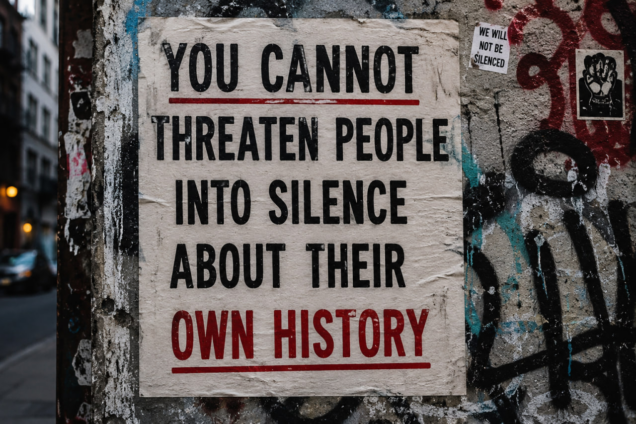
That is the history Reform UK wants to use visa restrictions to silence.
Sir Hilary Beckles, Chairman of the CARICOM Reparations Commission and one of the most authoritative scholars of the economics of slavery alive today, did not mince words in his response. He described the Reform UK initiative as a legacy of toxic racism and a continuation of colonial attitudes, and he was precise about what the proposal amounts to in moral terms. Threatening visa restrictions against nations seeking reparations, he said, “is punishing the victims all over again”. It is telling the descendants of people who were kidnapped, trafficked, stripped of language, family, name, and humanity, that if they dare ask for accountability, they will be denied the right to visit the country that committed those crimes against their forebears. It takes a specific kind of political imagination, one deeply rooted in the assumption that British comfort matters more than African justice, to arrive at that position and present it as reasonable governance.
Ghana's position at the center of this storm is not accidental. President John Dramani Mahama, serving as the African Union's Champion for Reparatory Justice, led the effort that produced UN Resolution A/RES/80/250, adopted by 123 member states in March 2026, declaring the transatlantic enslavement of Africans the gravest crime against humanity. As President Mahama has consistently argued, the work of reparatory justice is not about rewriting history or assigning personal guilt to people alive today. It is about acknowledging that history cannot be changed, but its consequences can be addressed. The inequality, the poverty, the stunted development that characterize formerly colonised nations are not random. They are the accumulated compound interest of centuries of extraction. Recognizing that is not aggression. It is honesty.
It is the kind of honesty that Comrade Dhoruba Bin Wahad, a leader in the original Black Panther Party in the U.S. ,long time Pan-African advocate for continental unity, and one of the sharpest political minds the African and diaspora freedom movement has produced, has never been afraid of. In an exclusive interview, Bin Wahad cut through the diplomatic framing to name what this moment requires. His position is unambiguous. “Reparations and reparative justice must not be negotiated, he says, especially with former governments that benefited from the sale and marketing of African flesh”. They must be systematically demanded. And the mechanism for that demand, in his view, is not another petition or resolution, but economic leverage. “If Britain wants access to African mineral resources, it can only do so by paying a reparations surcharge or tariff of at least 25 percent”. Otherwise, he says plainly, “they get nothing”. The logic is as clean as it is long overdue. Africa holds an extraordinary proportion of the world's strategic minerals, from cobalt to coltan to lithium, all of which underpin the digital and green economies that Britain and the rest of Europe are betting their futures on. If the price of justice is too high for Reform UK, the price of the minerals can simply reflect it instead.
This is not an extreme position. It is the application of basic economic and legal reasoning to a relationship that has operated on terms set entirely by one side for five hundred years. The response to Reform UK's visa threat is not fear, and it is not a counter-threat. It is the calm observation that Europe needs Africa far more than Africa needs Europe, and that the emergence of BRICS, alternative monetary networks, and South-South partnerships not dependent on petrodollars, the British pound, or the CFA franc has fundamentally changed the equation that colonial powers once relied on to ensure African compliance.
President Mahama said it clearly in Accra at the Next Steps Conference: “history does not ask us to inherit guilt, but it does ask us to inherit responsibility.” Africa is holding Britain to exactly that standard. What Reform UK's proposal reveals, more than anything else, is the discomfort of a former empire that has never truly reckoned with what it did, and is now discovering that the world no longer has the patience to pretend that discomfort is more important than justice.
Africa will not stop. This movement did not begin last year, and it will not end because a British political party threatens to make visas more difficult. The reparations struggle has survived far more than hostile immigration policy. It survived the Atlantic itself. It survived the plantation. It survived a century of being told that what happened was not that serious, that it was too long ago, that asking for accountability was itself somehow divisive. It has survived all of that, and it has arrived in Accra, in the United Nations, and in the consciousness of 123 governments, stronger and more legally grounded than at any point in history. Reform UK's proposal is not a roadblock. It is, if anything, confirmation that the pressure is being felt in exactly the places that most need to feel it.
The question facing Britain is not whether Africa will keep demanding justice. It will. The question is whether Britain will choose to engage with that demand with the seriousness it deserves, or whether it will continue to choose, as Reform UK now suggests, the comfort of denial over the dignity of repair.
Latest Stories
-
Morgan’s Miracles pays school fees for children with special needs at House of Mercy
6 minutes -
Boy, 12, dies after car hit by train
9 minutes -
GH¢70k is no ordinary gift, it raises serious ethical questions – Edem Senanu
42 minutes -
Accra-Kumasi Expressway will be Ghana’s biggest infrastructure project – Kwakye Ofosu
56 minutes -
Cape Coast pulses with colour, sound ahead of Fetu Afahye
57 minutes -
Nigerians die after inhaling toxic fumes during alleged pipeline theft, community group says
57 minutes -
CSSPS placement results to be released tonight at 10:00 pm
57 minutes -
Accra-Kumasi Expressway to be fully funded locally – Government
59 minutes -
US diesel prices hit an all-time-high
1 hour -
Horticulture Expo: Gov’t targets stronger agric value chain to boost horticulture exports
1 hour -
Reckless driving incidents fall by 38% across Africa – Yango report
1 hour -
It is ‘FAKE’ – Patricia Appiagyei reacts to memo alleging rejection of GH¢70,000 money
1 hour -
ICE agent charged with lying about shooting Venezuelan man during crackdown
1 hour -
Police arrest landlord’s wife for allegedly biting tenant’s ear during a fight
1 hour -
US diesel prices hit a record high, pushing up transportation costs for a long list of goods
1 hour