

Audio By Carbonatix
Floods, filth, failing infrastructure, wasteful expenditure, and dangerous partisanship all expose one uncomfortable truth: Africa cannot solve problems that everyone believes belong to someone else.
Every rainy season, Africa relives the same painful story. Television stations broadcast images of submerged communities, collapsed bridges, stranded commuters, devastated businesses, and grieving families. Governments declare emergencies. Opposition parties blame governments. Governments blame climate change. Citizens blame local authorities. Local authorities blame inadequate funding. Social media explodes with outrage, accusations, and endless commentary. Then, just as predictably as the floods arrived, the waters recede, public attention shifts elsewhere, and life resumes as though nothing has happened. Until the following rainy season, when the same tragedy returns, often in the very same communities.
The disturbing reality is that many of these disasters are neither sudden nor entirely natural. They are the cumulative result of years of neglect, poor planning, weak enforcement, and, perhaps most dangerously, a culture in which responsibility is endlessly transferred from one person to another. Every problem becomes somebody else's fault. Every failure belongs to another institution. Every crisis is blamed on another generation, another political party, another government, another community, or another circumstance.
Perhaps that is why one uncomfortable question continues to echo louder than the floodwaters themselves:
What is wrong with us?
This question is not directed at governments alone. Nor is it aimed solely at politicians, civil servants, or public institutions. It is a question that every African must ask while looking into the mirror. Because nations do not become dysfunctional overnight. They become dysfunctional when responsibility becomes optional, and blame becomes habitual.
The culture of blame has become our national pastime
There is perhaps no continent where blame travels faster than responsibility. When roads deteriorate, governments are blamed. When hospitals become overwhelmed, ministries are blamed. When corruption emerges, politicians are blamed. When schools decline, education authorities are blamed. Yet remarkably few people pause to ask a more personal question: What part did I play in creating or tolerating this problem?
This is not to absolve governments of their enormous responsibilities. Governments must govern, regulate, enforce, and plan. But governments alone cannot stop citizens from dumping refuse into gutters. Governments cannot personally maintain every public toilet, protect every public building, or prevent every act of indiscipline if society itself has normalised such behaviour.
The uncomfortable truth is that a nation where everyone blames others eventually becomes a nation where nobody feels responsible for solving anything.
NyansaKasa (Words of Wisdom)
"When every finger points outward, none points toward the mirror."
Interpretation: A society that constantly searches for someone else to blame rarely finds the courage to correct itself.
Flooding begins long before the rain falls
Climate scientists are correct that extreme weather events are becoming more frequent. The United Nations has repeatedly warned that climate change will intensify flooding across vulnerable regions, including much of Africa. Yet climate change does not throw plastic bags into storm drains. Climate change does not build houses across waterways. Climate change does not approve unauthorised developments on wetlands. Human beings do.
Walk through many African cities before the rains arrive. Gutters are often filled with discarded bottles, food containers, mattresses, broken furniture, tyres, construction waste, and every imaginable form of refuse. Markets spill onto drainage channels. Informal structures block natural waterways. Plastic waste accumulates month after month.
Then the rains come.
Water simply follows the laws of physics. It cannot negotiate with human negligence. It flows where it can and floods where it cannot.
Every year, millions are spent on emergency relief, road reconstruction, and compensation. Yet comparatively little is invested in changing behaviour or enforcing sanitation laws consistently. It is as though we have accepted flooding as an annual national event rather than a preventable governance and civic failure.
NyansaKasa (Words of Wisdom)
"Water follows the path that negligence leaves behind."
Interpretation: Floods often expose years of human carelessness rather than a single day of heavy rainfall.
Disease is often the invoice for poor citizenship
The World Health Organisation estimates that hundreds of thousands of preventable deaths each year are linked to unsafe water, poor sanitation, and inadequate hygiene. Cholera, typhoid, dysentery, and numerous gastrointestinal diseases continue to affect millions across developing countries.
Yet diseases do not emerge in isolation.
They flourish where refuse accumulates, where drainage systems fail, where open defecation persists, where food hygiene is neglected, and where communities abandon responsibility for shared public spaces.
Hospitals become overcrowded, treating illnesses that should never have occurred in the first place. Governments spend millions on emergency healthcare interventions while communities continue practices that create the very conditions those diseases require.
Public health begins not in hospitals but in neighbourhoods.
NyansaKasa (Words of Wisdom)
"The cleanest hospital is the community that prevented illness before it arrived."
Interpretation: The greatest healthcare system is one that prevents disease through responsible citizenship.
We build proudly but maintain reluctantly
Across Africa, governments proudly commission highways, schools, hospitals, airports, government buildings, power stations, and water projects. Ribbon cutting ceremonies attract cameras and applause. Yet several years later, many of these same assets begin showing signs of avoidable deterioration.
Roofs leak. Elevators stop functioning. Roads develop potholes. Public toilets become unusable. Air conditioning systems fail. Streetlights stop working. Water pipes burst repeatedly. Sewage systems collapse under inadequate maintenance.
This is not primarily a financial problem.
It is a cultural one.
Countries such as Japan, Germany, Singapore, and the Netherlands budget for maintenance almost as carefully as they budget for construction. They understand that infrastructure is not simply built; it is continuously preserved.
Africa often celebrates construction while quietly neglecting stewardship.
The result is predictable.
Assets worth billions depreciate prematurely, forcing governments to borrow more money to replace infrastructure that should have lasted decades longer.
NyansaKasa (Words of Wisdom)
"A nation that cannot maintain what it builds eventually spends twice for the same dream."
Interpretation: Neglect transforms investment into repeated expenditure.
Wasteful expenditure is not victimless
Every year, Auditor General reports across numerous African countries reveal recurring financial irregularities. Unaccounted funds, abandoned projects, procurement breaches, overpayments, idle equipment, and incomplete infrastructure repeatedly appear in official reports.
Public debate follows.
Radio discussions become heated. Newspaper headlines dominate public discourse. Parliamentary committees convene. Political parties exchange accusations.
Then silence returns.
The following year, another report arrives containing remarkably similar findings.
One must ask whether Africa has become better at documenting waste than preventing it.
Every wasted public cedi, naira, rand, shilling, or pula represents a classroom never built, a hospital never equipped, a road never completed, or a child whose future opportunities have quietly diminished.
Waste is not merely an accounting issue. It is an intergenerational injustice.
NyansaKasa (Words of Wisdom)
"Every coin wasted today becomes tomorrow's debt for an unborn child."
Interpretation: Public waste silently mortgages the future.
Dangerous partisanship has become stronger than patriotism
Perhaps no force weakens accountability more effectively than excessive political loyalty.
Increasingly, identical actions receive different moral judgments depending upon who commits them. Supporters defend misconduct by their preferred political parties while condemning identical behaviour by opponents.
Facts become negotiable.
Truth becomes partisan.
National interest becomes secondary to political victory.
This dangerous mentality weakens democratic accountability because wrongdoing becomes acceptable provided it advances one's preferred political cause.
Countries that have made remarkable developmental progress generally cultivate strong national identities alongside healthy political competition. They disagree vigorously on policy while remaining united around national priorities.
Africa often reverses the equation.
Politics becomes permanent.
Nationhood becomes temporary.
NyansaKasa (Words of Wisdom)
"When political colours become brighter than the national flag, unity begins to fade."
Interpretation: Patriotism must always rise above partisanship.
The world offers examples worth studying
Singapore transformed itself from a resource-poor city-state into one of the world's most efficient societies through uncompromising enforcement, civic discipline, and long-term planning.
Rwanda has demonstrated how sustained cleanliness campaigns, environmental protection, and civic responsibility can reshape national culture within a generation.
The Netherlands has spent centuries managing flood risks through engineering excellence, maintenance, and proactive planning rather than waiting for catastrophe.
Japan treats maintenance as an expression of national character, not merely engineering practice.
These countries differ in history, culture, and politics.
What they share is a collective understanding that development requires responsibility at every level of society.
What must change?
- Africa's transformation will not occur through speeches alone.
- Governments must enforce sanitation, planning, procurement, and environmental laws consistently.
- Educational institutions must teach civic responsibility with the same seriousness as mathematics and science.
- Religious institutions must reinforce public ethics alongside personal morality.
- Traditional authorities must continue promoting communal responsibility.
- The media must devote as much attention to practical solutions as it does to sensational problems.
Most importantly, every African citizen must stop asking only, "Who caused this?" and begin asking, "What is my responsibility?"
Real change begins when responsibility becomes contagious.
NyansaKasa (Words of Wisdom)
"The strongest nations are built by ordinary citizens doing extraordinary acts of responsibility every day."
Interpretation: National greatness is the cumulative result of millions of individual acts of civic discipline.
Conclusion: The mirror Africa can no longer avoid
Every society inherits challenges. Africa is no exception. Colonialism left scars. Global inequalities persist. Climate change is real. External pressures continue to shape our development.
But history, however painful, cannot become a permanent substitute for self-examination.
The most serious threat to Africa's future may not be the problems we inherited. It may be our growing reluctance to acknowledge the problems we continue to create ourselves.
What is wrong with us is not that we face floods, disease, corruption, waste, weak maintenance, or political division. Every nation confronts challenges.
What is wrong with us is that we too often respond by searching for someone else to blame before searching our own conscience.
Until we replace the culture of blame with the culture of responsibility, our debates will remain louder than our progress, our reports longer than our solutions, and our hopes greater than our achievements.
NyansaKasa (Words of Wisdom)
"The day a nation stops asking, 'Who is responsible?' and begins asking, 'How am I responsible?' is the day genuine transformation begins."
Interpretation: Lasting national renewal starts when responsibility becomes personal before it becomes political.
History will not remember Africa for the excuses it offered.
History will remember whether Africans finally accepted that nation building is not somebody else's responsibility. It belongs to all of us.
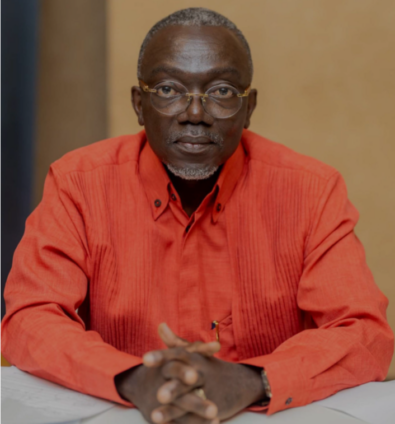
About Ing. Professor Douglas Boateng
Ing. Professor Douglas Boateng is a pioneering international industrial, manufacturing, and production systems engineer, governance strategist, and Pan-African thought leader whose work continues to shape boardroom thinking, supply chain transformation, and industrialisation across both the continent and globally. As Africa’s first appointed Professor Extraordinaire in Supply Chain Management, he has consistently championed the integration of procurement, value chain, industrialisation strategy, and governance into national and continental development agendas, aligning practice with purpose and long-term impact. An International Chartered Director and Chartered Engineer, he has received numerous lifetime achievement awards and authored several authoritative books. He is also the scribe of the globally acclaimed and widely followed daily NyansaKasa (Words of Wisdom), which continues to inspire reflection, accountability, and purposeful living among audiences worldwide. His work is driven by a simple yet powerful belief: Africa’s transformation will not come from rhetoric but from deliberate action, strong institutions, and leaders willing to build for future generations.
Latest Stories
-
Black Princesses Coach Charles Sampson confident ahead of World Cup opener against Ecuador
35 minutes -
TV presenter among 12 sentenced to death in Egypt drugs case
38 minutes -
Accra Airport VIP Lounge project to be completed this year without taxpayer funds – Ablakwa
1 hour -
NPP clears all 47 aspirants for 2026 national officers’ election
1 hour -
Domelevo backs OSP probe into GH¢70k allegation
2 hours -
CAF Confederation Cup: Dennis Korsah confident Nations FC can overturn Mali defeat
2 hours -
Chief Justice should stop commenting on some political issues – Domelevo
3 hours -
‘I don’t trust OSP’ to probe GH¢70k ‘bribe’ allegation – Kwasi Kwarteng
3 hours -
Road inspections not to witch-hunt contractors – Kwame Agbodza
4 hours -
Inter Milan mount stunning comeback to beat Napoli
4 hours -
Modric plans to play for Croatia past 41st birthday
4 hours -
Bayern fail to score for first time in 59 games
4 hours -
Bawumia preparing new cocoa policy package for farmers – Annoh-Dompreh
4 hours -
Wa-Tumu-Bolga road upgrade will unlock agriculture, trade – Agbodza
4 hours -
Ghana Maritime Authority readies oil-spill response vessel for deployment
4 hours