

Audio By Carbonatix
We have spent enough time defining Ghana's rural inclusion gap; now it is time to focus our efforts on reducing it, recognizing the task at hand. The infrastructure realities, language barriers, and product design challenges that keep millions of rural Ghanaians on the edges of digital finance are well documented. Yet the conversation rarely moves from diagnosis to action. If we are honest about wanting an inclusive financial system, the path forward must be concrete, coordinated, and grounded in how rural Ghanaians actually live, since vague commitments and corporate goodwill alone will never bridge a gap this wide.
Real inclusion starts with infrastructure, and Ghana cannot keep launching new digital products on top of networks that fail when rural customers need them most. Government, the National Communications Authority, Telcos, and the Ministry of Energy must agree on a coordinated rural connectivity plan that prioritizes consistent mobile coverage, stable electricity supply, and all-weather access roads to underserved districts. Public-private partnerships can fund shared rural network towers in low-revenue areas, while solar-powered agent points can address energy needs in communities still waiting for grid expansion.
Mobile money agents are already the most trusted face of digital finance in rural Ghana, and the next phase of inclusion must invest in training them to be properly compensated and well-supervised frontline financial workers. Telcos and the Bank of Ghana can co-design a national agent certification program that covers customer protection, fraud detection, basic financial education, and disability-friendly service, while raising commission floors to prevent agents in remote areas from being tempted by income pressures that drive exploitation. Strengthening this layer alone would transform how rural customers experience the entire system.
Inclusion that ignores language is inclusion in name only. Ghana has the technology to address this more quickly than the industry often acknowledges. Telcos and Fintechs must roll out voice-based USSD prompts and SMS notifications in Twi, Ga, Ewe, Dagbani, Hausa, Frafra, and other widely spoken Ghanaian languages so customers can hear, understand, and confirm transactions without relying on third parties. The Bank of Ghana can make multilingual customer communication a licensing condition rather than a goodwill gesture, thereby changing behavior across the entire sector within a year.
Credit and savings products in Ghana have largely been designed for salaried urban workers. Rural inclusion will remain a slogan until these changes are made. Fintechs and banks need to build loan products tied to harvest cycles for farmers, daily savings tools that mirror susu collection habits, and micro-insurance plans that pay out quickly for shocks like crop failure, livestock loss, or fishing accidents. Partnerships with cooperatives, farmer associations, and traditional savings groups can serve as both distribution channels and trust anchors. Rural Ghanaians believe what their communities believe long before they believe what marketing campaigns claim.
Regulators must extend their visibility into the very communities where harm is most likely to occur, since complaint resolution that works in Accra means little in a village six hours away. The Bank of Ghana, the National Communications Authority, and the Cyber Security Authority can deploy mobile complaint desks on market days, partner with district assemblies to set up local financial ombudsman points, and require telcos to publish complaint-resolution data by region, so that underserved areas can no longer be quietly ignored. Real accountability lives close to where the customer stands.
Inclusion without understanding leaves customers vulnerable to fraud and poor decisions, so Ghana needs a national financial literacy campaign delivered through community radio, local-language podcasts, market-day sessions, churches, mosques, and trusted opinion leaders in every region. The Ministry of Finance, the National Insurance Commission, and the Securities and Exchange Commission can co-fund this effort, while teacher training colleges and nursing schools can be enlisted to push basic financial education into rural classrooms and clinics where families already gather.
What gets measured gets improved, and Ghana currently measures inclusion in ways that flatter the cities and obscure the villages. The Bank of Ghana should publish a Rural Financial Inclusion Index that tracks active usage, transaction success rates, complaint resolution times, and product diversity by district, so that policymakers and providers can see exactly where the system is failing. Tying telco license renewals and bank performance reviews partly to rural inclusion metrics would shift corporate behavior faster than any policy speech ever could.
Closing Ghana's rural inclusion gap is technically achievable, financially viable, and politically overdue, because the tools, capital, and talent already exist within the country. What we need now is the collective will to coordinate across government, regulators, Telcos, banks, FinTechs, and communities, with a clear plan and measurable milestones. The rural Ghanaian has waited long enough for the digital finance revolution to reach her doorstep, and the next decade will be defined by whether we finally show up with the seriousness her financial life has always deserved.
******
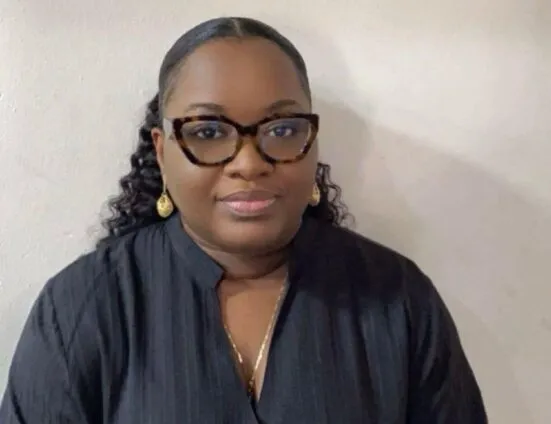
Writer: Dr. Genevieve Sedalo, Department of Marketing, University of Professional Studies. gdsedalo@gmail.com
Latest Stories
-
African health manufacturers meet in Addis Ababa for AHMTEC 2026, focus shifts from building capacity to commercial scale
50 seconds -
Court delays can amount to denial of justice – Mahama
8 minutes -
NPP approves proxy voting for October 3 national officers elections
18 minutes -
Yemen’s Houthis reportedly seize strategic Red Sea port of Mokha
20 minutes -
Horse racing community hits Accra streets, petitions Presidency over demolished Racecourse
22 minutes -
Two arrested over alleged plot to kill Susu collector at Botwe in Accra
25 minutes -
Jirapa MP provides SHS prospectus items to 1,196 fresh graduates
30 minutes -
Ghana signs offshore deals with Eni, Vitol to revive oil exploration
31 minutes -
Two feared dead, several injured after trailer crashes into vehicles at Krofrom
35 minutes -
Where did we lose it? The falling standards of our airwaves and silence of regulators
36 minutes -
I remain fully committed to judicial independence – Mahama
39 minutes -
NDC opens nominations for 2026 constituency executive elections on September 15
40 minutes -
GROW2 project exceeds targets for women farmers in Northern Ghana
56 minutes -
Twenty-five dead after fire on cargo ship in eastern China
57 minutes -
The Battle For The Soul of the Ghanaian BAR: Is it a freedom of association or regulatory anarchy?
59 minutes