

Audio By Carbonatix
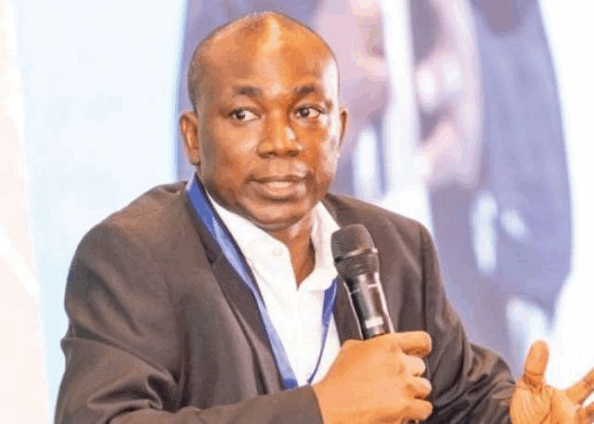
Economist Professor Godfred Bokpin says Ghana’s early Eurobond repayments are a positive sign for the country’s debt recovery efforts, but cautions that they should not be interpreted to mean government is fully on track with all of its financial obligations.
Speaking in an interview on Joy FM's Middaynews on July 7, on the implications of government’s latest debt settlements, Prof. Bokpin said the payments signal progress under Ghana’s debt restructuring programme and demonstrate some commitment to meeting obligations to external creditors.
“It comes with some positive story and shows that we are on track when it comes to our debt obligations,” he said.
However, he stressed that government’s broader fiscal position remains under pressure and that meeting debt service commitments does not necessarily mean it is adequately addressing obligations to all stakeholders in the economy.
“That does not mean that government is on track with all its obligations to various stakeholders. There are different stakeholders in this economy,” he noted.
Prof. Bokpin explained that while government appears to be current on some debt repayments, there are competing demands on public finances, including spending on roads, hospitals, schools and other public services.
He pointed to budget execution challenges as evidence that government’s fiscal pressures remain significant.
“If you look at the 2026 budget, the overall budget execution is around 73 per cent or so. So government is not totally on track when it comes to our payments and obligations to various stakeholders,” he said.
According to him, Ghana’s debt obligations represent only one part of a much larger set of demands on state resources, and prioritising debt repayments could limit the funds available for other pressing development needs.
Prof. Bokpin said Ghana’s current debt service path must be understood in the context of the major sacrifices already made by bondholders under the restructuring programme.
He noted that creditors had accepted significant losses and extended repayment timelines as part of Ghana’s debt workout, making it important for government to remain consistent in servicing the restructured debt.
Latest Stories
-
Mahama’s board shake-up should not be linked to indiscipline – Akwatia MP
14 minutes -
‘My Police, Your Police, Our Police’: the Aboso fire and a lesson in Policing together
35 minutes -
Parliament backs OSP probe into alleged GH¢70k payment to Patricia Appiagyei
56 minutes -
Photos: Joy FM Back-to-School Fair buzzes with excitement, strong patronage on Day 2
1 hour -
Dissolving inactive SOE boards is justified – Dennis Miracles Aboagye
1 hour -
John Boadu: I am not contesting for president; I am contesting to make Bawumia President
1 hour -
Zoomlion begins post-flood disinfection exercise in West Gonja to curb health risks
2 hours -
When Lady Justice Counted Eight Years
2 hours -
SIGA reporting should distinguish commercial performance from public service – Yaw Appiah Lartey
2 hours -
SOEs must hold AGMs, not just submit audited accounts – Deloitte Partner
2 hours -
There are errors in SIGA report that affected its conclusions – Miracles Aboagye
2 hours -
Joy FM Back-to-School Fair gains momentum as Day 2 gets underway
2 hours -
Bright Simons fires back, rejects claims he used AI to critique SIGA report
3 hours -
SIGA did not conjure or manufacture figures – Prof Kpessa-Whyte
3 hours -
Government just put a spin on SIGA report – Miracles Aboagye
3 hours