

Audio By Carbonatix
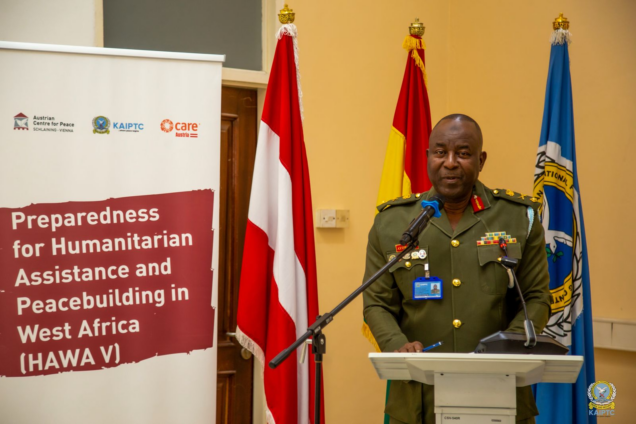
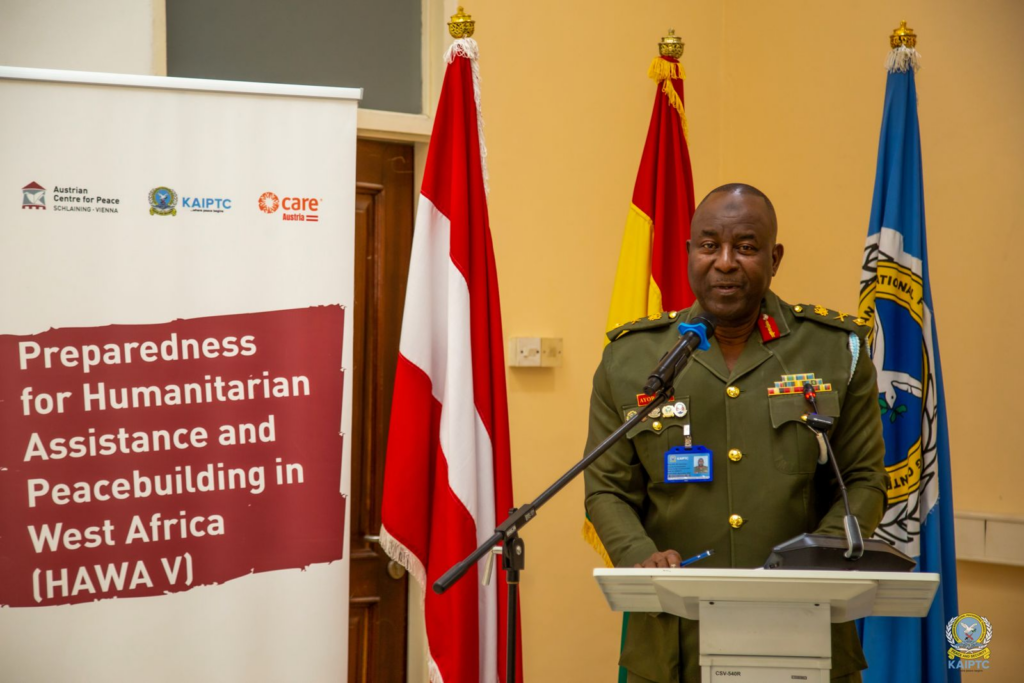
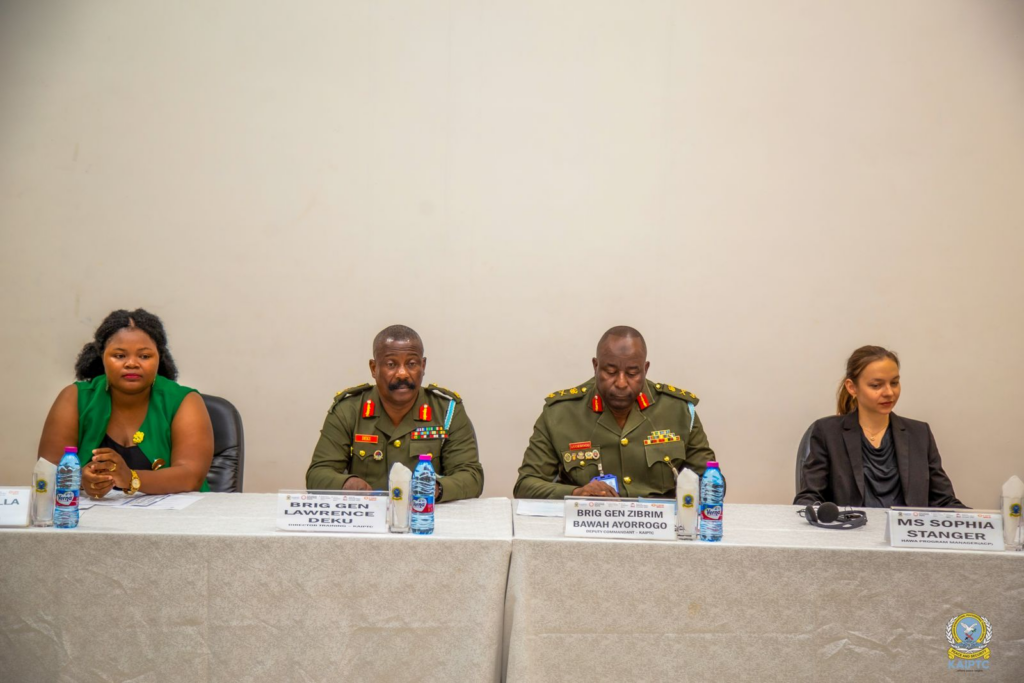
The Deputy Commandant of the Kofi Annan International Peacekeeping Training Centre (KAIPTC), Brigadier General Zibrim Ayorrogo, speaking on behalf of the Commandant, Air Vice Marshal David A. Akrong, has called for deeper regional collaboration and inclusive capacity-building to address the increasingly complex humanitarian and security challenges facing West Africa.
Speaking at the opening ceremony of the Preparedness for Humanitarian Assistance and Peacebuilding in West Africa (HAWA) Core Course 2026 at KAIPTC in Accra, he described the programme as a vital platform for strengthening regional resilience and coordination in crisis response.
Brigadier General Ayorrogo welcomed participants drawn from across the region, commending their commitment to strengthening humanitarian preparedness, peacebuilding, and crisis response systems.
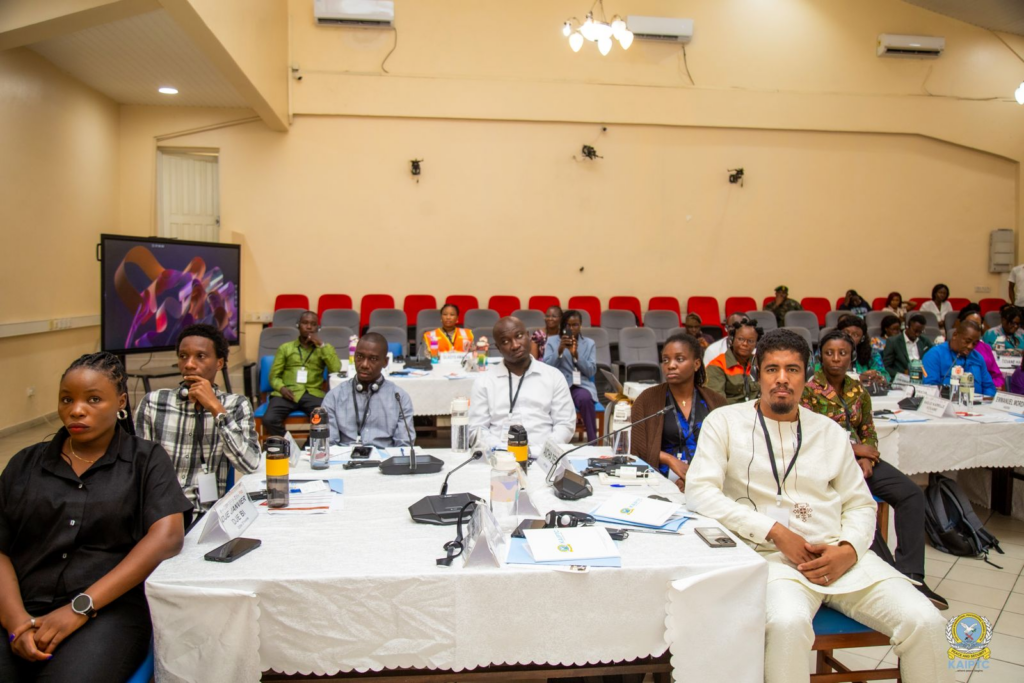
He noted that the HAWA programme has evolved into a key regional initiative, now in its fifth phase and thirteenth iteration, bringing together humanitarian practitioners, security actors, civil society organisations, and development professionals.
According to him, the programme continues to serve as a bridge between institutions and sectors that are essential to managing West Africa’s increasingly complex crisis landscape.
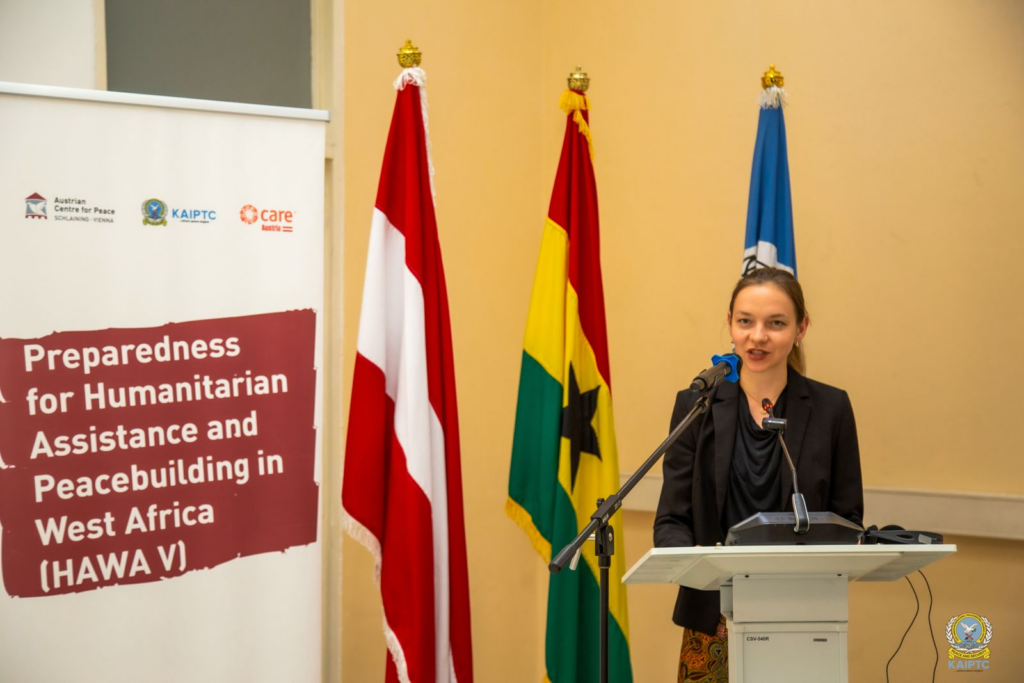
He highlighted the strong international partnership behind the initiative, including the Austrian Centre for Peace (ACP), CARE International, the Austrian Development Cooperation, and the Austrian Ministry of Defence, which have supported its growth over the years.
The Deputy Commandant warned that West Africa is facing a rapidly evolving humanitarian and security environment characterised by multiple, overlapping crises.
He cited violent extremism, forced displacement, climate change, environmental degradation, food insecurity, governance challenges, and socio-economic vulnerability as interconnected threats shaping the region’s stability.
“These challenges are increasingly interconnected and often transcend national borders,” he said, stressing the need for coordinated and cross-sectoral responses.
He emphasised that no single institution or country can effectively respond to these pressures in isolation.
Brigadier General Ayorrogo highlighted the importance of stronger collaboration between humanitarian, development, peacebuilding, and security actors.
He said effective responses must be inclusive, coordinated, and sensitive to local contexts, particularly in frontier regions where vulnerabilities are most pronounced.
He highlighted border areas between Ghana, Burkina Faso, Togo, and Côte d’Ivoire as critical zones where communities are directly affected by insecurity, climate stress, and humanitarian pressures.
“These border communities often experience the direct effects of insecurity, climate stress, and humanitarian pressures, reminding us that crises do not stop at national boundaries and neither should our responses,” he stated.
The KAIPTC Deputy Commandant explained that the HAWA V programme has been designed to provide participants with practical skills through real-life scenarios, interactive learning, and operational tools relevant to field conditions.
He noted that the course will cover key thematic areas including gender-responsive crisis response, environmental peacebuilding, climate-security linkages, and inclusive humanitarian action.
According to him, these themes are no longer optional considerations but central pillars for building resilient communities and sustaining peace across the region.
Mr Ayorrogo placed strong emphasis on the inclusion of women and young professionals in peace and security processes, describing their participation as essential to long-term stability.
He reaffirmed the programme’s alignment with the United Nations Women, Peace and Security agenda and the Youth, Peace and Security framework.
“Sustainable peace and effective humanitarian action can only be achieved when all voices are meaningfully included in decision-making and implementation processes,” he said.
Encouraging participants to view themselves as collaborators rather than passive learners, he urged them to apply the knowledge gained beyond the classroom environment.
He said the real value of the programme lies in how participants translate training into practical action within their institutions and communities.
Brigadier General Ayorrogo also encouraged participants to join the expanding HAWA and KAIPTC alumni network to sustain collaboration and knowledge sharing across the region.
He expressed gratitude to the Austrian Government and its partner institutions for their continued support in strengthening peacebuilding and humanitarian preparedness initiatives in Africa.
He described the partnership as instrumental in building sustainable capacity across West Africa’s security and humanitarian sectors.
He urged participants to use the opportunity to strengthen regional solidarity and cooperation.
Latest Stories
-
Vice President urges Methodist Church to add digital skills to women’s training programmes
49 minutes -
Forestry Commission arrests 12 illegal miners in Atewa Forest
56 minutes -
NPP National Treasurer aspirant involved in accident during campaign
1 hour -
Treat coastal communities as partners in sea turtle conservation – Dr Agyekumhene
1 hour -
The Chief Justice is not a Touring Minister: Baffoe-Bonnie’s SOE visits are unconstitutional officiousness
2 hours -
Enforcing environmental laws carries political cost, while offenders go unpunished – Frimpong-Boateng
2 hours -
Galamsey fight collapsed after safeguards introduced in 2018 were abandoned – Prof Frimpong-Boateng
2 hours -
Jail officials who approve projects in wetlands and forest reserves – Prof Frimpong-Boateng
2 hours -
Ghana needs $21bn to restore lands damaged by illegal mining – Frimpong-Boateng
2 hours -
Law student killed in hit-and-run on Tema Motorway; family offers GH¢50,000 bounty
2 hours -
Gas explosion near Larteh school contained after fire outbreak
2 hours -
Nigerian-British businessman dies after penis enlargement procedure in Thailand
3 hours -
CHEAP JUSTICE? – Occasional Kwatriot Kwesi Yankah writes
3 hours -
WASSCE 2026: English performance decline requires urgent action – EduWatch
3 hours -
Old Tafo MCE pledges action as residents raise alarm over faulty drainage systems
4 hours