

Audio By Carbonatix
Arrests and prosecutions alone will not stop Ghana’s digital fraud problem, Economist and Professor of Finance at the University of Ghana Business School, Godfred Bokpin, has warned.
He says the country must pair enforcement with stronger financial literacy and basic cybersecurity education as more people rely on mobile money, banking apps and other digital payment platforms.
“The law alone does not solve that problem. You also need higher public education. Higher financial literacy also helps, so that people understand how they use it and how they can protect their passwords,” Prof. Bokpin said.
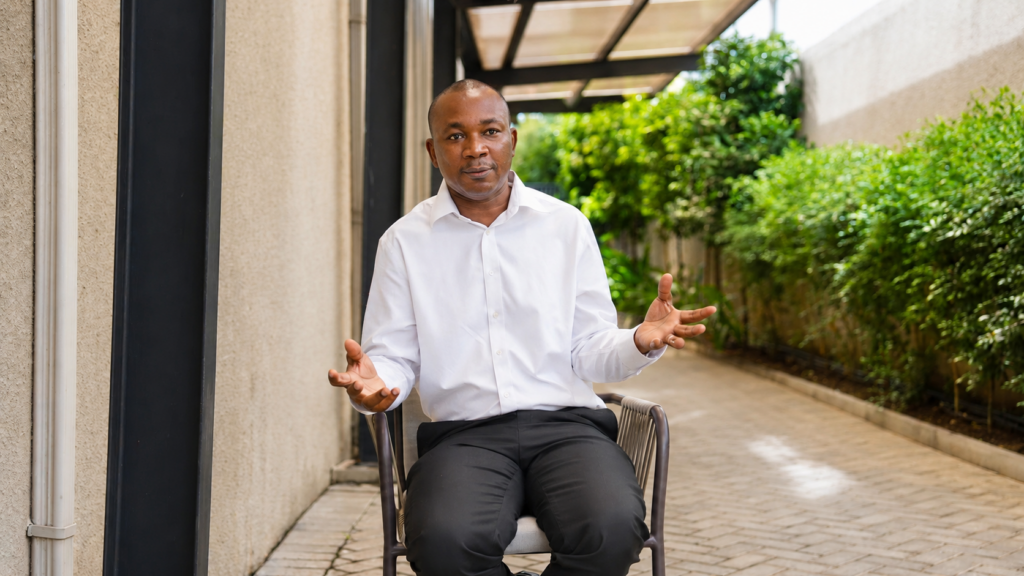
The economist was speaking in a yet-to-be-aired documentary, “The Trust Crisis,” ahead of the maiden Digital Economy Forum under the theme, “The Trust Crisis: Why Fraud Is Holding Back Ghana’s Digital Economy.”
The thought-leadership platform, an initiative of Hubtel, will air on JoyNews and Joy FM on Wednesday, July 22, 2026, at 8 p.m.

The forum will bring together regulators, banks, fintech companies, telecommunications firms, security agencies and consumers to examine whether Ghana’s regulatory system is keeping pace with the growth of digital finance.
Prof. Bokpin said digital fraud has both criminal and economic dimensions, making a purely legal response inadequate. He said fraudsters are also adapting as more financial activity moves online. That, he said, makes basic user education critical.
“It is very difficult to separate the two. It is a crime, but of course, it is also driven by economic reasons. There are those who invest to ensure that they benefit from this fraud because that is a kind of profession for them all over the world.”
“When it comes to technology, it is not only available to those who want to use it for good. It is also available to those who want to use it for fraud. We need to mainstream basic tips and baseline knowledge on cyber fraud and cybersecurity across society.
"So that the apps are not only available, but people also understand how they can use them and how they can insulate themselves from basic fraud activities,” Prof. Bokpin said.

His comments come as Ghana records a rise in fraud cases across banks, specialised deposit-taking institutions and payment service providers.
The Bank of Ghana’s 2024 fraud report shows that reported fraud cases increased from 15,865 in 2023 to 16,733 in 2024.
The total value at risk also increased by 13 per cent, from GH¢88 million in 2023 to approximately GH¢99 million in 2024.
Payment service providers accounted for the bulk of the incidents.
The Ghana Association of Banks’ overview of the Bank of Ghana report shows that payment service providers recorded 15,673 fraud cases in 2024, representing 94 per cent of total reported cases. The value at risk in that sector rose by 18 per cent to GH¢19 million.
The Bank of Ghana’s 2024 Payment Systems Oversight Annual Report also shows that payment service providers processed about 8.1 billion transactions valued at approximately GH¢3 trillion in 2024, reflecting the scale of the digital payment ecosystem now exposed to fraud risks.
Prof. Bokpin said the rise in digital transactions has changed how criminals operate.

“If you look at the trend, from reports by the Bank of Ghana and also from the UN, you realise that with increasing digitisation and digital payments, you see a switch from physical crime, in terms of physical theft and cash, moving more online. These days, it is easier for criminals to meet people online than in physical locations,” he said.
He said consumers cannot leave fraud prevention only to regulators, fintech companies or banks.
“There are basic tips that you should know as a participant, as a customer and as a beneficiary of the system,” he said.
“We cannot outsource that only to regulators or fintech organisations. Users must also understand certain basic risk management issues within that same context.”
Prof. Bokpin said this does not remove responsibility from the state or regulated institutions.
He said regulators, the Cyber Security Authority and other public institutions must continue to manage higher-end risks, while service providers strengthen their systems.
“Then, at the higher end, the state, through the Cyber Security Authority, the regulators and others, can also invest and manage the higher-end risk,” he said.
The Bank of Ghana’s 2024 fraud report directed payment service providers to strengthen authentication, introduce customer-behaviour monitoring technologies, educate customers and improve the monitoring and training of mobile money agents.
It also directed banks and specialised deposit-taking institutions to work with law-enforcement agencies and other stakeholders to ensure suspected fraudsters are apprehended and prosecuted.
For Prof. Bokpin, however, prosecution must be matched with prevention.
He said users need to understand how digital platforms work, how fraudsters operate and how to protect sensitive information such as passwords and account credentials.

Without that, Ghana risks expanding digital finance while leaving many users exposed to preventable fraud.
The issue will form part of discussions at the maiden Digital Economy Forum as stakeholders examine how Ghana can protect trust in digital finance while expanding access to digital payment services.
Latest Stories
-
Édouard Mendy annonce sa retraite internationale avec le Sénégal
1 hour -
Lamine Yamal scores twice as Barcelona maintain perfect start
2 hours -
Haaland scores controversial winner for 10-man City at Man Utd
2 hours -
Ghana’s narcotics crisis deepens as drug seizures linked to country top US$1bn – Minority
2 hours -
CAF CC: Nations FC bow out after draw with FC Diarra in Accra
2 hours -
Kenyans dominate 2026 KGL Millennium Marathon as race champions mental health
2 hours -
Minority demands full-scale probe into Ghana’s alleged emergence as narcotics transit hub
2 hours -
NaCCA trains teachers to implement new Chinese language curriculum
4 hours -
Ghana, China deepen cooperation on galamsey and mining sector
4 hours -
JoyNews–Republic Bank Habitat Fair ends on a high note after 3 days of strong patronage, expert engagement
4 hours -
Emma Ofosua takes West African spoken word to three UK cities
4 hours -
Traditional artists will become more expensive because of AI – Aewura Arts
4 hours -
Clients would disappear after I finished their artworks – Aewura Arts recounts challenges
4 hours -
Turkish police detain dozens in raids on gay bars and homes of LGBTQ+ activists
5 hours -
Trump doubles down on united Ireland comments on day two of visit
5 hours