

Audio By Carbonatix
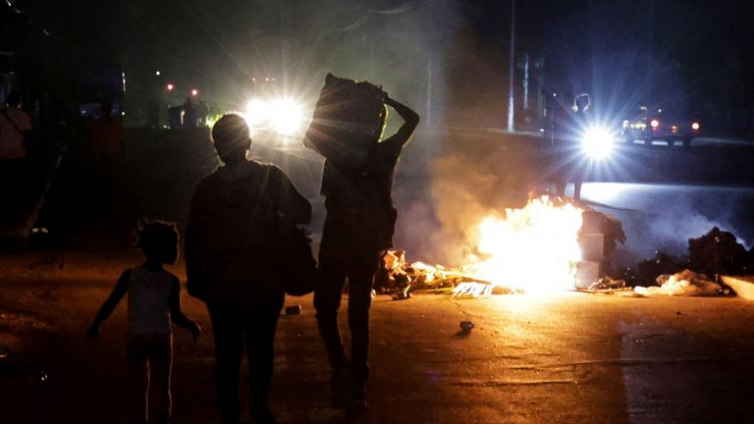
Scattered protests broke out across Havana on Tuesday evening, with residents banging pots, honking horns and shouting "turn on the lights" as millions of Cubans remained without power amid a six-month-long U.S. fuel blockade.
Cuba experienced a nationwide outage on Monday — its third this year — but while authorities said most of the country had been reconnected to the island's grid by late Tuesday, many remained in the dark and without electricity as the island doesn't have enough fuel.
The country's grid operator UNE said it had reconnected the grid from Pinar del Rio, in far western Cuba, to Holguin in the east. Santiago de Cuba, the island's second-largest city, remained disconnected and without power, authorities said.
The U.S. in January cut off Cuba's fuel supply, then imposed fresh sanctions that have prompted an exodus of foreign businesses and a near-complete collapse of tourism in a bid to force the island's government to the negotiating table.
The U.S. is seeking to upend Cuba's communist-run government and has called for democratic elections and the release of "political" prisoners.
Cuba and the United Nations say U.S. President Donald Trump's sanctions violate international law and the human rights of the island's residents.
Hundreds of exhausted residents in the outlying Havana neighborhoods of Jaimanitas and Santa Fe took to the streets while others sat on doorsteps and sidewalks during the hot night, playing dominoes or chatting with neighbors while waiting for power to be restored.
Many, now accustomed to blackouts spanning 30 hours or more, had largely resigned themselves to another night of swatting mosquitoes and little sleep.
"I don't see a quick fix to this problem," said Amauri Gonzalez, a local resident who had stepped outside his home for a bit of fresh air. "Our power plants are obsolete and there's no fuel."
In some areas of Santa Fe, the power returned shortly after the pot-banging began, sending protesters scurrying to their homes to take advantage.
According to both Cuban and U.S. officials, talks between the two nations have stagnated.
U.S. Ambassador to the United Nations Michael Waltz told a Tuesday debate on U.S. sanctions at the UN General Assembly that Cuba's government was to blame for the electricity shortfalls.
"Change your ways and turn the lights back on for your people," he said.
The vast majority of countries that spoke during the debate, however, called on Washington to end the blockade and reverse the sanctions that have crippled the island's economy.
Latest Stories
-
Domestic debt increased by GH¢57bn to GH¢391bn in June 2026; total public debt now GH¢719.5bn
2 hours -
CUTS warns GH¢12 demurrage surcharge on cement, raises serious cartel concerns
3 hours -
Ato Forson thanks constituents for 18 years of support
3 hours -
T-bills auction: Government exceeds target by 51%, interest rates fall again
3 hours -
Avoid comparing governments, Catholic Bishops tell Chief Justice
4 hours -
140 migrants in single dinghy rescued in English Channel
4 hours -
FIFA president Infantino will stand for re-election
5 hours -
Catholic Bishops reject calls for Chief Justice’s resignation over political remarks
5 hours -
Germany’s far-right AfD set for big win in eastern state, just short of majority
5 hours -
Catholic Bishops urge Chief Justice to avoid remarks that could raise doubts about impartiality
5 hours -
Mrs Doris Emma Doryumu (Nee Dove)
5 hours -
Illegal mining concessions easier to obtain than lawful ones in Ghana – Prof Frimpong-Boateng
6 hours -
At least 5 dead after Amazon cargo plane barreled off runway at Miami airport
6 hours -
Frimpong-Boateng proposes Environmental Restoration Fund funded by mineral royalties
6 hours -
Corrupt individuals are worse than pathogens; their actions cause premature deaths – Prof Frimpong-Boateng
6 hours