

Audio By Carbonatix
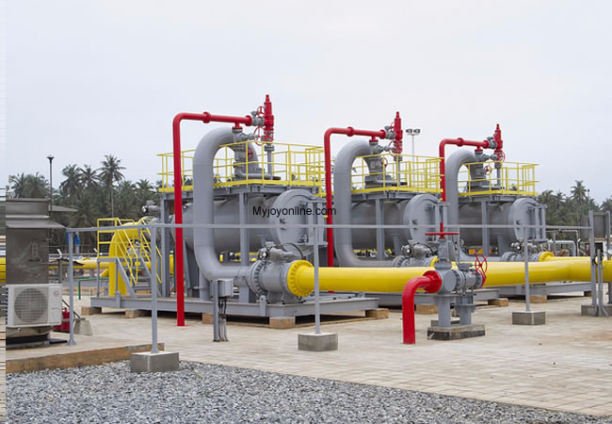
The Africa Sustainable Energy Centre (ASEC) has urged the government not to hand over the planned second Gas Processing Plant of the Ghana National Gas Company to a private entity, warning that such a move would weaken Ghana’s energy security, increase power production costs and undermine long-term national interests.
In a press release issued on Wednesday, July 8, the energy policy group said any decision to privatise the proposed Ghana Gas Processing Plant Train 2 would amount to a major strategic mistake rather than a simple commercial arrangement.
ASEC said it strongly objects to “any move by the Government of Ghana to hand over the planned second Gas Processing Plant (GPP Train 2) of the Ghana National Gas Company to a private entity”.
According to the Centre, the issue goes beyond business and should be treated as a matter of national economic and energy policy.
“Handing over GPP Train 2 to the private sector would not merely be a commercial transaction but a severe, irreversible missed opportunity for the nation,” the statement said.
It added that, when the matter is assessed through “the lens of economic logic, national energy security, and structural alignment”, only one conclusion emerges: “the state must maintain absolute ownership of GPP Train 2.”
ASEC said that allowing a private operator to take control of the plant would disrupt the state’s current fuel supply structure for thermal power generation.
It explained that under the existing Tolling Agreement with Independent Power Producers (IPPs), the Government of Ghana took responsibility for supplying fuel for thermal plants and designated Ghana Gas as the state vehicle for processing and distributing domestic gas.
“Under the current Tolling Agreement with Independent Power Producers (IPPs), the Government of Ghana assumed responsibility for supplying fuel for thermal power generation and established Ghana Gas as the exclusive national vehicle to harness, process, and distribute domestic gas,” the statement said.
In ASEC’s view, introducing a private operator into that arrangement would weaken the structure rather than improve it.
The Centre also warned that privatising the plant would create an additional layer of commercial interest in a sector that is central to national electricity supply.
According to ASEC, a private operator would naturally seek to maximise profit, and that could push up the cost of power production while the state still carries much of the underlying risk.
“It creates an unnecessary middleman,” the statement said.
“A private operator would prioritize maximizing profits, increasing power production costs and exposing the state to commercial risks while the government continues to bear the financial and structural liability.”
ASEC said that arrangement would leave Ghana in the difficult position of carrying the burden of the sector while giving away control of a strategic part of the gas value chain.
The Centre rejected any suggestion that Ghana Gas should be privatised as a way of solving operational problems, insisting that the company does not fit the profile of a struggling state institution in need of rescue.
“Privatization is a remedial measure for heavily mismanaged, unprofitable, and structurally broken public institutions,” the statement said. “Ghana Gas does not fit this description.”
ASEC said that the company has already shown that it can operate major gas infrastructure successfully and should therefore be allowed to retain ownership and control of the second processing plant.
To support its case, ASEC pointed to Ghana Gas’ management of the Atuabo Gas Processing Plant, saying the company has already demonstrated the technical and operational capacity needed to run strategic gas infrastructure.
“The company has successfully managed the existing Atuabo Gas Processing Plant, substituted imported light crude oil with indigenous natural gas, and saved the nation billions of dollars,” the statement said.
That performance, ASEC said, should strengthen the case for keeping the new plant under full state ownership rather than transferring it to private hands.
While strongly opposing private control of GPP Train 2, ASEC said it is not against private sector participation in every part of the energy sector.
Instead, it said its long-standing position has been that private sector involvement is more urgently needed in the commercial operations of the Electricity Company of Ghana (ECG), which it described as financially troubled.
“Private sector participation should instead focus on ECG,” the Centre said, adding that it has “consistently advocated for private participation in the commercial operations of the Electricity Company of Ghana (ECG) because of its chronic multi-billion-cedi financial losses.”
This, ASEC suggested, would be a more sensible area for reform than transferring a strategic gas processing facility out of public ownership.
ASEC further said that GPP Train 2 should be treated as a strategic national asset because of the role natural gas plays in electricity generation and industrial growth.
“Natural gas is the backbone of Ghana’s industrialization drive. Retaining 100% ownership of GPP Train 2 ensures that gas processing remains aligned with national development timelines,” the statement said.
According to the Centre, public ownership gives the state greater control over how gas infrastructure is used to support power generation, industrial expansion and wider economic planning.
It warned that private ownership could lead to situations where commercial interests take precedence over national needs, especially during difficult economic periods.
“During periods of economic distress or currency fluctuations, a private operator could halt operations, demand tariff adjustments, or place commercial interests above national priorities,” the statement cautioned.
ASEC said that the debate over GPP Train 2 should not be reduced to economics alone, because gas remains central to Ghana’s domestic power supply and energy security.
The Centre said that, for that reason, the country must keep full control of the planned facility.
“Beyond economic and legal considerations, natural gas remains central to Ghana’s domestic electricity supply so should not go into private hands,” the statement said.
Latest Stories
-
PRESEC, Augusco and Accra Academy battle for 2026 NSMQ crown today
15 minutes -
GH₵12 cement price increase: GPHA clarifies attribution to port congestion
16 minutes -
Pythagoras won’t balance your books
18 minutes -
Pay me by Sept. 11 or face the court – Kow Essuman demands salary, benefits from Finance Minister
37 minutes -
Bawumia’s destiny lies in the hands of God; not you – Muslim Forum for Peace and Unity replies Rev. Owusu Bempah
39 minutes -
NPP NEC meets today to discuss and approve party’s position paper on Constitution Review proposals
46 minutes -
Today’s frontpages: Thursday, September 10, 2026
53 minutes -
Ghana Garden and Flower Show returns on Sept 11 with focus on green jobs, business and wellbeing
54 minutes -
Titus-Glover camp says Mustapha Salam wasn’t pressured to withdraw from National Organiser race
55 minutes -
Ghana’s acclaimed Christian – Muslim unity bigger than Owusu Bempah’s hatred and bigotry – Muslim Forum for Peace and Unity
58 minutes -
Karpowership lights up young minds on International Literacy Day
1 hour -
Banking sector NPLs fall to GH¢19.9bn as asset quality improves
1 hour -
Republic Bank Ghana, UPSA sign strategic MoU to advance professional development and industry-academia collaboration
1 hour -
MTN 30th Anniversary CEO Invitational Golf Tournament set to tee off at Achimota
1 hour -
Ghana woos Australian investors into critical minerals
2 hours