

Audio By Carbonatix
Researchers, engineers and policymakers have called for innovative approaches to transform mining waste into valuable resources, warning that the growing volumes of mine tailings and wastewater generated by mining activities could become a major environmental challenge if left unmanaged.
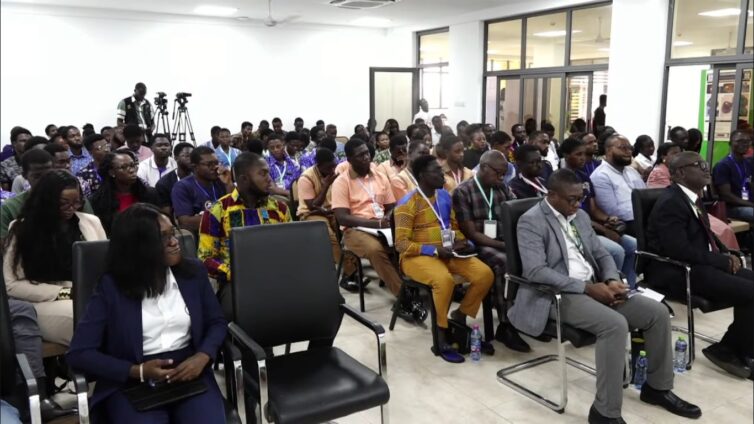
The call was made at the 2026 Mineral Waste Valorisation Research Conference held by the Department of Materials and Metallurgical Engineering at the Kwame Nkrumah University of Science and Technology (KNUST), where experts explored engineering and policy solutions to reduce the environmental impact of mineral waste.
Mining operations produce significant amounts of waste, including wastewater, process water and tailings, which can contaminate water bodies, degrade land and affect communities if not properly treated.
Participants at the hybrid conference argued that sustainable mineral waste management must become a priority as Ghana seeks to balance mineral extraction with environmental protection.
Ashanti Regional Director of the Environmental Protection Authority, Dr Jackson Adiyiah Nyantakyi, stressed that mining companies have a responsibility to ensure proper management of waste generated from their operations.
He said environmental protection must remain central to mining activities, urging companies to comply with regulations governing waste management.
“Rising concern over the environmental cost of mining has triggered fresh calls for mining companies to overhaul waste management practices before irreversible damage is done to communities and ecosystems. And the solution falls at the doorsteps of mining companies,” he said.
The conference formed part of research led by Dr Bennetta Koomson under her 2023 Women in Science for the Developing World Early Career Fellowship.
Dr Koomson said her interest in mineral waste valorisation was driven by the increasing amount of mining waste generated globally and the potential economic value that could be recovered through research and innovation.
She explained that materials considered waste by one user could become valuable resources after undergoing the right technological processes.
“We call it waste because it is of no use to the first user. And the mining industry use interesting chemicals on these wastes. What has it become after going through a certain transformative process? The focus can next be how valuables can be recovered from them or pushed to other engineering activities,” she said.
Dr Koomson added that her current research is exploring ways to use waste materials in engineering applications, including absorbing lead during laboratory processes.
She called for stronger partnerships among researchers, industry players and policymakers to scale up sustainable solutions for mineral waste management.
Provost of the College of Engineering at KNUST, Ing. Prof. Kwabena Biritwum Nyarko, urged researchers to move beyond academic publications and focus on translating discoveries into practical solutions.
“I encourage all participants not only to share scientific discoveries but also explore how these discoveries can be translated into commercial applications, national policies, practical interventions that create lasting impact,” he said.
According to him, young researchers represent the future of engineering in Ghana and Africa, and investing in their ideas would support the development of sustainable industries.
Professor Anthony Andrews, Director of the Institute of Disaster Management and a faculty member at KNUST’s Department of Materials and Metallurgical Engineering, also highlighted the importance of proper waste separation to improve recycling and resource recovery.
He particularly emphasised the need for households and industries to separate organic waste from electronic waste to reduce environmental hazards.
“I recommend that we do the sorting ourselves from homes and industries. Separating organic waste
from electronic waste. Waste in general is toxic and not friendly to the environment. And so management is prominent,” he said.
The conference, held under the theme “Valorising Mineral Waste through Engineering Innovations and Policy Advocacy,” brought together postgraduate researchers, academic staff, industry professionals and regulators to discuss strategies for converting mineral waste into useful materials while protecting Ghana’s environment.
Latest Stories
-
GNFS dismisses reports of unpaid 2025 rent allowance
23 minutes -
Gordon Asare-Bediako steps down from NPP Communications Director race, backs Dennis Aboagye
28 minutes -
GES dismisses requirement for newly promoted teachers to submit documents for salary adjustments
34 minutes -
Meko Bono 2026: Vice President pledges agricultural revival as Atebubu hosts grand homecoming
2 hours -
Russian skydiver Sergey Boytcov sets world record with 11,551-metre stratosphere jump
2 hours -
Ablakwa-led committee submits five reports to Mahama ahead of 2027 AU chairmanship
2 hours -
Africa not seeking Western cash in reparations campaign – Ablakwa
2 hours -
Production decline, reserve depletion threaten Ghana’s upstream sector – Jinapor
2 hours -
Surveyors caution against treating compensation disputes as professional misconduct
2 hours -
Mahama calls for AU dialogue on migration after South Africa xenophobic tensions
2 hours -
I haven’t experienced any envy in the gospel music industry — Ohemaa Mercy
4 hours -
Prayer does not solve everything — Ohemaa Mercy
4 hours -
New PURC office symbolises stronger consumer protection – Dr Jinapor
4 hours -
Rev. Wengam re-elected Assemblies of God, Ghana General Superintendent
4 hours -
Less than 20km of clearing left to connect Accra-Kumasi Expressway to Kumasi – Agbodza
5 hours