


Audio By Carbonatix
Economist and Professor of Finance at the University of Ghana Business School, Professor Godfred Bokpin, says digital fraud must not be treated only as a criminal matter because its impact can weaken confidence, reduce participation in digital payments and slow economic growth.
He says Ghana’s digital economy depends on trust and any sustained erosion of confidence could affect financial inclusion, formalisation, tax mobilisation and the country’s transition to a cash-lite economy.

Prof. Bokpin was speaking in a yet-to-be-aired documentary, "The Trust Crisis," ahead of the maiden Digital Economy Forum under the theme, "The Trust Crisis: Why Fraud Is Holding Back Ghana’s Digital Economy."
The thought-leadership platform, an initiative of Hubtel, will air on JoyNews and Joy FM on Wednesday, July 22, 2026, at 8 p.m.

The forum will bring together regulators, banks, fintech companies, telecommunications firms, security agencies and consumers to examine whether Ghana’s regulatory system is keeping pace with the growth of digital finance.
Prof. Bokpin said digital fraud has both criminal and economic dimensions. He said the growing “economy of fraud” means the law alone cannot solve the problem.
“It is very difficult to separate the two. It is a crime, but of course, it is also driven by economic reasons. There are those who invest to ensure that they benefit from this fraud because that is a kind of profession for them all over the world. The law alone does not solve that problem. You also need higher public education. Higher financial literacy also helps, so that people understand how they use it and how they can protect their passwords,” he said.
His comments come as fraud cases in Ghana’s financial sector continue to rise.
The Bank of Ghana’s 2024 fraud report shows that banks, specialised deposit-taking institutions and payment service providers recorded 16,733 fraud cases in 2024, up from 15,865 in 2023.
The total value at risk increased by 13 per cent, from GH¢88 million in 2023 to approximately GH¢99 million in 2024.
Payment service providers accounted for 94 per cent of total reported fraud cases, making digital-payment channels central to Ghana’s fraud challenge.
Prof. Bokpin said fraud can change consumer behaviour and push people away from digital transactions. He cited traders who reject mobile money payments because of fraud concerns.
“We know that in Ghana, because of fraud associated with MoMo here and there, there are communities and traders who do not want to accept MoMo payment. It is simply because they do not have confidence in the system. It may also be because they have had one experience or another, directly or indirectly. One direct effect is unwillingness to participate. What that means is that they will prefer to do more cash-based transactions,” he said.
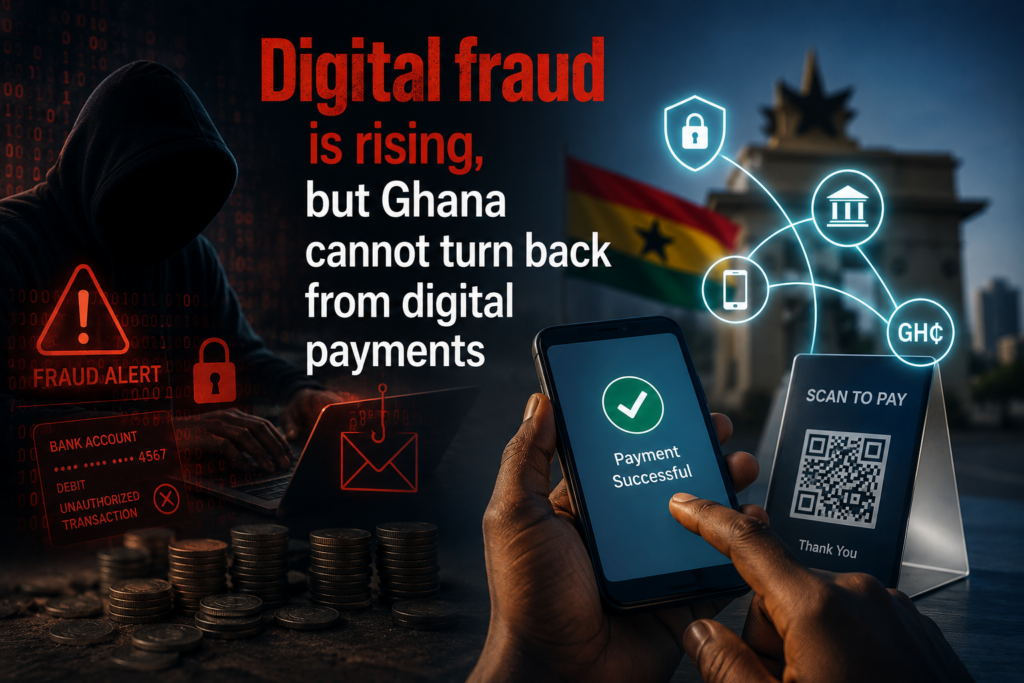
The economist said when trust falls, participation in the digital economy also suffers. According to him, this has wider economic implications because digital payments can help reduce transaction costs, increase financial inclusion and bring more informal-sector activity into the formal financial system.
“For a country like Ghana, with a huge informal sector and a huge unbanked population, these avenues allow the economy to rope in the unbanked. Digital payments, digital apps and fintech open up the market and rope in all these people,” he added.
Prof. Bokpin said the benefit goes beyond taxation. He cautioned government not to approach digitisation mainly as a tool to tax citizens.
“We should not only look at it from the perspective of taxation. We should look at it in terms of the broader economic benefit. If you always put tax ahead of digitisation, the market will react differently,” he indicated.
He said the better approach is to use digital finance to grow a broader, more inclusive and taxable economy.
“The government’s goal should not be that we want to leverage this to tax you. Let us look at how we want to leverage it to grow an economy, a taxable economy, that allows the state to get the maximum tax revenue from that,” he held.
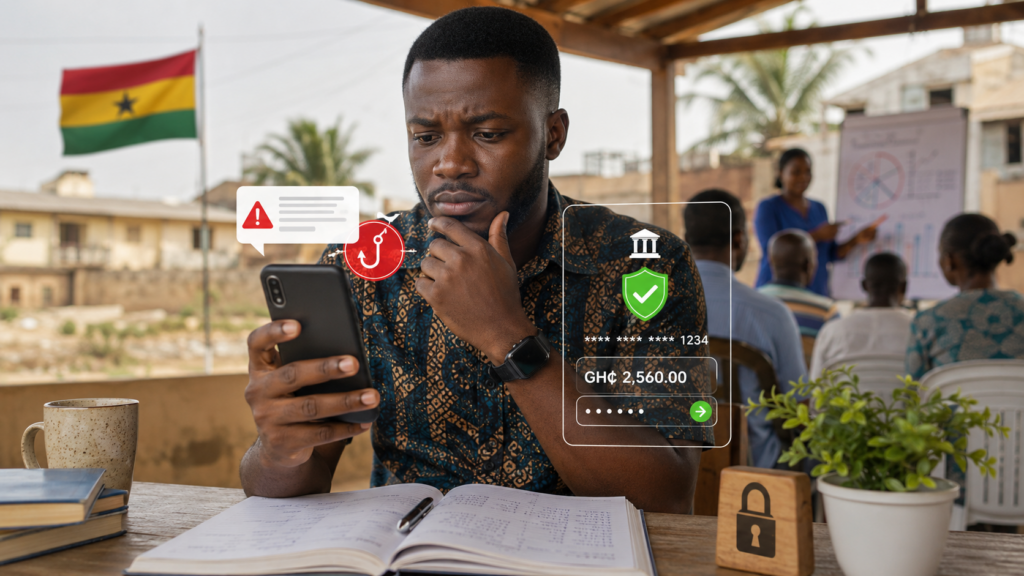
The Bank of Ghana says payment service providers processed about 8.1 billion transactions valued at GH¢3 trillion in 2024. This represented a 19 per cent increase in transaction volume and a 58 per cent rise in value from 2023.
Prof. Bokpin said criminals are also tracking that growth. e said the rise of online transactions has shifted financial crime from physical cash theft to digital fraud.
“Criminals follow the money and the trend. They are also doing their analysis and projections, seeing where the flow is going, and preparing towards that as well. With increasing digitisation and digital payments, you see a switch from physical crime, in terms of physical theft and cash, moving more online. These days, it is easier for criminals to meet people online than in physical locations,” he further said.
Despite the risks, Prof. Bokpin said Ghana cannot retreat from digital payments. He said the benefits of convenience, inclusion, lower transaction costs and digital jobs remain significant.
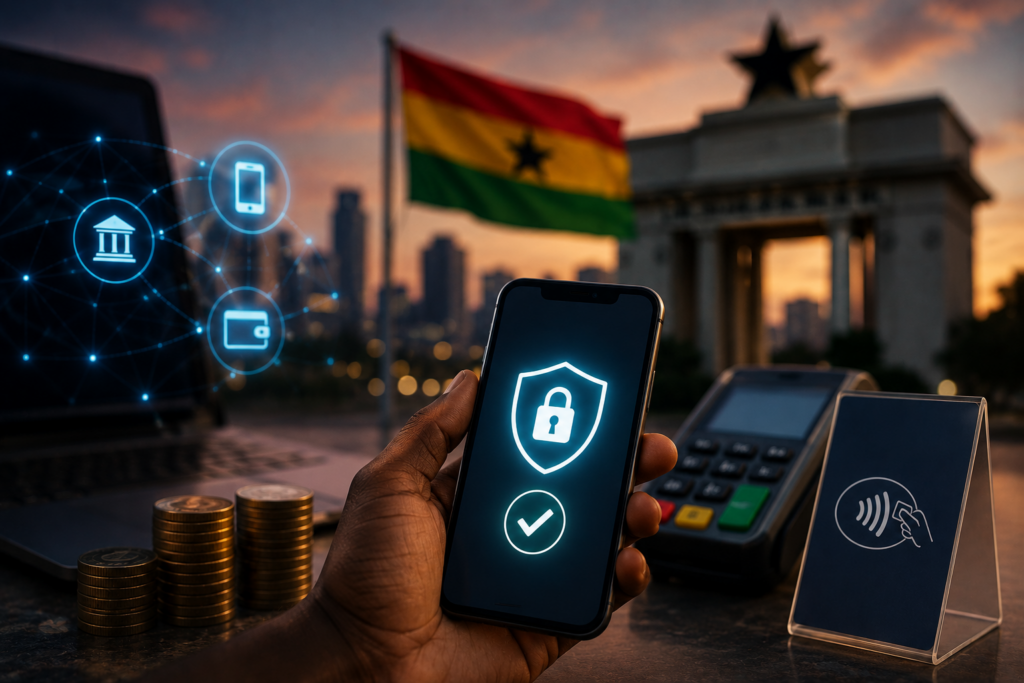
He said financial institutions, fintech companies, regulators and users all have roles to play in managing fraud.
Prof. Bokpin said Ghana must mainstream basic cybersecurity and financial-literacy education across society. He said the state, through the Cyber Security Authority, regulators and other institutions, must also invest in managing higher-end risks.
For him, Ghana’s digital economy can keep expanding only if consumers believe the system is safe enough to use. The challenge, he said, is not to stop digitisation but to protect the trust that makes it work.
Latest Stories
-
Édouard Mendy annonce sa retraite internationale avec le Sénégal
1 hour -
Lamine Yamal scores twice as Barcelona maintain perfect start
2 hours -
Haaland scores controversial winner for 10-man City at Man Utd
2 hours -
Ghana’s narcotics crisis deepens as drug seizures linked to country top US$1bn – Minority
2 hours -
CAF CC: Nations FC bow out after draw with FC Diarra in Accra
2 hours -
Kenyans dominate 2026 KGL Millennium Marathon as race champions mental health
2 hours -
Minority demands full-scale probe into Ghana’s alleged emergence as narcotics transit hub
2 hours -
NaCCA trains teachers to implement new Chinese language curriculum
4 hours -
Ghana, China deepen cooperation on galamsey and mining sector
4 hours -
JoyNews–Republic Bank Habitat Fair ends on a high note after 3 days of strong patronage, expert engagement
4 hours -
Emma Ofosua takes West African spoken word to three UK cities
4 hours -
Traditional artists will become more expensive because of AI – Aewura Arts
4 hours -
Clients would disappear after I finished their artworks – Aewura Arts recounts challenges
4 hours -
Turkish police detain dozens in raids on gay bars and homes of LGBTQ+ activists
5 hours -
Trump doubles down on united Ireland comments on day two of visit
5 hours