

Audio By Carbonatix
Founder and Executive Chair of e-Crime Bureau, Dr Albert Antwi-Boasiako, says social engineering remains one of Ghana’s weakest links in the fight against digital fraud.
He says fraudsters are increasingly exploiting human trust, fear, ignorance and online habits to steal money or personal information from unsuspecting users.
The threat, he explains, is no longer limited to suspicious phone calls. It now includes phishing links, cloned Facebook accounts, fake public officials, fraudulent e-commerce websites and impersonation of trusted brands.
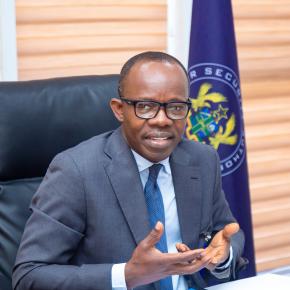
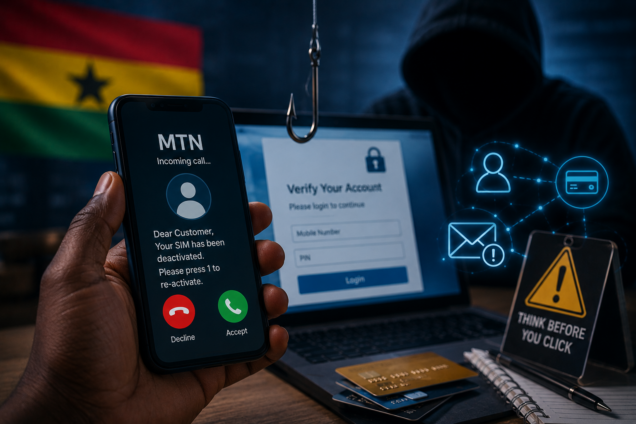
“We have all received calls where someone says, ‘I’m calling from MTN. Can you provide your PIN?’ MTN will not call you to request your PIN. Some people can detect these tricks, but what about the wider population, especially vulnerable people who may not be able to recognise social engineering attacks?” he said.
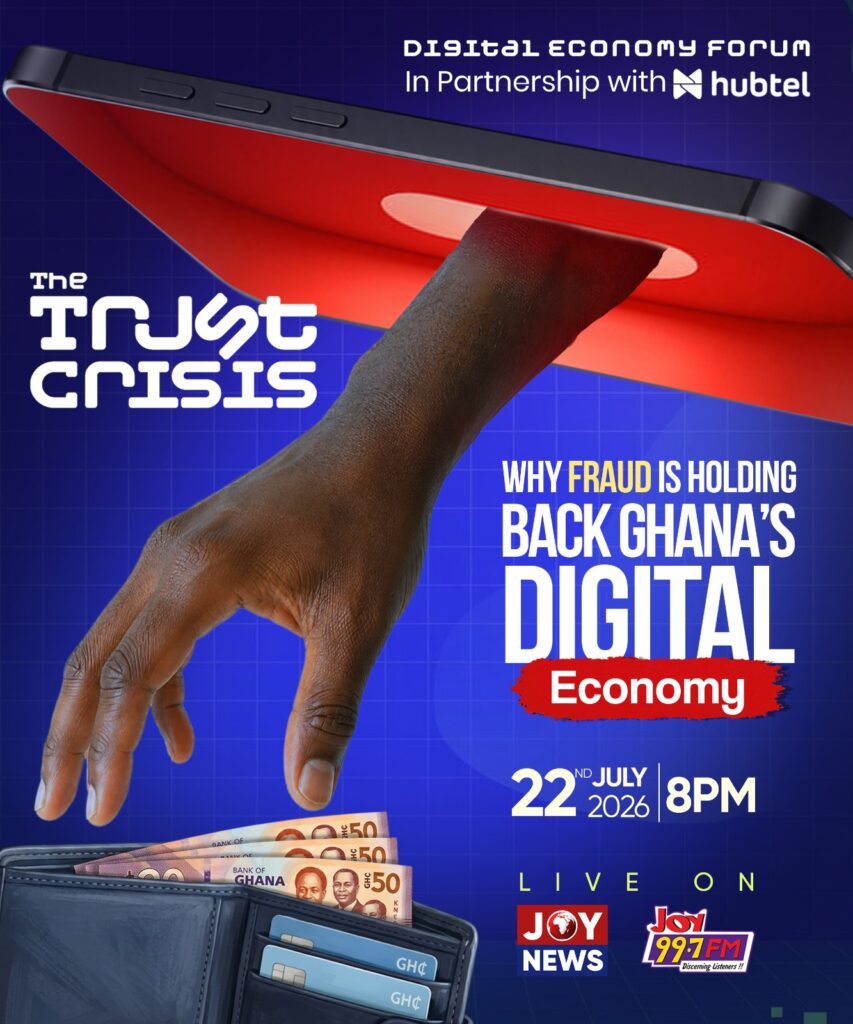
Dr Antwi-Boasiako was speaking in a yet-to-be-aired documentary, “The Trust Crisis,” ahead of the maiden Digital Economy Forum under the theme, “The Trust Crisis: Why Fraud Is Holding Back Ghana’s Digital Economy.”
The thought-leadership platform, an initiative of Hubtel, will air on JoyNews and Joy FM on Wednesday, July 22, 2026, at 8 p.m.

The forum will bring together regulators, banks, fintech companies, telecommunications firms, cybersecurity experts, businesses and consumers to examine how fraud is affecting confidence in Ghana’s digital economy.
DDrAntwi-Boasiako said social engineering has become dangerous because it targets the user rather than only the technology.
Banks, fintechs and telecommunications companies may build stronger systems, but fraudsters can still succeed when they persuade customers to disclose PINs, passwords, one-time passwords or other sensitive details.
The Bank of Ghana has also identified social engineering as a major vulnerability within Ghana’s digital payment space. In its 2024 fraud report, the central bank directed payment service providers to strengthen authentication systems, introduce customer-behaviour monitoring technologies, educate customers, and improve monitoring and training of mobile money agents.
DrDrntwi-Boasiako said phishing attacks have also become common. He said criminals are using several online channels at once, making fraud harder for ordinary users to detect.
“There are also organised groups using phishing attacks. They send links that appear legitimate. You click the link, enter your details, and they use that information to defraud you. It is not just calls. It is not just links. Criminals clone Facebook accounts, impersonate public officials and create fake online identities. Sometimes, they set up websites that look like legitimate e-commerce platforms. You either give away information or end up parting with money,” he said.
His warning comes at a time when Ghana’s digital finance ecosystem is expanding rapidly.
The Bank of Ghana’s 2024 Payment Systems Oversight Annual Report says Ghana’s payment landscape remained buoyant and robust in 2024, as adoption of digital payments increased and the central bank focused on oversight to minimise risks in the sector.
Available data from the report shows mobile money transaction values reached about GH¢3.01 trillion in 2024, up from GH¢1.92 trillion in 2023. Transaction volumes also rose to about 8.1 billion in 2024, from 6.8 billion in 2023.
But as the volume and value of digital transactions grow, fraudsters are also finding more opportunities to target users.
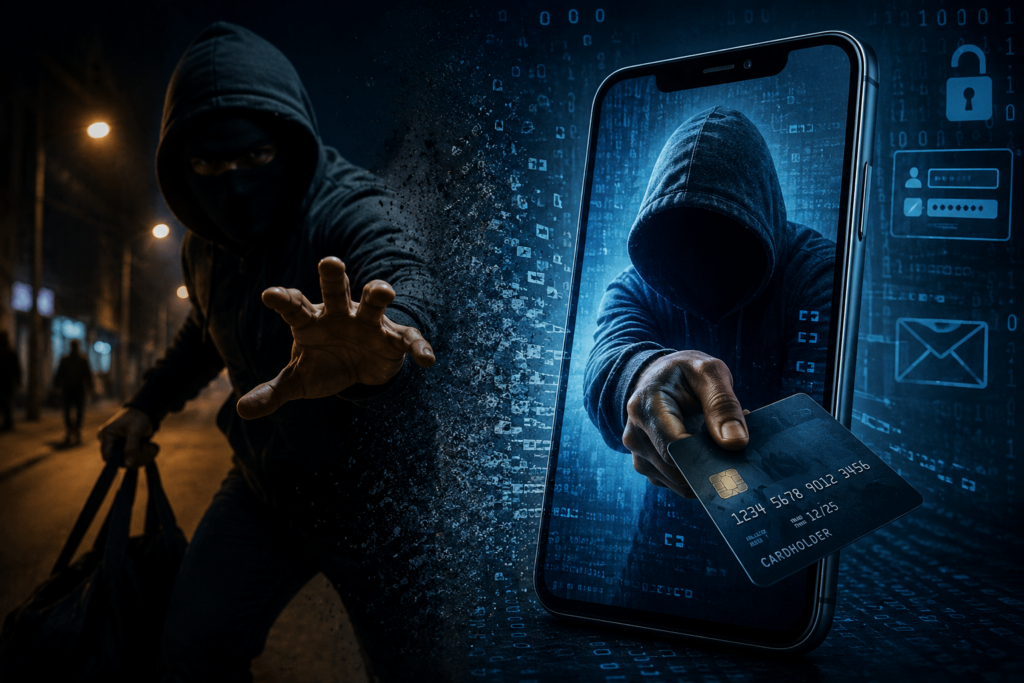
The Bank of Ghana’s 2024 fraud report shows that banks, specialised deposit-taking institutions and payment service providers recorded 16,733 fraud cases in 2024, up from 15,865 in 2023. The report covers attempted and successful fraudulent activities recorded between January and December 2024.
Payment service providers recorded 15,673 fraud cases in 2024, representing a seven per cent increase from the 14,655 cases recorded in 2023. The value at risk in the sector also rose by 18 per cent to about GH¢19 million.
Dr. Antwi-Boasiako believes these risks must be understood as public online safety issues, not only banking or mobile money problems.
He said many Ghanaians are confronted daily with different forms of impersonation, including romance fraud, employment fraud, recruitment fraud, identity impersonation and brand impersonation.
He said brand impersonation is also becoming common as more consumers use social media to find services and make payments.
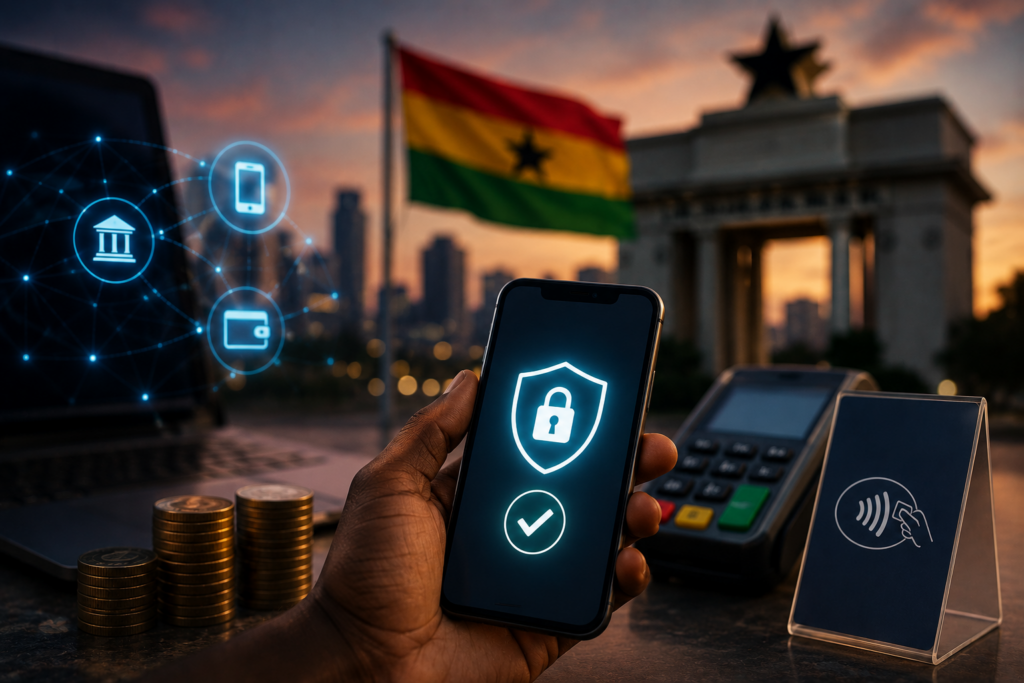
“We’re talking about impersonation, which is a form of fraud, and it manifests in different dimensions. You have romance fraud, employment fraud and recruitment fraud. There are also cases of people impersonating brands and service providers.”
“For example, you go online intending to order from a particular service provider on social media, but an organised criminal network has created a similar brand online. People contact them, pay through mobile money accounts and are defrauded,” he said.
Ghana’s growing internet population has widened the exposure.
DataReportal’s Digital 2025 report estimates that Ghana had 24.3 million internet users at the start of 2025, when internet penetration stood at 69.9 per cent.

This means millions of users are now exposed to online platforms where fraudsters can impersonate businesses, send deceptive links, clone accounts or redirect payments.
Dr. Antwi-Boasiako said fraud is deliberate and calculated. He said the internet gives criminals some cover, while mobile money and other instant payment systems can make it easier for them to benefit quickly from deception.
He said fraudsters also take advantage of weak detection and limited deterrence. For him, awareness remains a critical defence.
“The environment is full of these actors, but what they have in common is intent. Fraud is a deliberate and calculated activity. In criminology, we refer to rational choice theory. Criminals are not stupid. They make calculated decisions based on clear goals. They act when the chance of detection is low, and the reward is high. The internet provides a kind of cover. There is also the element of reward.”
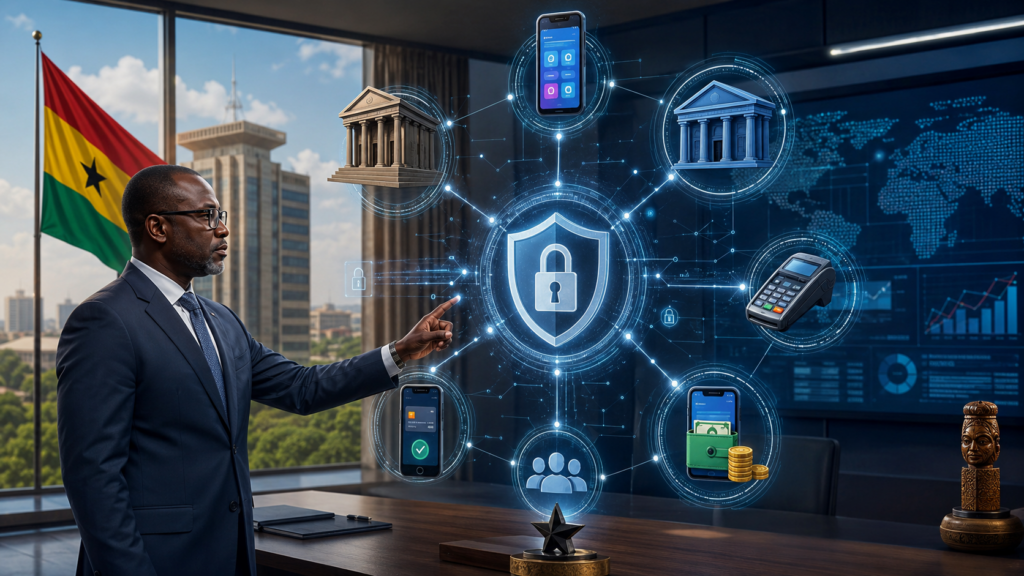
“If I am able to deceive you into sending money to my mobile money account, I can quickly withdraw it. There is instant financial benefit to the criminal. They also act when they believe detection and deterrence are almost non-existent. When enforcement is weak, from investigation and prosecution standpoints, they take advantage of that. The lack of awareness of the risks and schemes being used by cybercriminals puts users of digital platforms in danger,” he said.
Dr Antwi-Boasiako said the fight against social engineering cannot depend on law enforcement alone because cybercrime cases are complex and difficult to investigate successfully.
“Law enforcement is important, but you cannot investigate and prosecute every cybercrime case successfully. Even if the state successfully investigates and prosecutes five per cent of reported cases, that would be significant because these crimes are complex.”
When users are repeatedly exposed to fake calls, phishing links, cloned accounts and fake online shops, they may become reluctant to transact online, keep money in mobile wallets or trust digital payment platforms.
Dr. Antwi-Boasiako said government, businesses and individuals must all take responsibility.
For Ghana’s digital economy to grow, social engineering must be treated as more than a nuisance. It is a direct threat to trust, adoption and the safety of millions of digital users.
Latest Stories
-
Ferran Torres Hat-trick gets PSG title defence off to a winning start
27 minutes -
Mac Allister scores winner as Liverpool beat Athletico Madrid
34 minutes -
Martin Odegaard hits Arsenal winner to sink Napoli
48 minutes -
Messi agrees to buy second Spanish club
2 hours -
Ruthless Raphinha inspires Barcelona to Feyenoord win
2 hours -
Nii Moi Thompson says government must put SMEs at heart of 24-Hour Economy
2 hours -
24-Hour Economy was not born with Mahama’s second term, says Nii Moi Thompson
3 hours -
Apple’s new boss starts with big gamble on costly first folding iPhone
3 hours -
24-Hour Economy was born from Ghana’s 48-year development plan – Nii Moi Thompson
3 hours -
Motorcycle number plates: The growing practice of concealment
4 hours -
Two accused of land guard activities weep in court
4 hours -
Gauff saves match points to set up Rybakina semi-final
4 hours -
Police record seven major breakthroughs in crime fight
4 hours -
Okraku credits Black Princesses technical team for Korea Win
4 hours -
Police arrest suspects over Buipe, highway robberies and weapons trading
4 hours