

Audio By Carbonatix
President John Dramani Mahama has directed the immediate operationalisation of all waste transfer stations managed by Zoomlion Ghana Limited to improve refuse collection and strengthen waste management across the Greater Accra Region in the aftermath of the recent floods.
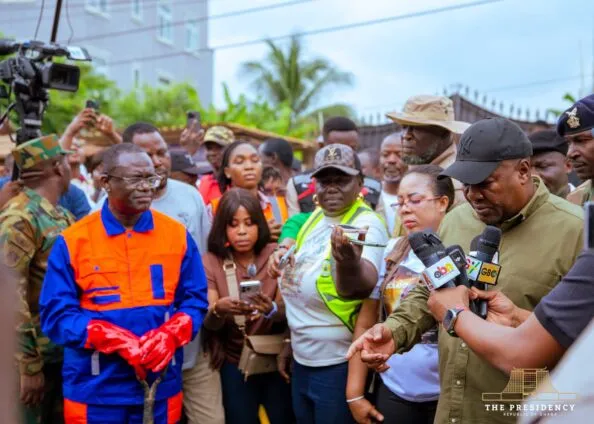
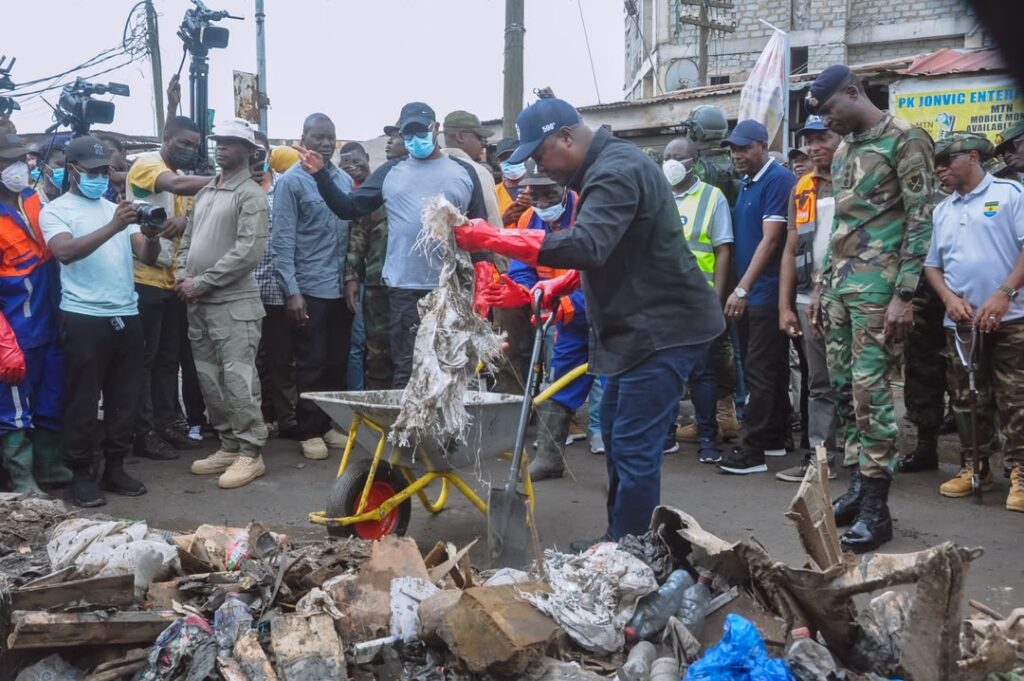
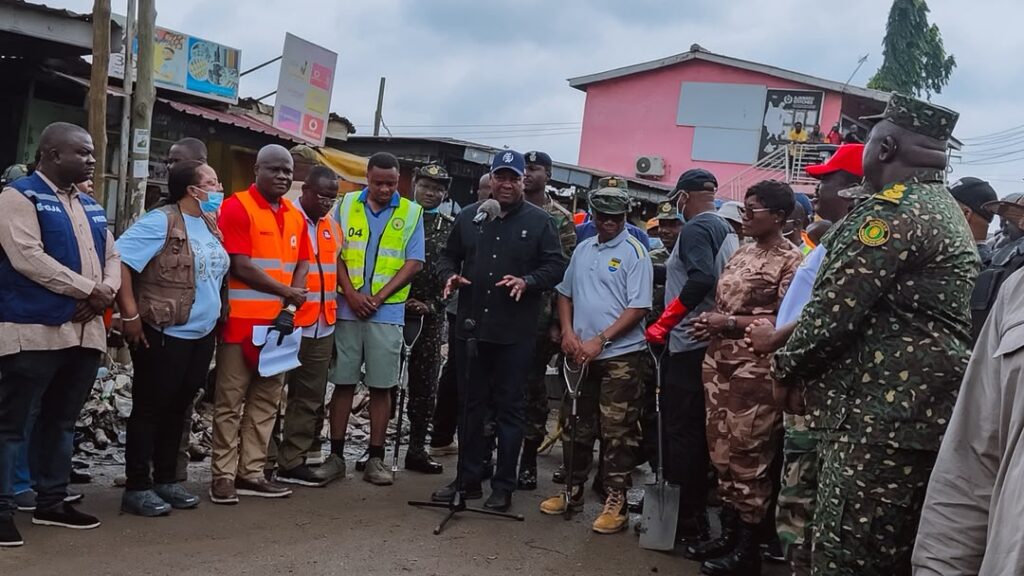
Speaking to residents during the second and final day of the National General Clean-up Exercise at Alajo on Saturday, July 11, the President said the transfer stations, constructed more than nine years ago, had remained unused, forcing waste collectors to transport refuse over long distances to final disposal sites.
"Unfortunately, they were not put into operation. So, we have asked the contractor, Zoomlion, to open the transfer stations so that the Aboboyas and others can take the garbage to the transfer stations," President Mahama said.
"They don't need to go all the way to Amasaman to the IRECOPs," he added.
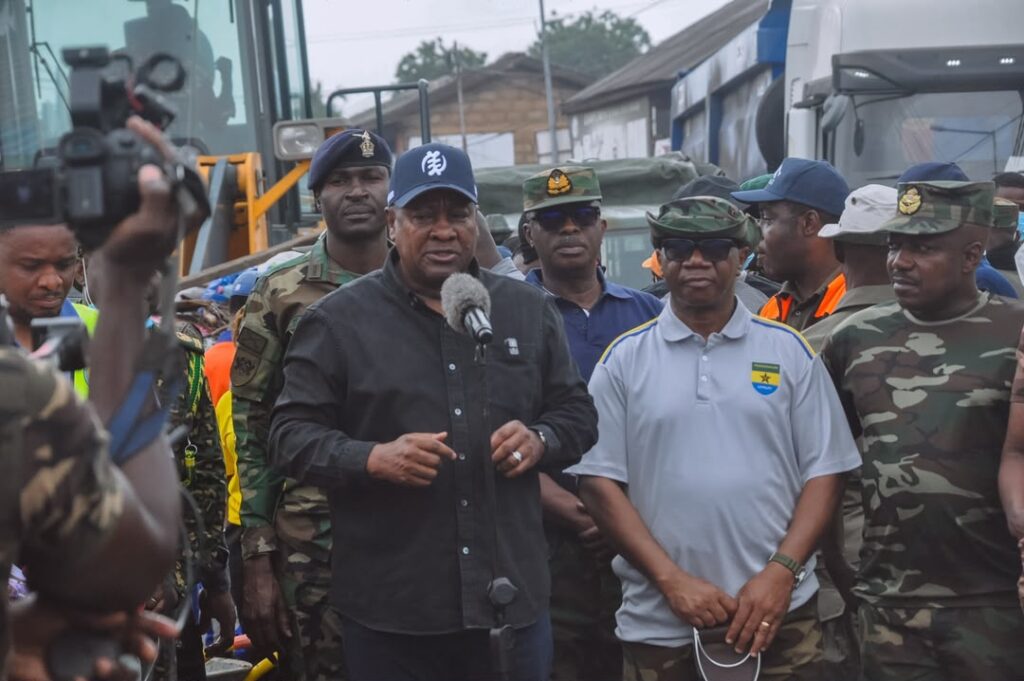
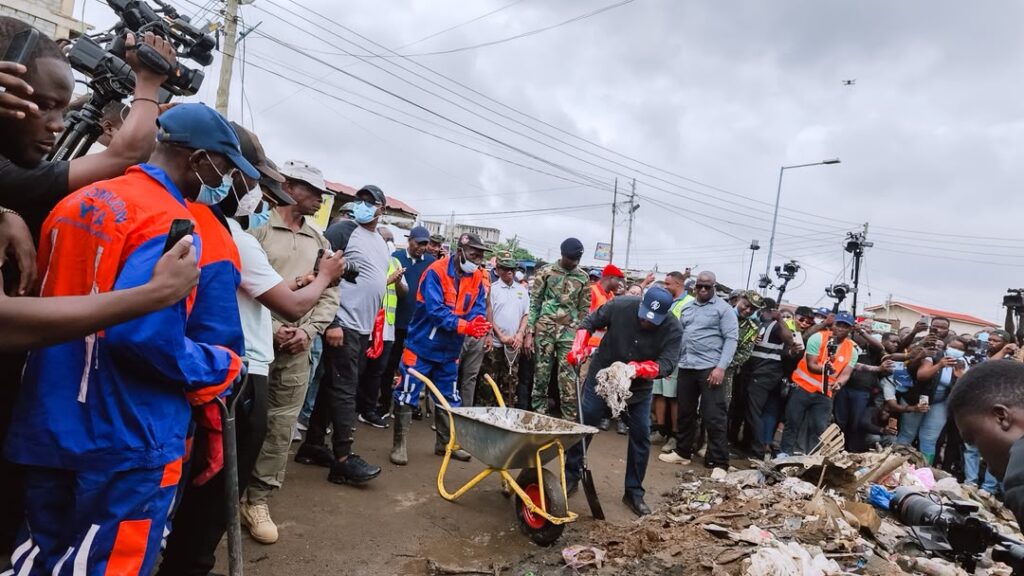
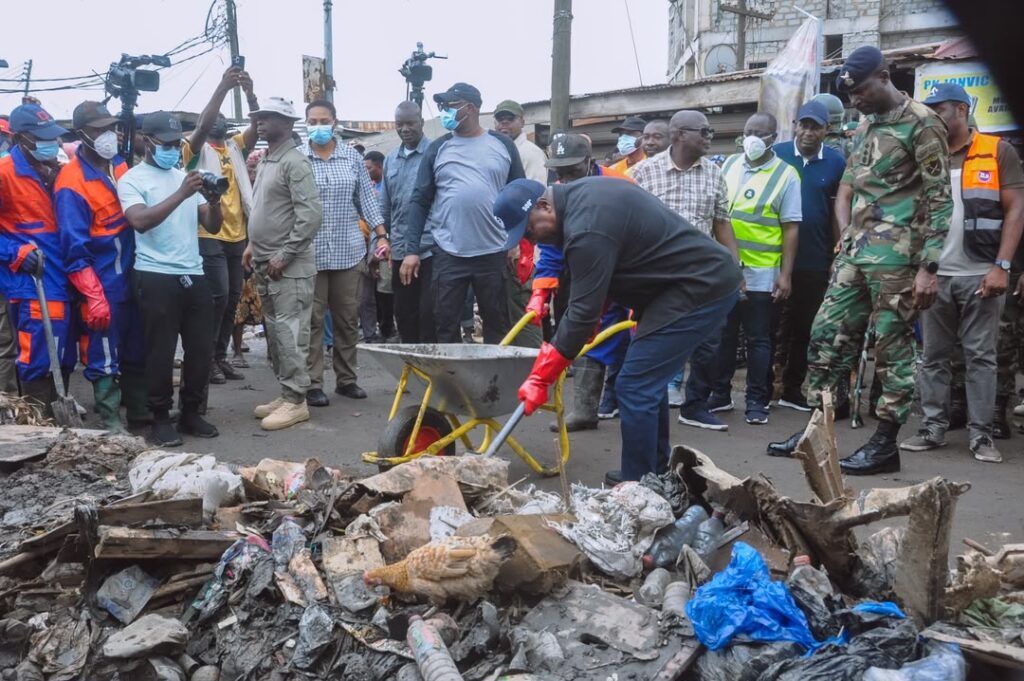
The President described the move as a major step towards creating a more efficient and sustainable waste management system, stressing that effective sanitation depends on both functional infrastructure and responsible public behaviour.
Under the arrangement, waste collectors will discharge refuse at the transfer stations, where it will be compacted before being transported by Zoomlion's heavy-duty haulage trucks to approved treatment and final disposal facilities.
The six transfer stations, located at Achimota, Teshie, Kpone, Ashaiman, Pantang and Adipa, will serve as temporary collection points before waste is transported to facilities including the Accra Compost and Recycling Plant (ACARP) and the Accra Integrated Recycling and Compost Plant (IRECOP).
Zoomlion confirmed that all six transfer stations are now operational and receiving waste generated during the nationwide clean-up exercise.
'We will bounce back better'
President Mahama commended the public response to the two-day exercise, describing participation as encouraging, while urging those who had not yet joined the exercise to do so.
"Today the turnout is very good, but I am calling on those still in their houses to come out and come and join us so we clean the city after the flood," he appealed.
He noted that previous clean-up campaigns often failed because refuse removed from drains was left along roadsides, only to be washed back into the drains during subsequent rainfall.
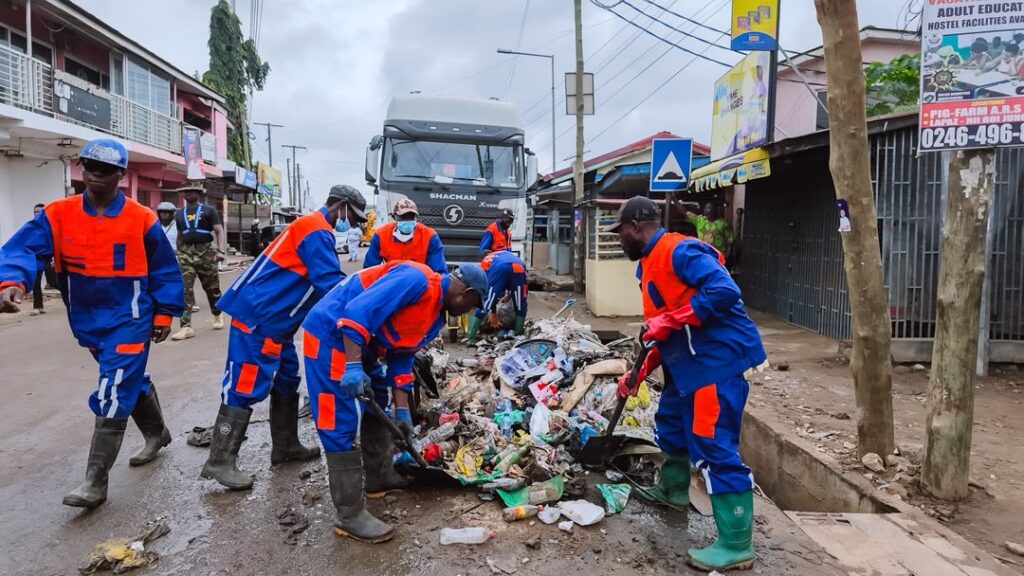
"Today we are going to concentrate on scooping all the garbage we took out of the gutters into these big trucks so that they take them to the dumpsite," he said.
Acknowledging that two days would not be sufficient to complete the work, the President announced that the Ghana Armed Forces and other agencies would continue the exercise until all waste removed from drains had been evacuated.
"Ghana is a resilient country, Accra is a resilient city, and we will bounce back better than before," he said.
Zoomlion expands logistics
Responding to the President's directive, Executive Chairman of the Jospong Group, Dr Joseph Siaw Agyepong, welcomed the decision and reaffirmed Zoomlion's commitment to supporting the government's post-flood sanitation efforts.
He explained that the second day of the exercise focused largely on evacuating the huge volumes of refuse removed from homes, drains and public spaces, requiring extensive logistical support.
Dr Siaw Agyepong said Zoomlion, working with the Environmental Service Providers Association (ESPA), Metropolitan, Municipal and District Assemblies (MMDAs) and other stakeholders, had significantly expanded its operations across the Greater Accra Region.
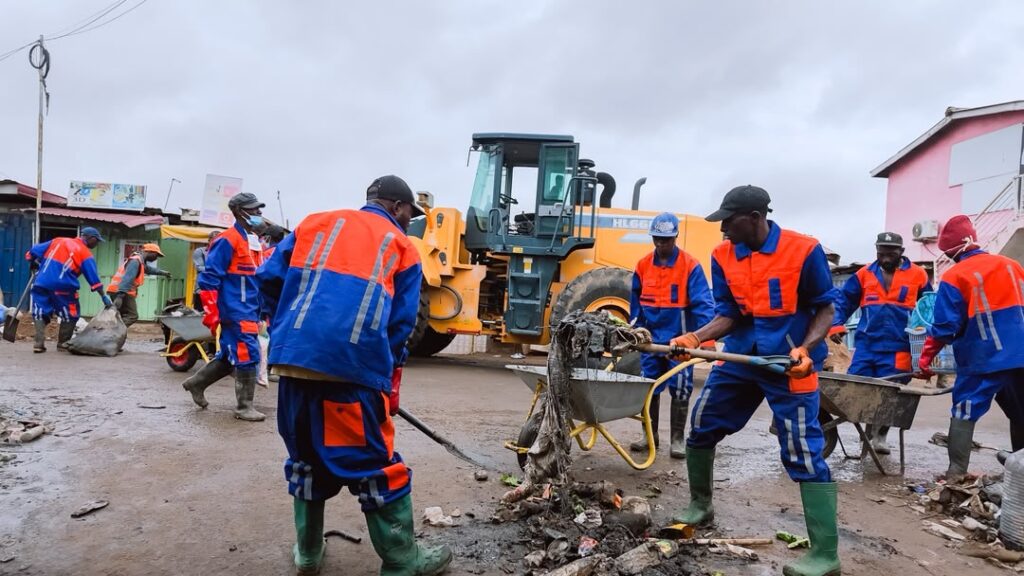
According to him, the exercise involved about 150 haulage trucks, 30 refuse compactors, road sweepers, more than 2,000 tricycle waste operators and over 1,000 Zoomlion personnel. An additional 60 long-haul trailers were also deployed on the second day to boost evacuation capacity.
He said the operation was being undertaken simultaneously across all 29 Metropolitan, Municipal and District Assemblies in the Greater Accra Region, particularly in flood-affected communities.
Dr Siaw Agyepong urged residents to complement the exercise by adopting responsible waste disposal practices, observing that much of the refuse removed had accumulated over several years.
Minister inspects waste management chain
Following the President's directive, the Minister for Local Government, Chieftaincy and Religious Affairs, Ahmed Ibrahim, inspected several transfer stations and the Accra Integrated Recycling and Compost Plant (IRECOP) to assess their readiness and operational capacity.
He commended President Mahama for authorising the activation of the facilities, describing the decision as a significant step towards improving waste collection and transportation across Greater Accra.
The Minister also praised Dr Siaw Agyepong for investing in the infrastructure needed to support the government's sanitation agenda, saying the partnership between the public and private sectors would play a critical role in addressing Ghana's waste management challenges.
He noted that the transfer stations have the capacity to operate continuously, including on a 24-hour basis, to receive and process waste whenever necessary.
Mr Ibrahim further stressed that preventing sanitation-related diseases is far less costly than treating their health consequences, urging Ghanaians to maintain cleaner surroundings.
Towards a circular waste economy
At the IRECOP facility, officials were taken through the waste treatment process, where collected refuse is sorted, recycled and converted into useful products instead of being disposed of at landfill sites.
Technical Manager of IRECOP, Ing. Joseph Owusu Sarkodie, explained that the facility treats waste as a resource through a combination of mechanical and manual sorting systems.
He said recovered plastics are processed into raw materials for plastic manufacturers, metals are prepared for steel producers, while organic waste is converted into compost for agriculture, landscaping and other uses.
The visit underscored the government's renewed commitment to transitioning from a disposal-driven waste management model to a circular economy that prioritises waste recovery, recycling and composting.
The National General Clean-up Exercise brought together the Minister for Local Government, Chieftaincy and Religious Affairs, the Greater Accra Regional Minister, the Mayor of Accra, personnel from the Ghana Armed Forces, Ghana Police Service, Ghana National Fire Service and Ghana Immigration Service, as well as thousands of residents and volunteers.
As the exercise concluded, stakeholders expressed optimism that the activation of the transfer stations, increased deployment of logistics and stronger collaboration between government and the private sector would significantly improve waste management and help build a cleaner, healthier and more resilient Accra.
Latest Stories
-
Aggrieved teachers demand payment of unpaid four-year legacy arrears
19 minutes -
Skipping breakfast bad for your health?
32 minutes -
Kpeshie Lagoon reclamation linked to first-ever flooding at Tse Addo – ISD
40 minutes -
GRA announces major policy proposal under Modified Taxation Scheme initiative
55 minutes -
TCL sues Samsung for false advertising over ‘Mini LED’ televisions
1 hour -
US embassy child abuse images suspect flown from UK before police interview
1 hour -
Payment dispute led to murder of Dr Jesse Amuah and wife at Asylum Down – Court told
1 hour -
COPEC calls for GH¢1 petrol, continuation of GH¢2 diesel subsidy amid price surge
1 hour -
Petrol to sell at GH¢16.26, diesel GH¢19.07 from Wednesday – COPEC
2 hours -
Massive crowds flock to JoyNews–Republic Bank Habitat Fair on final day to explore mortgages and seek expert advice
2 hours -
Ghana’s Alice Banaaza spotlights fugu weaving at 2026 CHAN Festival in UK
2 hours -
Russia’s Youth Festival could unlock business partnerships and scholarships for Ghanaian youth – John Aggrey
2 hours -
The 21st Century Gold Standard was piloted in Ghana under Bawumia – Gideon Boako
2 hours -
Ahafo NDC Vice Chairman pays nomination fees for 168 constituency executives ahead of 2026 internal reorganisation
2 hours -
Upper West receives GH¢101.9m DACF for development projects
2 hours