

Audio By Carbonatix
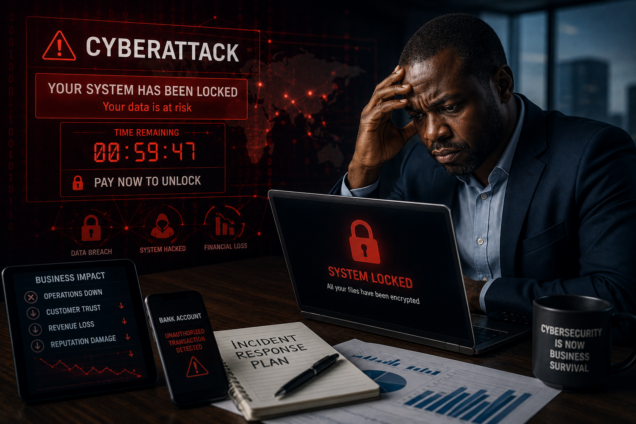
Founder and Executive Chair of e-Crime Bureau, Dr. Albert Antwi-Boasiako, says cyberattacks have become an existential risk for businesses operating in the digital economy.
He says banks, fintech companies, e-commerce platforms, online merchants, logistics firms and payment service providers can no longer treat cybersecurity as a technical matter reserved for IT departments.
As more business operations move online, he says companies must invest in protection, early detection and recovery systems or risk losing revenue, customer trust and operational continuity.

Dr. Antwi-Boasiako was speaking in a yet-to-be-aired documentary, “The Trust Crisis,” ahead of the maiden Digital Economy Forum under the theme, “The Trust Crisis: Why Fraud Is Holding Back Ghana’s Digital Economy.”
The thought-leadership platform, an initiative of Hubtel, will air on JoyNews and Joy FM on Wednesday, July 22, 2026, at 8 p.m.
The forum will bring together regulators, banks, fintech companies, telecommunications firms, cybersecurity experts, businesses and consumers to examine how fraud and cybercrime are affecting confidence in Ghana’s digital economy.

Dr. Antwi-Boasiako said the growing dependence on digital platforms has changed the risk profile of businesses.
“Businesses must invest in cyber protection. They must understand that they can be targets and prepare to protect their platforms and services. Cyberattacks have become an existential risk in the digital age. We must stay aware, prevent where possible, detect early and be prepared to recover quickly when attacks happen,” he indicated.
The e-Crime Bureau boss’ warning comes at a time when Ghana’s payment and digital service ecosystem is expanding rapidly.
The Bank of Ghana’s 2024 Payment Systems Oversight Annual Report says Ghana’s payment landscape remained buoyant and robust in 2024 as the adoption of digital payments increased. The central bank said it focused on effective oversight of players within the space to ensure that risks associated with digital payments were kept at a minimum.
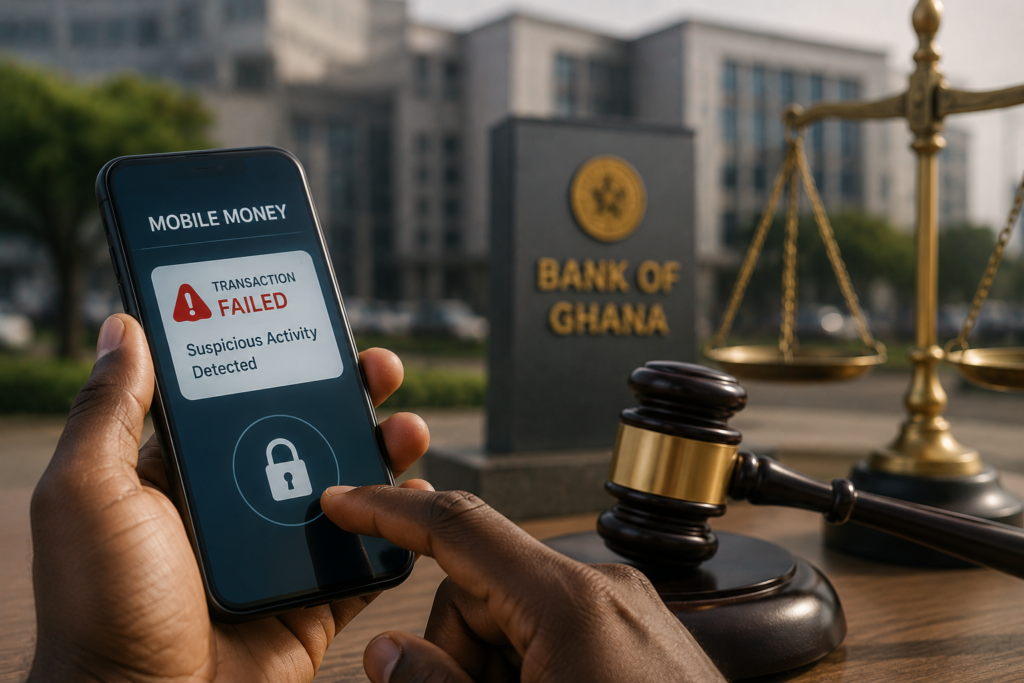
Available data from the report shows mobile money transaction values reached about GH¢3.01 trillion in 2024, up from GH¢1.92 trillion in 2023. Transaction volumes also rose to about 8.1 billion in 2024, from 6.8 billion in 2023.
That scale of activity means more businesses now depend on digital payments, online verification, mobile applications, customer databases and platform availability to operate.
For payment companies, an attack can disrupt transactions.
For e-commerce platforms, it can redirect customers to fake pages or compromise payment flows.
For logistics firms, it can affect delivery systems, customer records and order tracking.
For banks and fintechs, it can damage confidence in channels that customers are expected to use daily.
Dr. Antwi-Boasiako said the growth of digital financial services has a direct relationship with the kinds of fraud and cyber risks now emerging.
He said Ghana’s risk environment has changed because the economy is no longer as cash-based as it used to be.
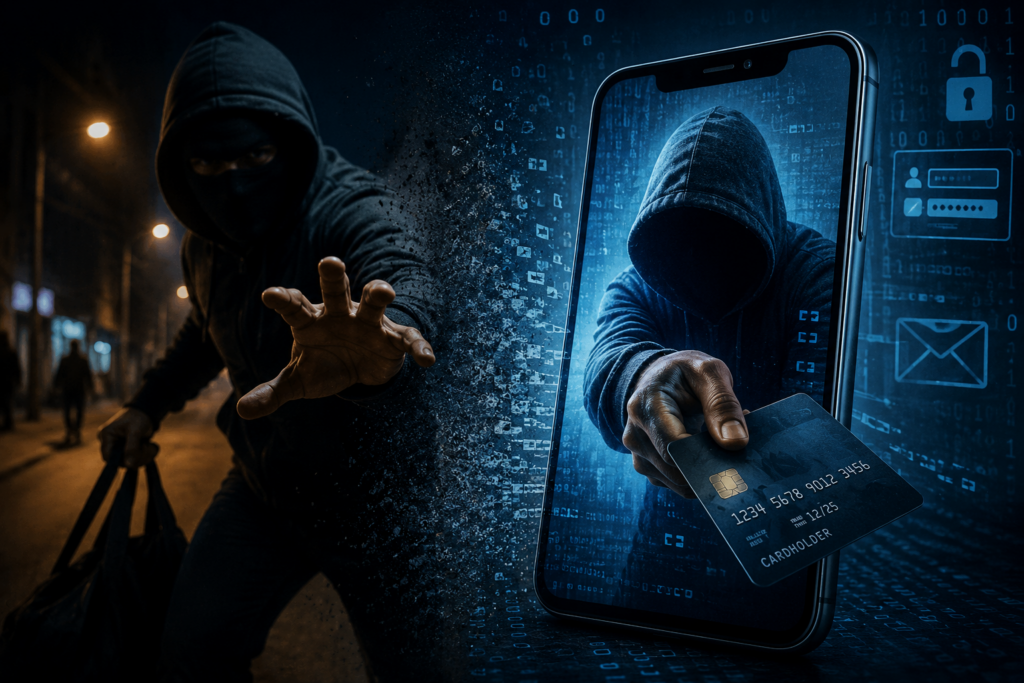
“There is a correlation. The growth of digital financial services has a correlation with the kind of fraud we are seeing. Fifteen years ago, Ghana was largely cash-based. The risks were different, especially around cash handling. Now, as digital financial services grow, fraud is also evolving through digital channels. As the nation adopts digital financial services and digital initiatives, naturally, there will also be growth in fraud and cybercrime,” he indicated.
The Bank of Ghana’s 2024 fraud report shows that banks, specialised deposit-taking institutions and payment service providers recorded 16,733 fraud cases in 2024, up from 15,865 in 2023.
Payment service providers were particularly exposed. In the PSP sector, the total value at risk rose to GH¢19 million in 2024, involving 15,673 reported cases. This represented an 18 percent increase in value and a seven percent increase in the number of cases compared with 2023.
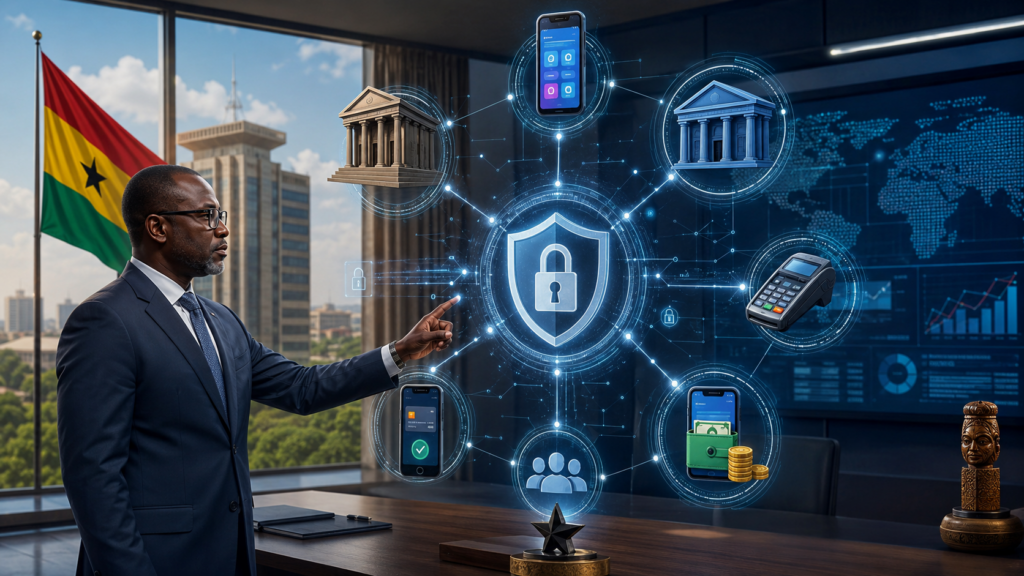
For Dr. Antwi-Boasiako, cyber risk is also becoming more complex because criminals are gaining access to stronger tools. He said artificial intelligence is one of the emerging concerns.
“One new area is artificial intelligence. AI tools are helping cybercriminals improve their methods and become more efficient. They can target more people with speed and scale. AI broadens the attack surface. Criminals can execute attacks with less effort, and those attacks are likely to become more complex. Detection mechanisms must therefore be enhanced,” he said.
That concern is consistent with wider global warnings that AI is changing the cyber-risk environment.
IBM’s 2025 Cost of a Data Breach report says the global average cost of a data breach fell by nine percent from the previous year, driven by faster identification and containment. But the report still places breach costs in the millions of dollars and underscores the financial impact that cyber incidents can have on affected organisations.
Cybersecurity Ventures also estimates that global cybercrime costs reached about $10.5 trillion annually by 2025, up from $3 trillion in 2015. The estimate is an industry projection, not an official global statistic, but it is widely cited as an indication of the economic scale of cybercrime.
Dr. Antwi-Boasiako said cybercriminals operate by exploiting gaps.
“Cybercriminals are exploiting gaps everywhere, even in advanced countries. Awareness is key. If you are a digital user, due diligence is important. Government has a responsibility to improve awareness, but institutions also have a responsibility,” he further said.
For businesses, that responsibility includes protecting customers from impersonation and platform abuse.
Dr. Antwi-Boasiako said fraudsters are impersonating brands and service providers, especially on social media.
“There are also cases of people impersonating brands and service providers. For example, you go online intending to order from a particular service provider on social media, but an organised criminal network has created a similar brand online. People contact them, pay through mobile money accounts and are defrauded,” e-Crime Bureau founder said.
He said businesses that provide digital services must educate customers and protect them from such schemes.
Dr. Antwi-Boasiako also said enforcement is important, but it cannot be the only response because cybercrime cases are complex and difficult to investigate at scale. For that reason, he said prevention must become central to the business response.
The Bank of Ghana’s 2024 fraud report directed payment service providers to strengthen authentication, introduce customer-behaviour monitoring technologies, educate customers and improve monitoring and training of mobile money agents. It also directed banks and specialised deposit-taking institutions to work with law-enforcement agencies and other stakeholders to ensure suspected fraudsters are apprehended and prosecuted.
But Dr. Antwi-Boasiako’s warning goes beyond the financial sector.

As more companies depend on digital channels for sales, payments, records, delivery and customer communication, cyberattacks can threaten the survival of the business itself.
A company that cannot protect its platform may lose customers.
A business whose systems are unavailable may lose revenue.
An online merchant whose brand is repeatedly cloned may lose trust.
A payment provider that cannot detect unusual activity may expose users to loss.
For Dr. Antwi-Boasiako, this is why cyber protection must become part of core business strategy.
The issue will form part of discussions at the Digital Economy Forum as stakeholders examine how Ghana can protect trust in digital services while expanding participation in the digital economy.
The central question for businesses is no longer whether they may be targeted.
It is whether they are prepared to prevent, detect, respond and recover when the attack comes.
Latest Stories
-
BECE: ‘I’m happy we’re seeing our children’s true results because cheating is curtailed’ – Mahama
3 minutes -
24-Hour Economy targets greenhouses, cold storage and air cargo to transform horticulture
16 minutes -
Taxpayers’ money shouldn’t fund National Cathedral; Christians can contribute towards it – Mahama
28 minutes -
U.S. Embassy launches Girls’ soccer initiative in Ghana to build leaders on and off the pitch
32 minutes -
HIDAH Foundation equips youth with future-ready skills at free 2-day development programme
37 minutes -
Mahama: 24-Hour Markets will boost economic activity across districts
38 minutes -
Ablakwa celebrates PRESEC’s 9th NSMQ triumph, rewards contestants, staff with MacBooks and cash
52 minutes -
Free Primary Healthcare targets most deprived districts – GHS Director General
57 minutes -
Gov’t unveils ambitious cut-flower export corridor from from Daboya to Europe, West Africa and Gulf
1 hour -
‘Life Is Short’ gospel music hitmaker Bernice Offei dies at 63
2 hours -
Ghana’s economy has moved from standing on broomsticks to concrete pillars – Mahama
2 hours -
Systemic vulnerabilities within banking industry remain broadly subdued- BoG
2 hours -
Ghana, Côte d’Ivoire’s export sectors face heightened risks due to El l Niño – Fitch Solutions
2 hours -
Norway’s Princess Astrid dies two days after attending brother King Harald’s funeral
2 hours -
NCA awards 700MHz spectrum to MTN Ghana for US$109.9m
2 hours