

Audio By Carbonatix
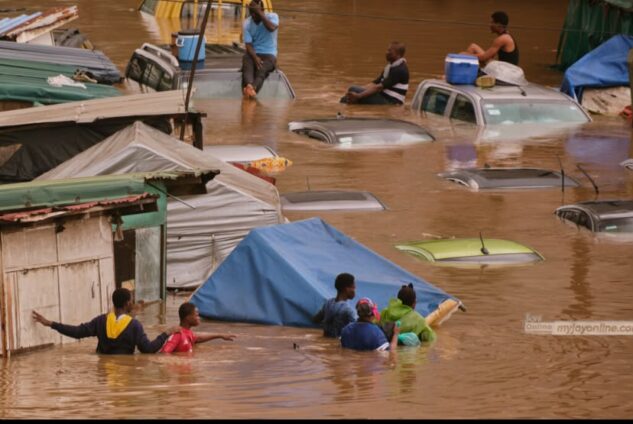
Rising temperatures are intensifying rainfall across Ghana, overwhelming drainage infrastructure and leaving communities increasingly vulnerable to devastating floods, climate experts have warned.
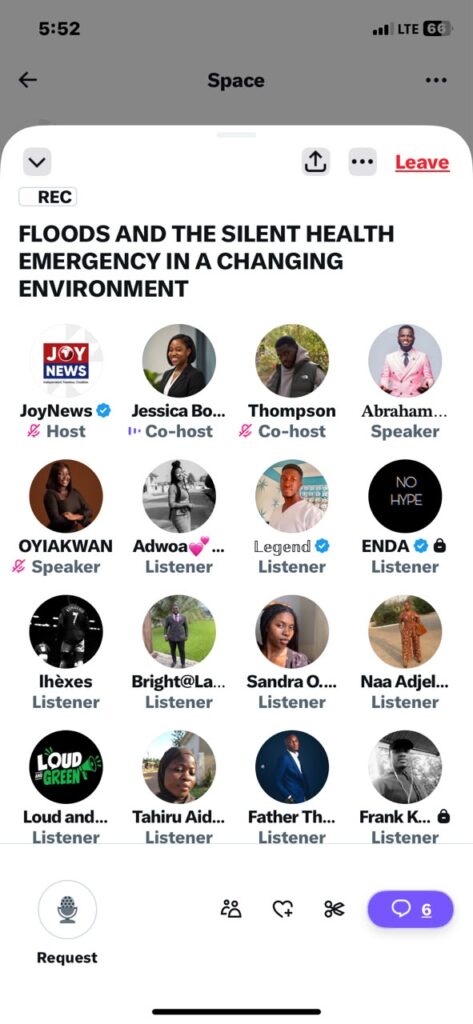
Speaking during the sixth edition of the Loud and Green X Space hosted by JoyNews in partnership with Behind the Science and CDKN Ghana, experts argued that Ghana's flood crisis can no longer be attributed solely to choked gutters and poor sanitation.
The discussion, held under the theme "Floods and the Silent Health Emergency in a Changing Environment," focused on how climate change is amplifying flood risks and exposing weaknesses in the country's ageing infrastructure.
Climate Change and Health Advocate, Nana Adwoa Eghan Abroka, said rising global temperatures are changing weather patterns in ways that existing drainage systems were not designed to handle.
"The temperatures are rising. The atmosphere actually holds more moisture, so it causes a lot of more frequent rainfall events. What happens when a lot of rainfall events happen? It actually overwhelms drainage systems. That's the link on how it increases the severity of flood events, especially in Accra," she said.
She explained that warmer atmospheric conditions allow more moisture to accumulate, resulting in heavier and more frequent downpours that place unprecedented pressure on urban drainage networks.
Her remarks underscore what experts describe as an urgent reality: Ghana's infrastructure is being tested by a changing climate faster than cities are adapting to it.
While blocked drains, poor waste management and unplanned settlements continue to contribute to flooding, participants said these long-standing challenges are now colliding with increasingly intense rainfall driven by climate change.
The combination, they noted, leaves roads submerged, homes damaged, businesses disrupted and thousands of residents exposed to recurring floods whenever heavy rains occur.
Panellists challenged the perception that flooding is merely an engineering or sanitation issue, arguing instead that climate adaptation must become a central pillar of infrastructure planning, urban development and disaster preparedness.
They warned that drainage systems designed for historical rainfall patterns are increasingly being overwhelmed by the volume and intensity of today's storms.
The experts called for infrastructure planning that reflects evolving climate realities, warning that failure to adapt will continue to impose significant economic, environmental and public health costs on the country.
The discussion formed part of the Loud and Green X Space series organised by JoyNews in partnership with Behind the Science and CDKN Ghana, which brings together researchers, climate advocates and public health experts to examine evidence-based solutions to Ghana's growing climate challenges.
Latest Stories
-
Kyebi galamsey clash triggers outrage as A Rocha Ghana and CCAL demand investigation into bloody shooting
27 seconds -
Three killed, three critically injured in Juaso crash
2 minutes -
Interior Ministry recovers 73 assets linked to drug trafficking
4 minutes -
GJA condemns alleged assault on Adom Brands journalist by military personnel in Nkwanta South
6 minutes -
Why cybercrime is becoming everyone’s problem in Ghana
38 minutes -
‘They beat me up and demanded my phone’ — Multimedia Group journalist recounts alleged military assault
40 minutes -
Man Utd close to completing Tielemans deal
51 minutes -
Daily Insight for CEOs: Don’t let yesterday’s success become tomorrow’s limitation
53 minutes -
WAFCON 2026: Black Queens open camp in Morocco ahead of tournament
1 hour -
Kintampo South MP engages Libyan authorities over plight of Ghanaian migrants
1 hour -
Divided mandates, shared crises: Institutional intersections in Ghana’s flood management
1 hour -
Western Regional Minister calls for stiffer sanctions for sanitation offenders
1 hour -
NPP’s Salam Mustapha slams EOCO over the arrest of Miracles Aboagye
1 hour -
EOCO explains why Dennis Miracles Aboagye was arrested at the airport
1 hour -
EOCO says Dennis Miracles Aboagye had left Ghana before stop order was issued
1 hour