

Audio By Carbonatix
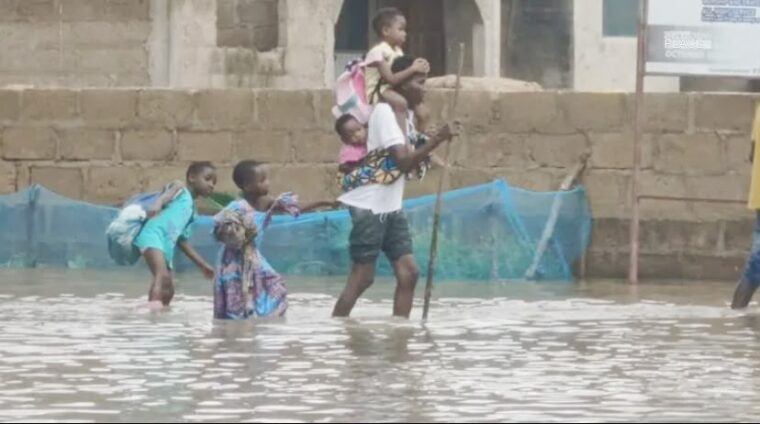
The danger does not end when floodwaters recede. While public attention often shifts once roads reopen and homes begin to dry out, public health experts say the real emergency may only be beginning.
They warn that floods leave behind contaminated water, disrupted healthcare, worsening chronic illnesses, damaged livelihoods and hidden mental health challenges that continue to affect survivors long after the immediate disaster has passed.
These concerns dominated the sixth edition of the Loud and Green X Space, organised by JoyNews in partnership with Behind the Science and CDKN Ghana, under the theme "Floods and the Silent Health Emergency in a Changing Environment."
Speaking during the discussion, Public Health Researcher at Ensign Global University, Judith Williams, said the health impacts of flooding extend far beyond the physical destruction caused by rising waters.
"Usually when the water goes down, everybody thinks everything is gone, but it doesn't end there. People's homes become contaminated. Sewage, chemicals, germs and rubbish mix with floodwater. Later, we begin seeing cholera, typhoid and skin infections appearing in communities."
She explained that floodwaters frequently contaminate household water sources, exposing families to waterborne diseases even after communities appear to have recovered.
According to her, many residents unknowingly prepare food with contaminated water or allow children to play in polluted environments, increasing the likelihood of disease outbreaks.
Beyond infectious diseases, Ms Williams said flooding also disrupts care for people living with chronic illnesses such as hypertension and diabetes.
"When people are displaced, they often lose their medications, cannot access health facilities or afford transportation to seek treatment. The stress alone can significantly increase blood pressure, making existing conditions much worse."
She noted that damaged roads and temporary displacement often prevent patients from refilling prescriptions or attending scheduled medical appointments, interrupting essential treatment.
Climate Change and Health Advocate, Nana Adwoa Eshun Abroka, said one of the most overlooked consequences of flooding is its impact on mental health.
"Most people don't think there are health impacts after floods. One health impact that is often overlooked is mental health."
She said survivors who lose homes, businesses, vehicles and years of investment are often left battling anxiety, trauma and emotional distress with little support.
"There are people who lost their workshops during the recent floods. This reduces their ability to even feed themselves. If someone is already living with hypertension, what does that pressure do to them?"
Drawing on her research into cascading health risks, Nana Adwoa explained that flooding often sets off a chain of interconnected social and health challenges.
"When floods disrupt businesses, income drops. People cannot provide for their families. Stress increases. They fall sick. It becomes one event triggering another."
The discussion also highlighted the pressure floods place on Ghana's healthcare system.
Judith Williams observed that many survivors delay seeking medical care because they have lost their financial resources or cannot physically reach health facilities due to damaged roads and inaccessible communities.
Although the National Health Insurance Scheme helps cover treatment costs, she noted that transportation expenses and other indirect costs continue to prevent many affected residents from accessing care.
The experts further called for greater investment in psychosocial support as part of disaster response.
According to Judith Williams, emergency interventions often prioritise food, shelter and relief supplies while overlooking the emotional and psychological recovery of survivors.
"We don't pay enough attention to psychological support. People lose their homes, food, money and livelihoods. Communities must also support affected families because recovery is not only physical but mental."
The panel concluded that Ghana's flood response must evolve beyond emergency rescue operations to include stronger disease surveillance, improved public health preparedness, mental health services and uninterrupted access to healthcare for vulnerable populations.
As climate change continues to intensify rainfall across the country, the experts warned that protecting lives will require addressing not only the floods themselves but also the silent public health crisis they leave behind.
Latest Stories
-
Ghana must stop sending all waste to landfills and embrace recycling – Environmental expert
17 seconds -
Yaa Naa Abubakari II laid to rest at dawn in Yendi as Dagbon enters mourning period
19 minutes -
Conrad Z. Dumbah takes over as Director-General of Internal Audit Agency, bringing global financial leadership to Ghana’s public sector
21 minutes -
After The Flood: Can Ghana prevent the next disaster?
33 minutes -
Flood waste to be recycled for farming, other uses – Local Government Minister
44 minutes -
Government will end tomato import dependence in four months – Eric Opoku
45 minutes -
Kukuom Traditional Council cracks down on sanitation offenders to curb littering and pollution
45 minutes -
Dementia in Ghana: Study finds 23.4% of adults over 40 at risk as experts call for national care policy
1 hour -
Yaa Naa Mahama Abukari II, king who restored peace to Dagbon after 16-year dispute, dies
1 hour -
Today’s Front pages: Monday, July 13, 2026
1 hour -
When the waters came: A city shaken, a response begins
1 hour -
Sammi Awuku accuses NDC government of suppressing opposition dissent over EOCO arrest of Dennis Miracles Aboagye
1 hour -
Azamati, Rose Yeboah lead Ghana’s 40-member Commonwealth Games Team
2 hours -
Health experts warn Ghana’s floods are worsening chronic illnesses through disrupted healthcare
2 hours -
Floods leave a silent health crisis long after the waters recede, experts warn
2 hours