

Audio By Carbonatix
Nearly one in four adults aged 40 and above in parts of Ghana’s Ashanti Region are at risk of developing dementia, a finding experts say highlights a growing public health challenge and exposes gaps in the country’s care system.
The figure of 23.4% comes from a cross-sectional study involving more than 800 participants conducted between 2023 and 2025 as part of a UK-Ghana research collaboration on non-communicable diseases.
The research was led by Senior Lecturer in Adult Nursing at the University of Huddersfield, Dr Precious Adade Duodu, who is also the Principal Investigator on a project seeking to develop a structured dementia referral and care pathway for Ghana.
According to Dr Adade Duodu, while dementia is becoming increasingly common in low- and middle-income countries, the condition remains poorly understood in Ghana due to stigma, misinformation and spiritual interpretations that often delay diagnosis and treatment.
“Ghana currently does not have clear data on how many people are living with dementia, but this study gives us important insight into the scale of the problem,” he said.
Caregivers under pressure
Beyond the statistics, the research highlights the growing burden placed on families caring for persons living with dementia.
Many caregivers, experts say, are forced to abandon jobs, sacrifice income and deal with emotional and financial stress while trying to support relatives with the condition.
Dr Adade Duodu said some caregivers experience severe exhaustion because of the demands associated with long-term care.
“Some are burnt out, some are stressed, and many have had to sacrifice their livelihoods,” he noted.
When dementia is mistaken for witchcraft
Experts say dementia in Ghana is not only a medical concern but also a social challenge, with misconceptions exposing many elderly people to discrimination and abuse.
Symptoms such as memory loss, confusion and behavioural changes are sometimes interpreted as signs of witchcraft or spiritual attacks rather than a health condition requiring medical attention.
In some communities, elderly persons—particularly women—have been accused of causing misfortune following deaths, illnesses or family difficulties.
Some victims face isolation, abuse or forced displacement, while others end up seeking refuge in places such as the Gambaga witches’ camp after being rejected by their communities.
Elderly people facing abandonment
For many older persons living with dementia, neglect has become a harsh reality.
Experts say some families, constrained by poverty, limited knowledge and the demands of caregiving, struggle to provide adequate support, leaving some elderly relatives isolated and vulnerable.
Without stable income, pensions or reliable healthcare access, many face daily challenges securing food, shelter and medical support.
Clinical Psychologist and Founding Director of the Centre for Ageing Studies at the University of Ghana, Prof. Christopher Charles Mate-Kole, described the situation as a reflection of deeper societal gaps.
He said stigma surrounding ageing and dementia continues to fuel neglect and abuse, particularly in communities where awareness remains limited.
Prof. Mate-Kole is calling for increased public education to help communities understand dementia as a medical condition rather than a spiritual problem.
He also stressed the need for stronger social protection systems and policies that protect the dignity and rights of older persons.
Simple interventions can make a difference
Despite the challenges, experts say practical community-based interventions can significantly improve the quality of life of people living with dementia.
Activities such as music, singing, dancing, storytelling and social interaction have been found to improve mood, reduce isolation and support memory stimulation.
Experts also say light physical activity can help reduce stress and support mental and physical wellbeing among older adults.
However, access to such programmes remains limited due to the absence of structured support systems for elderly persons and caregivers.
A warning for Ghana’s ageing population
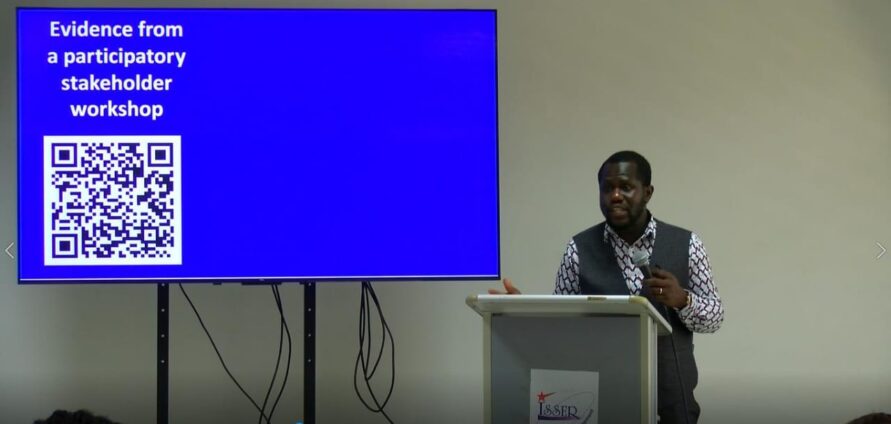
Speaking at a stakeholder workshop in Accra, Country Project Director for the Ghana-India-Nepal NCD study, Joshua Okyere, described the findings as a wake-up call for Ghana.
He warned that the country’s dementia care system remains fragmented, with no clear referral pathways to support early detection and treatment.
“If about 23 percent of adults over 40 are already showing signs of dementia risk, then it means all of us are at risk as we age. We need urgent action,” he cautioned.
Mr Okyere stressed that without clear policies, guidelines and public education, Ghana could face a worsening dementia burden as the population ages.
Calls for national dementia policy
Researchers say one of Ghana’s biggest challenges is the absence of a national dementia policy and a structured referral system within the health sector.
The lack of clear pathways means many patients are diagnosed late, often after symptoms have significantly progressed.
To address the challenge, researchers are working with local and international partners to develop a dementia care pathway tailored to Ghana’s health system.
The initiative brings together psychiatrists, psychologists, nurses, academics, policymakers, faith leaders, media practitioners and caregivers.
Stakeholders are calling for:
- A national dementia policy
- A clear referral and care pathway
- Greater support for caregivers
- Expanded public education to reduce stigma
- Community-based programmes for elderly engagement
Dr Adadidudu said caregiver support networks must become a key part of Ghana’s response, given the central role families play in dementia care.
Mr Okyere added that Ghana must work towards demystifying dementia and encouraging early healthcare seeking.
As Ghana’s population continues to age, experts warn that dementia cases could increase significantly in the coming years.
But beyond the numbers is a human reality: thousands of older Ghanaians are navigating a condition shaped not only by medical challenges but also by how society responds.
Experts believe the crisis can be addressed through stronger systems, greater awareness and a shift from stigma to care and support.
Latest Stories
-
Accra-Kumasi Expressway: 48 Engineer Regiment can deliver if well resourced – Political Lecturer
3 minutes -
Businesses above GH¢750,000 turnover must register for VAT – GRA
6 minutes -
Kenya confirmed hosts of World Athletics Championships 2029
17 minutes -
No more pothole ambulance rides: Mahama’s roads will change lives – Agbodza tells Upper West farmers
42 minutes -
‘Physically better’ Kudus can start against Liverpool – De Zerbi
47 minutes -
Bonsu Baah sets up opener in Al Qadsiah win over Al Wasl
1 hour -
Ghana has now become a distribution hub for drugs
1 hour -
Africa Nations Volleyball Championship: Ghana’s Black Spikers leave for tournament in Tunisia
2 hours -
Today’s Front pages: Tuesday, September 15, 2026
2 hours -
Auditing the Auditor-General: How special audit understated a COVID-19 expenditure
3 hours -
A Partnership for Progress: Why the ProMark–KPMG collaboration matters for Africa’s digital assets future
3 hours -
Catholic Bishops pressure gov’t to sign long-delayed mission schools agreement
4 hours -
Cedi under fresh pressure as Christmas import demand drives dollar surge
4 hours -
Ato Forson eyes first-week November for 2027 Budget, promises jobs and major infrastructure push
4 hours -
Catholic Bishops demand probe into ‘protocol admissions’ amid SHS placement challenges
4 hours