

Audio By Carbonatix
The values we model today become the society we inherit tomorrow.
The Question We Are Afraid to Ask
Across Africa, a familiar lament echoes through homes, classrooms, places of worship, workplaces, and television studios. Parents worry that young people have become impatient and entitled. Teachers complain that discipline is declining. Employers speak of poor work ethic, while politicians, religious leaders, and traditional authorities express concern about growing intolerance, corruption, drug abuse, cybercrime, and civic indifference. Almost every generation eventually concludes that the one following it has somehow lost its moral compass.
Yet perhaps we have been asking the wrong question.
Instead of asking what has gone wrong with our youth, perhaps we should ask what they have been watching. Before questioning the character of our children, perhaps we should first examine the character of the adults who have raised them.
This is an uncomfortable conversation because it places the spotlight where many of us would rather not look. It challenges governments, parents, teachers, religious leaders, business executives, traditional rulers, and ordinary citizens alike. It asks whether today's young Africans are not inventing new behaviours but simply reproducing those they see rewarded every day. What is wrong with us?
The Most Powerful Classroom Is Everyday Life
More than sixty years ago, psychologist Albert Bandura demonstrated through his groundbreaking Social Learning Theory that children learn primarily by observing others. His famous Bobo Doll experiments revealed that young people imitate behaviours they repeatedly witness, especially when those behaviours appear successful or carry no consequences. Modern neuroscience and developmental psychology have repeatedly confirmed the same principle. Children learn less from what adults say than from what adults consistently do.
That reality should give every African pause.
We tell children never to lie, yet ask them to tell visitors that we are not at home. We teach honesty but celebrate unexplained wealth. We urge respect for the law while proudly discussing how we avoided paying taxes, bribed an official, or used personal influence to bypass procedures. We tell children not to litter, yet throw rubbish from moving vehicles and complain when gutters become blocked and floods destroy our communities.
Children rarely become what we tell them to become. They become what they repeatedly see us becoming.
NyansaKasa (Words of Wisdom)
"The loudest lesson a child ever hears is the life an adult lives."
Interpretation: Children learn more from consistent behaviour than from repeated instruction.
The Mirror We Keep Blaming
Across much of Africa, public debate has become increasingly comfortable with blaming young people while avoiding adult responsibility. We criticise them for disrespect, yet they watch adults insult one another on political platforms and social media. We condemn corruption among the youth while excusing corruption committed by people who share our political party, ethnic background, or religious affiliation. We lament declining patriotism while treating public property as though it belongs to nobody. We complain about civic irresponsibility while jumping queues, ignoring traffic regulations, and damaging public infrastructure.
Should we really be surprised when the next generation concludes that rules are negotiable?
The same contradiction appears across nearly every challenge confronting our continent. Flooding is blamed solely on government, yet citizens continue dumping refuse into drainage systems. Road accidents are blamed on weak enforcement, yet motorists routinely ignore basic traffic regulations. Auditor General reports expose recurring wasteful expenditure, yet many ordinary citizens quietly seek shortcuts whenever personal advantage is at stake. Corruption becomes a national outrage only when someone else benefits from it.
A society cannot consistently reward bad behaviour and then expect good behaviour to become its culture.
NyansaKasa (Words of Wisdom)
"A child does not inherit tomorrow. A child inherits today's example."
Interpretation: The behaviour we normalise today becomes the culture of the next generation.
Why Some Nations Produce Different Outcomes
The contrast with many successful societies is instructive. In Japan, children routinely clean their classrooms, not because schools cannot afford cleaners but because responsibility for shared spaces is considered part of education. Singapore's remarkable transformation was built not only on economic policy but also on civic discipline, consistent law enforcement, and a culture that values public responsibility. Finland integrates ethics, citizenship, and cooperation into education from an early age, while countries such as Denmark and New Zealand consistently reinforce public trust through transparency and accountability.
These nations are not perfect, but they understand something profoundly important: national character is cultivated long before adulthood. Institutions become strong because citizens first learn to respect responsibility.
Africa possesses extraordinary advantages. According to the United Nations, it is the world's youngest continent, with nearly 70 per cent of Sub Saharan Africa's population below the age of thirty. By 2050, one in every four people on Earth will be African. This demographic reality could become the continent's greatest competitive advantage or its greatest missed opportunity. The difference will not depend solely on economic policy. It will depend on the values we model today.
NyansaKasa (Words of Wisdom)
"The future is educated first at home before it is examined at school."
Interpretation: Families remain the first and most influential institutions of nation building.
Changing the Mirror Before Judging the Reflection
Leadership begins long before public office. Every parent, teacher, police officer, trader, civil servant, religious leader, journalist, and business executive teaches leadership simply by the way they conduct themselves. When adults refuse to offer or accept bribes, admit mistakes, respect public property, keep promises, arrive on time, and obey laws even when nobody is watching, they quietly shape the ethical foundation upon which future generations will build.
Conversely, when adults glorify wealth without questioning its source, reward loyalty above competence, excuse dishonesty for political convenience, and tolerate indiscipline because "everyone does it," they teach children that success matters more than integrity.
Perhaps this explains why education alone cannot solve Africa's governance challenges. Degrees produce knowledge. Character produces wisdom. A nation may graduate thousands of engineers, doctors, lawyers, accountants, and politicians, yet still struggle if integrity is absent. Some of society's most sophisticated failures are committed not by the uneducated but by highly educated individuals who never learned that competence without character ultimately weakens nations.
NyansaKasa (Words of Wisdom)
"Knowledge builds careers. Character builds civilisations."
Interpretation: Technical excellence achieves little unless guided by ethical responsibility.
The Africa Our Children Deserve
What then must change?
Governments must enforce laws fairly and consistently. Schools should place greater emphasis on civic responsibility alongside academic achievement. Religious institutions should continue promoting ethical conduct not only inside places of worship but also in everyday public life. Political leaders must recognise that every public action becomes a lesson observed by millions of young people. Parents must understand that children are watching long before they begin listening.
Most importantly, every African should replace one question with another.
Instead of asking, "What is happening to our youth?" we should begin asking, "What are our youth learning from us?"
That single shift in perspective changes everything. It transforms criticism into reflection, blame into responsibility, and frustration into action.
NyansaKasa (Words of Wisdom)
"When a generation disappoints us, wisdom first examines the generation that raised it."
Interpretation: Every generation reflects, to some extent, the values and examples of those who came before it.
Conclusion: The Reflection We Cannot Escape
History will not judge Africa merely by the roads we built, the elections we conducted, or the economies we expanded. It will ask a more searching question: Did we become the kind of adults whose lives gave our children something worthy of imitation?
Perhaps the youth are not the crisis we fear.
Perhaps they are simply the mirror we have been avoiding.
And perhaps the most uncomfortable question of all has never been about them.
It has always been about us. What is wrong with us?
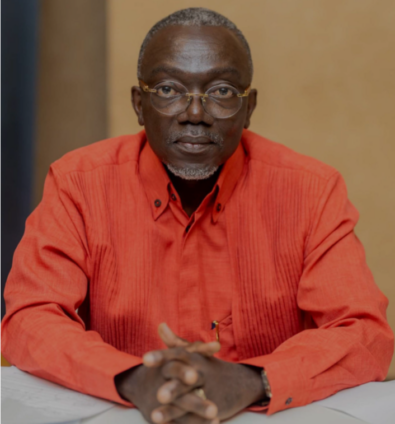
About Ing. Professor Douglas Boateng
Ing. Professor Douglas Boateng is a pioneering international industrial, manufacturing, and production systems engineer, governance strategist, and Pan-African thought leader whose work continues to shape boardroom thinking, supply chain transformation, and industrialisation across both the continent and globally. As Africa’s first appointed Professor Extraordinaire in Supply Chain Management, he has consistently championed the integration of procurement, value chain, industrialisation strategy, and governance into national and continental development agendas, aligning practice with purpose and long-term impact. An International Chartered Director and Chartered Engineer, he has received numerous lifetime achievement awards and authored several authoritative books. He is also the scribe of the globally acclaimed and widely followed daily NyansaKasa (Words of Wisdom), which continues to inspire reflection, accountability, and purposeful living among audiences worldwide. His work is driven by a simple yet powerful belief: Africa’s transformation will not come from rhetoric but from deliberate action, strong institutions, and leaders willing to build for future generations.
Latest Stories
-
Better roads will create sustainable jobs for Ghana’s youth – Joyce Bawah Mogtari
5 minutes -
Kumasi Expressway to cut travel time, boost economic activity – Joyce Bawah Mogtari
10 minutes -
GOIL could hold fuel prices despite $100 crude oil shock – Edward Bawa
11 minutes -
Fitch lifts Ghana’s 2026 current account surplus forecast to 7.8%
12 minutes -
Do not identify yourself as Ziavi Paramount Chief or Queen – Volta Region House of Chiefs warns
22 minutes -
Sosu demands probe into $260m cocaine shipment seized in France
27 minutes -
Mahama to receive cleared Accra-Kumasi Expressway right-of-way today
32 minutes -
Mahama to cut sod for US$1.3bn Sentuo Airport Garden City on Tuesday
36 minutes -
Ghana, China agree to tighten crackdown on illegal mining
42 minutes -
Ghana, INTERPOL make strides in crime combat – CID boss
48 minutes -
Fuel prices may rise, but GOIL says 30% transport fare hike doesn’t add up
52 minutes -
Minority questions why alleged masterminds behind US$350m cocaine haul remain free
53 minutes -
AGI calls for workplace training to boost youth employability
59 minutes -
Mahama inspects proposed site for Upper West Regional Airport
1 hour -
Government recruits 16,000 health personnel to support FPHC programme – Health Minister
1 hour