

Audio By Carbonatix
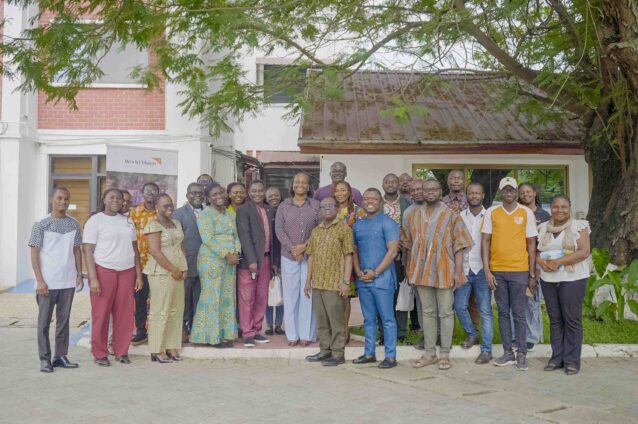
World Vision Ghana, in collaboration with the United Nations Population Fund (UNFPA), the Ministry of Health, the Ghana Health Service and other stakeholders, has validated findings from an assessment of health facility readiness in disaster-prone areas to strengthen emergency healthcare delivery across the country.
The validation meeting reviewed evidence gathered on the capacity of health facilities to sustain essential maternal health and sexual and reproductive health (SRH) services before, during and after disasters.
The assessment focused on the availability of skilled health workers, essential medicines, infrastructure, emergency preparedness plans, referral systems, infection prevention measures and coordination with disaster management agencies.
Speaking at the meeting, World Vision Ghana's Health and Nutrition Technical Specialist, Awurabena Quayeba Dadzie, said the exercise was designed to determine the resilience and operational readiness of health facilities in disaster-prone communities.
She explained that the assessment also evaluated the ability of facilities to provide maternal and newborn care, family planning, adolescent sexual and reproductive health services, and support for survivors of gender-based violence during emergencies.
According to her, the findings identified existing gaps, operational challenges and good practices that will guide future interventions.
"The ultimate goal is to enhance the capacity of health facilities to ensure uninterrupted, equitable, and quality sexual and reproductive health services for vulnerable populations affected by disasters," Ms Dadzie said.
Participants at the meeting, including representatives from the Ministry of Health, the Ghana Health Service, UNFPA and development partners, stressed the need for stronger emergency preparedness systems, improved coordination and greater investment in resilient health infrastructure.
They also called for the integration of the Minimum Initial Service Package (MISP) into emergency response frameworks to ensure life-saving reproductive health services remain available from the onset of disasters.
Latest Stories
-
7 out of 10 human trafficking cases in Ghana never reach prosecution — JoyNews Research
5 minutes -
Music, football to converge at Music Meets Football Summit 2026 in Lusaka
10 minutes -
Putin invites young global leaders to partner with Russia in shaping future world order
10 minutes -
Putin calls for ‘just world’, says every nation must be free to choose its own path
18 minutes -
IFY 2026 food festival to serve 20,000 meals showcasing global cuisines in Russia
29 minutes -
Ghana has a Domestic Violence Act: But can a victim afford to use it?
33 minutes -
Young artists from 100 countries showcase works at IFY 2026 in Russia
34 minutes -
Russia opens neo-Nazism exhibition at International Festival of Youth 2026
54 minutes -
‘Let’s change the world together’ – Putin tells young people
59 minutes -
VC inaugurates three committees ahead of UG’s 80th anniversary celebration
60 minutes -
Today’s Front pages: Monday, September 14, 2026
1 hour -
The Or Foundation to launch recycled textiles platform Foose Materials during London Design Week
1 hour -
110 children at Cardiothoracic Centre get second chance at life as Ghana Medical Trust Fund marks first year
1 hour -
‘I’m suffering’ – Motherless 12-year-old who lost both legs, father in Ofankor-Pokuase crash seeks support
1 hour -
Education Ministry extends 2026 SHS placement exercise by one week
3 hours