

Audio By Carbonatix
African leaders, governance experts, anti-corruption campaigners and civil society actors have called for urgent reforms to reduce the growing influence of money in politics, warning that unchecked political financing is weakening democracy, excluding competent citizens from public life and fuelling corruption across the continent.
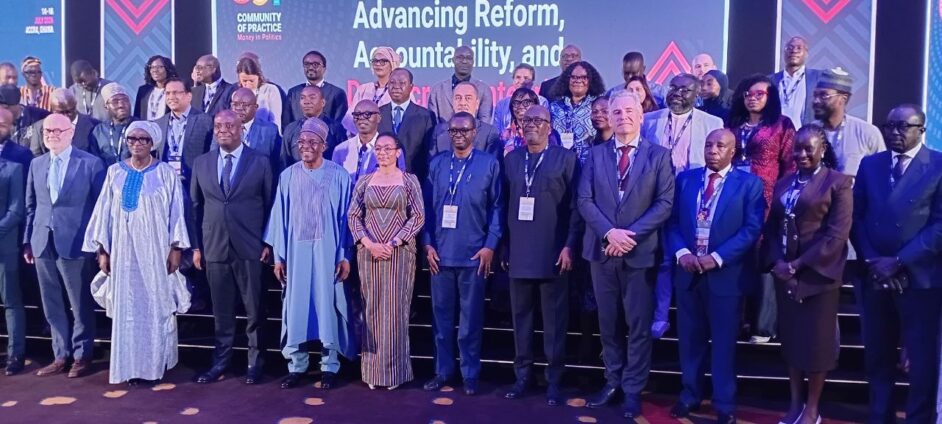
The call was made at the High-Level Regional Convening on the Financialization of Politics in Africa, held at the Kempinski Hotel Gold Coast City in Accra, Ghana, on the theme: “Advancing Reform, Transparency, Accountability and Democratic Integrity.”
The convening was organised by the African Union Advisory Board Against Corruption (AUABC), the Ghana Centre for Democratic Development (CDD-Ghana), the Open Society Foundations, and Transparency International.
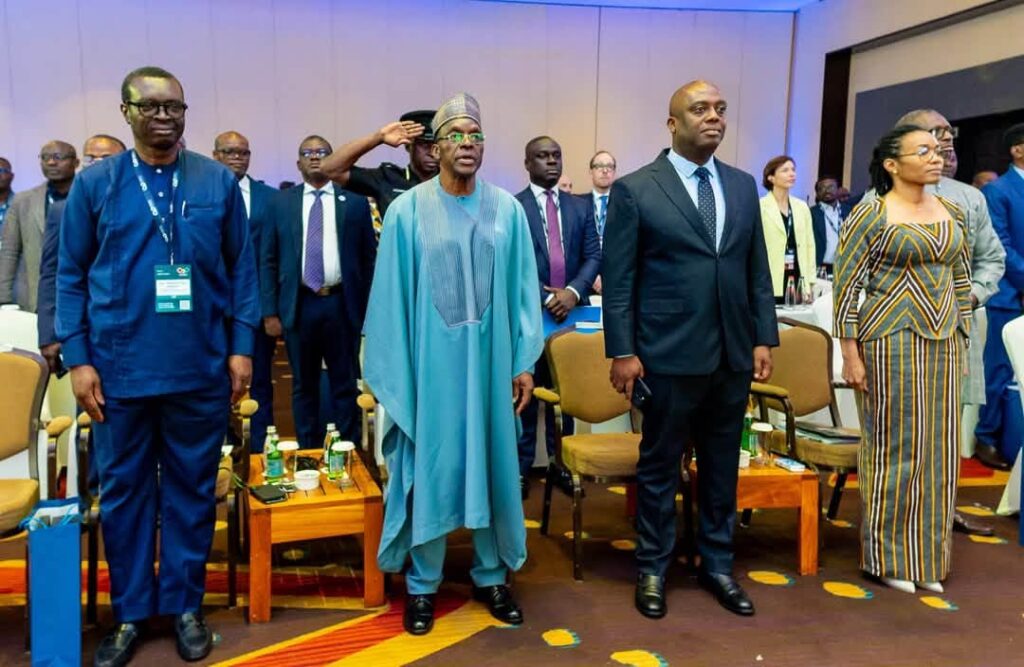
The meeting brought together senior state officials, parliamentarians, anti-corruption institutions, electoral management bodies, researchers, development partners and civil society organisations to examine how rising campaign costs, opaque political donations, vote buying, illicit financing and weak disclosure systems are threatening democratic integrity in Africa.
At the heart of the discussions was the growing cost of entering and remaining in politics. In Ghana, estimates cited in political finance research and public discussions suggest that an average parliamentary aspirant may spend about GH¢4 million or more to successfully navigate party primaries, nomination processes, constituency mobilisation, transportation of delegates, campaign logistics, media outreach, polling agents and voter engagement.
Speakers warned that beyond formal campaign expenditure, legislators and aspirants are often expected to pay school fees, medical bills, funeral costs, community donations and other private welfare demands from constituents, making politics increasingly expensive and unsustainable.
Participants also discussed the importance of the United Nations Convention Against Corruption Resolution 11-7, which has given fresh momentum to global political finance reform, and the African Union’s ongoing work towards a continental model law on political financing.
The convening identified several solutions to the growing financialisation of politics, including the adoption of comprehensive political party and campaign finance laws, mandatory disclosure of campaign donations, enforceable spending limits, regulation of party primaries, transparent public funding for political parties, and stronger sanctions for breaches.
Other proposed reforms included real-time digital reporting of campaign expenditure, independent auditing of party accounts, stronger protection for whistleblowers, improved asset declaration systems, civic education, empowerment of women and youth candidates, and better resourcing of electoral and anti-corruption institutions.
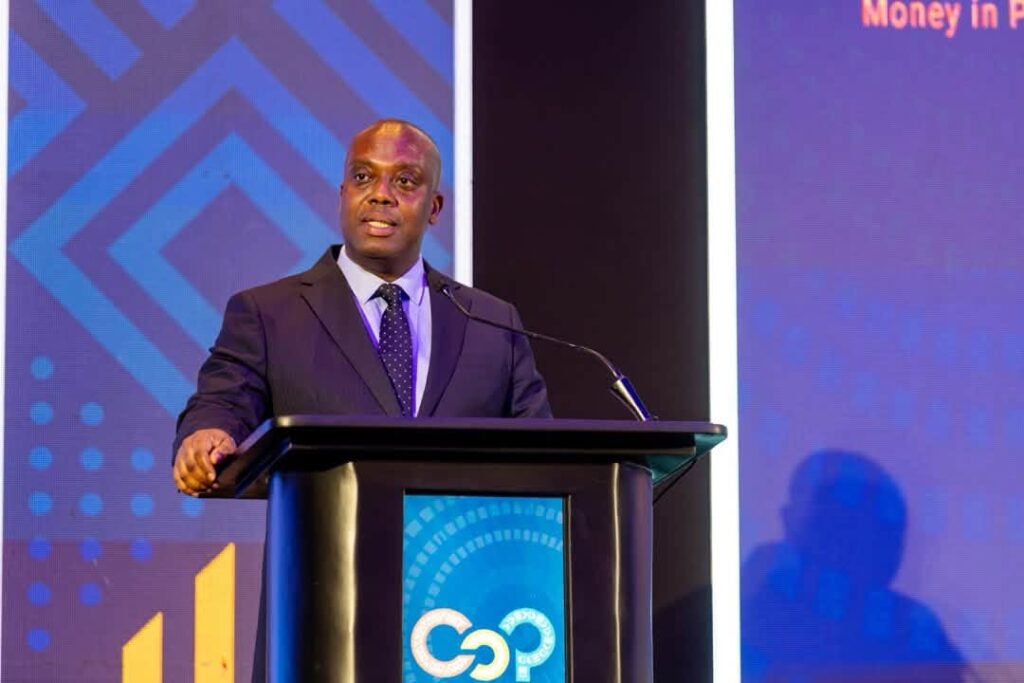
Deputy Finance Minister Thomas Nyarko Ampem Darko represented and delivered the keynote address by the Vice President of the Republic of Ghana, Her Excellency Prof. Jane Naana Opoku-Agyemang.
The Ghanaian leader was of the view that money had always been part of politics, but the danger arose when it determined who could participate, who could win and whose interests were served after victory.
“Money has always been part of politics. The challenge arises when money determines who participates, who wins elections, and whose interests are served after victory."
She described political finance reform as more than an electoral matter, stressing that it had become a development and democratic integrity issue.
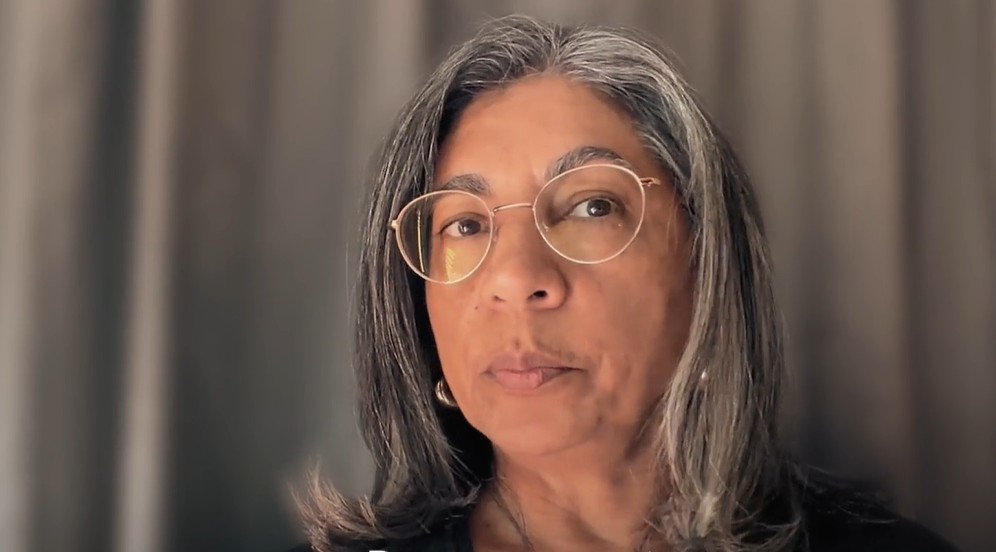
“Political finance reform is therefore not merely an electoral issue. It is a development imperative”.
Prof. Opoku-Agyemang acknowledged Ghana’s democratic credentials but said the country must confront gaps in its political finance framework.
“Ghana still lacks a comprehensive legal framework governing political party and campaign financing,” she noted, adding that stronger disclosure requirements, effective enforcement and appropriate spending limits were essential.
She urged participants to ensure that the outcome of the convening goes beyond declarations.
“Let us ensure that the true measure of our success is not the quality of our declarations but the quality of the reforms they inspire,” the Vice President said.
The Speaker of Parliament, Rt. Hon. Alban Kingsford Sumana Bagbin, said the time had come for African countries to move beyond conferences and workshops into concrete action.
“This is the time to act,” he declared.
He warned that when money becomes the principal determinant of political success, democracy becomes inaccessible to ordinary citizens and public office is treated as an investment to be recovered.
“When money becomes a principal determinant of political success, democracy risks becoming inaccessible to ordinary citizens. Public office is then viewed less as a public trust and more as an investment to recover,” he said.
Rt. Hon. Bagbin said Parliament had a central role to play in translating international commitments into laws, budgets, oversight and measurable reforms.
According to him, Ghana remains one of the most expensive countries in terms of electoral competition, and the burden placed on candidates creates opportunities for corruption, state capture and undue influence.
The Second Vice-President of the Pan-African Parliament, Hon. Dr. Zanetor Agyeman-Rawlings, said the rising cost of politics was deepening inequality and threatening democracy.
“Our democracies are at risk of unravelling given this trend of monetization of our politics. This is unsustainable and it undermines the aspirations of our citizens,” the Member of Parliament (MP) for the Klottey-Korley Constituency stated.
She linked corruption and money politics to security, noting that Ghana’s 2020 National Security Strategy identified corruption as a high-impact and high-probability threat to national security.
Dr. Agyeman-Rawlings called for stronger civic education, youth inclusion and economic empowerment to reduce the vulnerability of citizens to vote buying.
“Conscious empowered citizens are less likely to be influenced by money,” she said.
She added: “Let’s empower them economically so that our people will act from their hearts and minds rather than their stomachs.”
On his part, Executive Director of CDD-Ghana, Prof. Henry Kwasi Prempeh, said the convening was taking place at a time when democracy was under stress globally and in Africa.
Citing Afrobarometer findings, he noted that more than six out of 10 Africans were dissatisfied with how democracy works in their countries.
“Over 60 percent, that is more than six out of ten Africans, say they are dissatisfied with how democracy works in their countries,” he said.
Prof. Prempeh said the financialisation of politics was a major driver of public frustration, exclusion and declining trust in democratic institutions.
“Across Africa, the costs of waging a campaign for elective office are soaring,” he said, adding that even the available figures on Ghana may understate the true cost.
“I suspect that the numbers are significantly more than we report, even in party primaries,” he observed.
He warned that unregulated political financing allows wealthy elites, domestic cartels and foreign interests to hijack political parties and elections.
“Unregulated political financing allows wealthy elites, domestic cartels and foreign interests to hijack political parties and our elections,” Prof. Prempeh said.
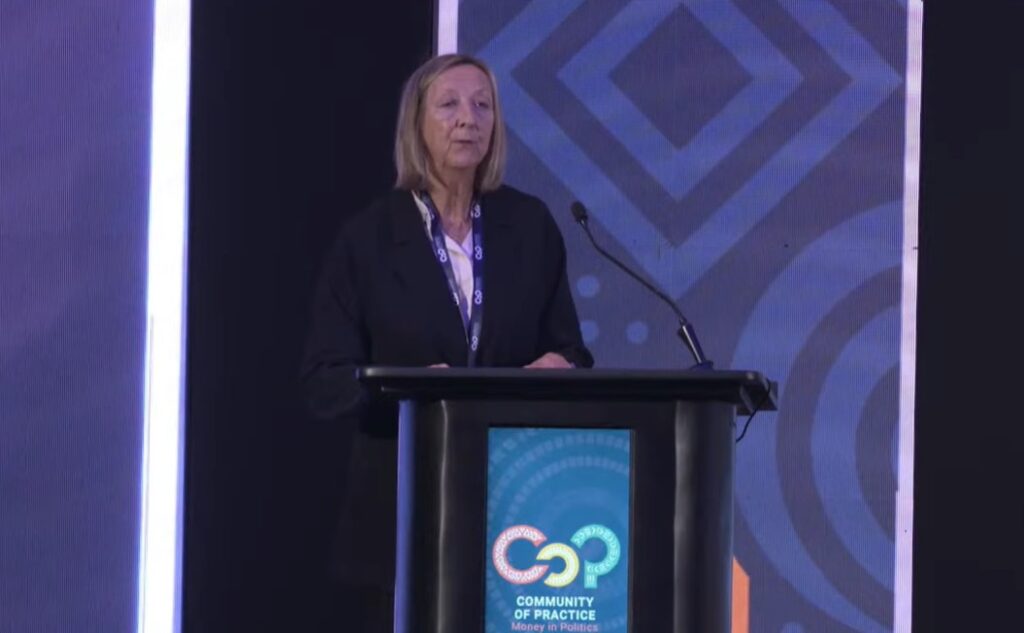
Contributing to the discussions, the President of the Open Society Foundations, Binaifer Nowrojee, said the growing influence of money in politics was one of the defining governance challenges of the time.
She said when political financing is hidden, unregulated or concentrated in the hands of a few, democracy begins to lose its meaning.
“Democracy rests on a simple promise — that every citizen’s voice matters. Yet when money is hidden, unregulated, or concentrated in the hands of a few, that promise begins to erode,” she said.
Ms. Nowrojee stressed that the goal of reform was not merely to regulate money but to restore trust between governments and citizens.
“Our goal is not simply to regulate money. Our goal is to strengthen the social contract between government and citizens,” she said.
She called for meaningful disclosure of political funding, fair and transparent public financing, strong oversight, independent enforcement, protection from illicit and foreign influence, and safeguards for civic oversight.
The Chair of the AU Advisory Board Against Corruption, Kwami Edem Senanu, was cited as playing a key role in advancing the continental model law process, which seeks to guide African countries in developing stronger political finance rules.
Mr Senanu pointed out that there was an urgent need to identify concrete ways to speed up, expand and strengthen collective actions to promote transparency, accountability and issues of democratic integrity on the African continent.
“Political party funding is one of the principal entry points for corruption, illicit financial flows and state capture on our continent. Opaque, unregulated or illicitly sourced party and campaign finance distorts electoral competitions.
“It entrenches incumbency advantage and converts public office into a vehicle for private and partisan enrichment. Whilst the sources of party funding are undisclosed, unregulated or drawn from corrupt or criminal proceeds, then political competition ceases to reflect the will of citizens. In this instance, it reflects the interests of some undisclosed financiers, income bank office holders or France national illicit networks,” he stressed.
Transparency International’s Lead on Political Integrity Policy, Mr. Jorge Valladares, also joined the call for stronger safeguards against illicit financing, foreign interference, opaque donations and weak enforcement systems while Deputy Head of Cooperation at the Norwegian Embassy in Ghana, Ms. Vivian Hilde Opsvik, advocated stronger systems and support of her country for reforms towards political financialization.
Participants further called for reforms to reduce the excessive private welfare burden placed on Members of Parliament by strengthening local government, social protection systems and public service delivery, so that legislators are not forced to become personal financiers of constituency needs.
The forum concluded with a strong message that Africa’s democratic future depends on whether elections can remain contests of ideas rather than contests of wealth.
The speakers repeatedly emphasised that political finance reform is no longer optional but essential to restoring public trust, protecting democratic institutions and ensuring that leadership is determined by integrity, competence and service, not by the size of a candidate’s bank account.
READ ALSO: Political office viewed as investment when money determines political success — Bagbin
Latest Stories
-
‘I am not a magician’ – Zdravko Logarušić on Nations FC exit from Africa
10 minutes -
Three nights. 28 titles. Ultimate history made
20 minutes -
Ghanaian delegates at IYF 2026 could become bridges for stronger Russia ties – John Aggrey
24 minutes -
Nigeria: Over 30 dead, 50 hospitalised after consuming alcoholic substance in Ondo State
27 minutes -
UK lawmakers demand new law to address AI threat to human rights
36 minutes -
WAFU B U-17 Girls Cup: Black Maidens depart Accra for tournament in Yamoussokro
36 minutes -
Sweden’s center-left bloc narrowly ahead as election remains too close to call
47 minutes -
GPL 2026/27: ‘We won ugly’ – Kotoko head coach unimpressed after Lions victory
50 minutes -
7 out of 10 human trafficking cases in Ghana never reach prosecution — JoyNews Research
1 hour -
Music, football to converge at Music Meets Football Summit 2026 in Lusaka
1 hour -
Putin invites young global leaders to partner with Russia in shaping future world order
1 hour -
Putin calls for ‘just world’, says every nation must be free to choose its own path
1 hour -
IFY 2026 food festival to serve 20,000 meals showcasing global cuisines in Russia
2 hours -
Ghana has a Domestic Violence Act: But can a victim afford to use it?
2 hours -
Young artists from 100 countries showcase works at IFY 2026 in Russia
2 hours