

Audio By Carbonatix
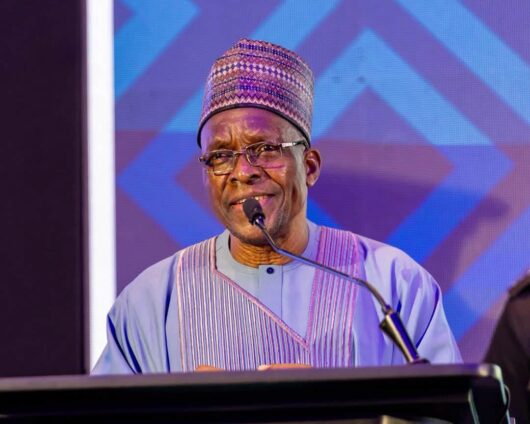
The Speaker of Parliament, Alban Sumana Kingsford Bagbin, has raised concerns over the growing influence of money in politics, warning that the escalating cost of contesting elections is undermining democracy by making political leadership increasingly inaccessible to ordinary citizens.
He said the commercialisation of politics was transforming public office from a position of trust into an investment, with some politicians seeking to recover the enormous financial resources expended in securing electoral victory.
"When money becomes a principal determinant of political success, democracy risks becoming inaccessible to ordinary citizens. Public office is then viewed less as a public trust and more as an investment to recover it," he stated.
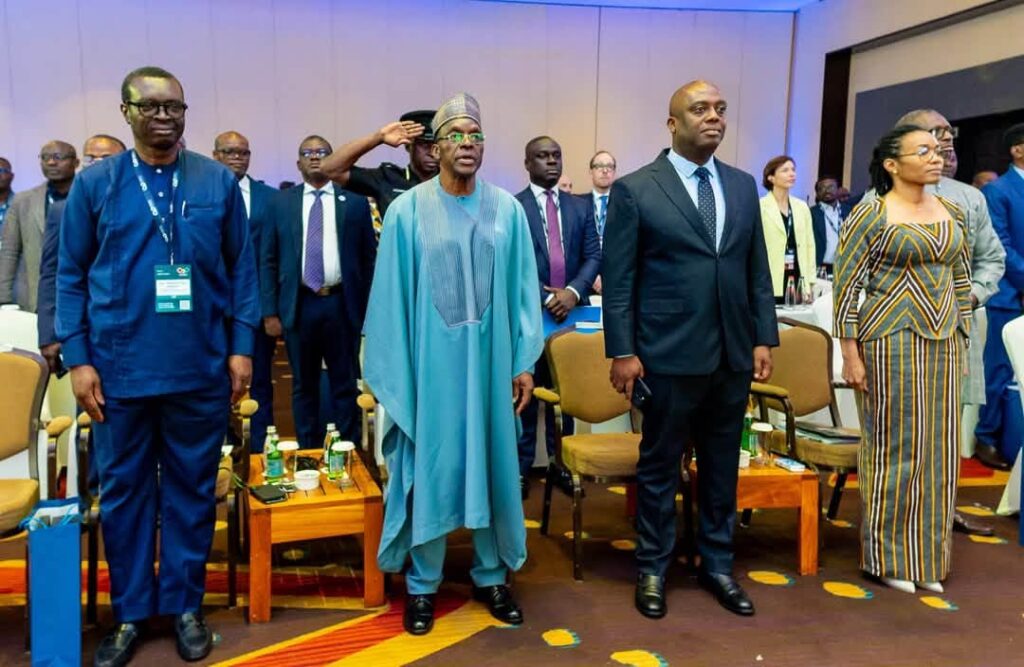
The Speaker made the remarks at the opening of a three-day high-level regional convening on the financialisation of politics in Africa in Accra on Tuesday, July 14,
The conference, on the theme "Advancing Reform, Transparency, Accountability and Democratic Integrity", brought together parliamentarians, anti-corruption agencies, electoral management bodies, civil society organisations, development partners and governance experts from across the continent to discuss reforms aimed at improving transparency and accountability in political financing.
The event was organised by the African Union Advisory Board Against Corruption (AUABC), the Ghana Centre for Democratic Development (CDD-Ghana), the Open Society Foundations and Transparency International.
Political financing has become an increasingly important governance issue across Africa as campaign costs continue to rise and concerns grow over illicit funding, vote buying, state capture and the influence of wealthy political patrons.
The Accra convening forms part of continental efforts led by the African Union Advisory Board Against Corruption to develop a model law on political financing, aimed at helping African countries strengthen transparency, accountability and oversight of political funding while safeguarding democratic integrity.
Democracy under pressure
Mr Bagbin observed that although democratic institutions had expanded significantly across Africa over the past three decades, they were increasingly being weakened by illicit campaign financing, vote buying, opaque political funding, state capture and the growing commercialisation of elections.
"Across Africa, and indeed the world, democracy is under increasing pressure. As a matter of fact, democracy is backsliding," he said.
He explained that the dominance of money in politics was gradually replacing the contest of ideas with a contest of financial muscle.
"Political competition shifts from a contest of ideas and service to a contest of financial power. Ultimately, citizens lose confidence in democratic institutions and become increasingly disengaged from the political process."
According to him, the trend poses a serious threat to democratic governance because it enables wealthy individuals and special interests to wield disproportionate influence over political decision-making.
Personal experience
Drawing on more than three decades in active politics, Mr Bagbin said he had personally witnessed the dramatic rise in the cost of elections in Ghana.
"I'm a product which hates corruption from birth. I fought it in primary school. I fought it seriously as a student leader," he said.
Recalling his entry into partisan politics in 1992, he added:
"I'm a living witness as to how much it used to cost a member of parliament in 1992."
Although election expenditure has increased globally, he stressed that Ghana had become one of the most expensive jurisdictions in Africa for political competition.
"Ghana is one of the most expensive when it comes to electoral processes."
He noted that the burden of financing election campaigns discourages capable but less affluent citizens from seeking public office, thereby narrowing democratic participation.
Beyond conferences
Mr Bagbin, who has participated in international anti-corruption initiatives for more than two decades, said Africa had held numerous conferences and workshops on corruption, but implementation had lagged.
He recalled participating in the 1999 World Conference Against Corruption in Durban, South Africa, which adopted the declaration on zero tolerance for corruption.
"I wish I could spend the whole three days with you, sharing my experiences.
"Because we've been around this talk show, workshops, and conferences for a long time. This is the time to act."
He urged participants to focus on practical reforms capable of strengthening integrity in political financing.
Parliament's role
Mr Bagbin described Parliament as central to efforts to regulate political financing and safeguard democratic governance.
According to him, legislatures must ensure that international commitments are translated into enforceable national laws, effective oversight and institutional reforms.
"The role of Parliament in advancing reform in this direction cannot be overemphasised."
He added:
"Parliament's leadership is essential to ensuring that international resolutions translate into laws, budgets, oversight actions, and measurable improvements in integrity."
He said Parliament's constitutional responsibilities in lawmaking, oversight and representation placed it at the centre of efforts to promote transparency and accountability in campaign financing.
Landmark international resolution
Mr Bagbin also highlighted the adoption in 2025 of a landmark resolution under the United Nations Convention against Corruption (UNCAC), which established internationally agreed standards on transparency in political financing.
He disclosed that he led Ghana's delegation during negotiations on the resolution.
"I am particularly proud to have led Ghana's delegation to the 11th session of the Conference of States Parties and to have personally witnessed the concerted efforts of Ghana, together with Norway and Mongolia, in advancing this landmark resolution."
He explained that the resolution calls on countries to strengthen transparency in political party financing, campaign funding and the financing of candidates for public office, while protecting whistleblowers and reinforcing public confidence in democratic institutions.
Difficult questions
Mr Bagbin urged African countries to confront difficult policy questions regarding the future of political financing.
Among them, he asked how governments could ensure fair political competition, prevent wealthy interests from dominating public policy, promote transparency in campaign financing and support credible citizens who lacked the financial means to contest elections.
"How do we ensure that political competition remains fair and inclusive?
"How do we prevent wealthy interests from exercising disproportionate influence over public policy?
"How do we promote transparency in campaign financing while respecting democratic freedoms?"
He acknowledged that no country had found a perfect solution to regulating political financing and called for continuous reforms to laws, institutions and oversight mechanisms to respond to evolving governance challenges.
"No country, and I repeat, no country has all the answers."
READ ALSO: Democracy up for sale: Africa moves to curb money politics at high-level Accra conference
Latest Stories
-
Three nights. 28 titles. Ultimate history made
5 minutes -
Ghanaian delegates at IYF 2026 could become bridges for stronger Russia ties – John Aggrey
9 minutes -
Nigeria: Over 30 dead, 50 hospitalised after consuming alcoholic substance in Ondo State
12 minutes -
UK lawmakers demand new law to address AI threat to human rights
21 minutes -
WAFU B U-17 Girls Cup: Black Maidens depart Accra for tournament in Yamoussokro
21 minutes -
Sweden’s center-left bloc narrowly ahead as election remains too close to call
32 minutes -
GPL 2026/27: ‘We won ugly’ – Kotoko head coach unimpressed after Lions victory
34 minutes -
7 out of 10 human trafficking cases in Ghana never reach prosecution — JoyNews Research
50 minutes -
Music, football to converge at Music Meets Football Summit 2026 in Lusaka
55 minutes -
Putin invites young global leaders to partner with Russia in shaping future world order
56 minutes -
Putin calls for ‘just world’, says every nation must be free to choose its own path
1 hour -
IFY 2026 food festival to serve 20,000 meals showcasing global cuisines in Russia
1 hour -
Ghana has a Domestic Violence Act: But can a victim afford to use it?
1 hour -
Young artists from 100 countries showcase works at IFY 2026 in Russia
1 hour -
Russia opens neo-Nazism exhibition at International Festival of Youth 2026
2 hours