

Audio By Carbonatix
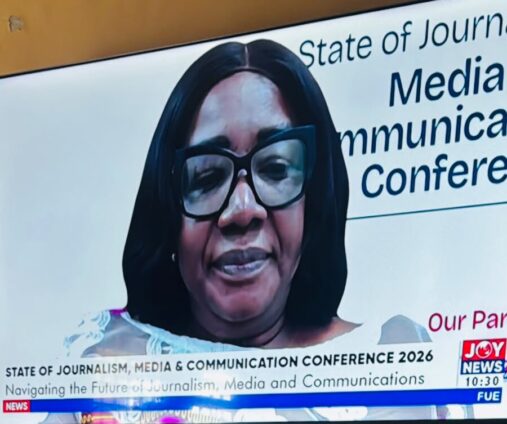
The Rector of the University of Media, Arts and Communication (UniMAC) Institute of Journalism, Prof Christiana Hammond, has called on journalism schools to take the lead in addressing the challenges posed by artificial intelligence, misinformation, and the rapidly evolving media landscape.
Speaking at the opening of the inaugural State of Journalism, Media, and Communication Conference (SJMCC 2026) on Wednesday, July 15, Prof Hammond said technological disruption is reshaping journalism at an unprecedented pace, making it imperative for institutions that train journalists to move beyond simply responding to change.
The two-day virtual academic conference was organised by the University of Media Arts and Communication on the theme, "Navigating the Future of Journalism, Media and Communication in a Dynamic World."
Professor Hammond stated that while artificial intelligence is transforming news production and digital platforms, it is also presenting the media with new ethical and professional challenges.
"The media landscape is changing at a very unprecedented pace. Artificial intelligence is not taking over jobs but rather helping to transform news production and digital platforms. AI is positively disrupting traditional business models and audience expectations and helping us to embrace contemporary challenges such as misinformation, disinformation, deepfakes, etc."
She said these developments demand that journalism institutions become drivers of innovation and thought leadership rather than passive observers.
"These developments compel institutions for training journalists and media practitioners not only to react but also to lead discussions such as this conference and to propose solutions to contemporary problems."
Professor Hammond stressed that journalism education must extend beyond technical competence to produce professionals capable of navigating complex ethical and societal challenges.
"Our responsibility is not to prepare professionals who possess only technical competence but also ethical judgment, critical thinking, creativity, adaptability, and a deep sense of commitment to the public good. These are the responsibilities that guide our mandate as an institute, and we pledge to commit to this always."
She described the conference theme as both timely and necessary, saying the future of journalism cannot be predicted but must be deliberately shaped.
The Rector added that the future of journalism requires more than technological skills.
"The future requires wisdom, soft skills, intercultural competencies, ethical leadership, interdisciplinary collaboration, and the ability above all to learn, backed by evidence-based research capable of informing current trends in media, journalism and communication, education, and practice."
Professor Hammond reaffirmed the Institute of Journalism's commitment to reviewing its academic programmes, strengthening partnerships with industry, and embracing innovation to ensure graduates remain globally competitive.
Latest Stories
-
Accra-Kumasi Expressway: Only nation-wreckers will oppose project – Frank Amoakohene
10 minutes -
Emerging agri-journalists gather in Croatia for global event
1 hour -
PPI Ghana congratulates Dr Abdul-Baasit Aziz-Bamba: Ghana needs a proper reset on value for money
1 hour -
Kasise Ricky Peprah writes: GBA’s face must be called out – for the record
1 hour -
Bernice Offei battled dementia for five years before death, former manager reveals
1 hour -
Jordan Ayew’s return offers Ghana timely boost ahead of AFCON qualifiers
1 hour -
De Zerbi raises doubts over Kudus’ availability for Ghana’s AFCON qualifiers
2 hours -
Ghana’s reputation must not be dented by self-centred individuals – Madina MP on cocaine seizure
2 hours -
MTN Ghana pushes digital growth for SMEs as sixth business clinic ends in Accra.
2 hours -
Black Maidens confident of WAFU B title defense ahead of Burkina Faso clash
2 hours -
5 players who deserve a Black Stars call-up for AFCON 2027 qualifiers
2 hours -
Photos: Vice President Jane Naana reviews changing of guard as Ghana Air Force takes over at Presidency
2 hours -
Africa’s richest man launches continent’s biggest share sale
2 hours -
Why Ghana’s MSMEs must rethink human capital investment: Seven strategic benefits
2 hours -
Asutifi South Assembly forms taskforce to stamp out illegal NHIS fees
2 hours