

Audio By Carbonatix
Governance expert and Founder of the Boardroom Governance Summit, Prof. Douglas K. Boateng, has called for a change in the values and attitudes of Ghanaians to build a stronger governance culture and prepare future leaders.
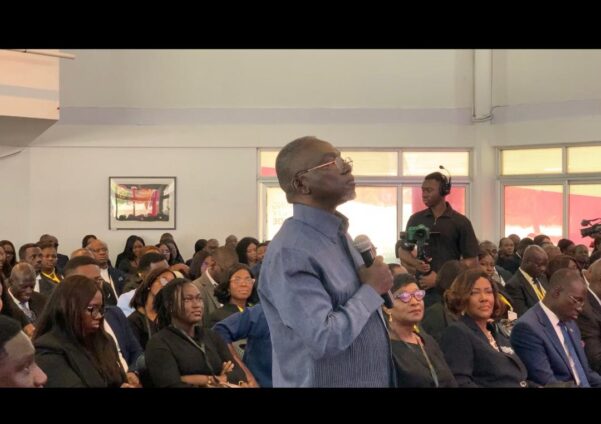
Speaking at the Greater Accra Regional Bar Week Conference in Accra, Prof. Boateng urged professional bodies, including the Ghana Bar Association (GBA), to play a greater role in shaping ethical leaders through mentorship, training and public education.
He said integrity, accountability and fairness must become central values in Ghana’s leadership and governance systems.
According to him, the country’s governance challenges cannot be addressed solely through institutional reforms but require a deeper transformation in societal attitudes and personal conduct.
“Good governance begins at home,” Prof. Boateng said, stressing that families play an important role in teaching children discipline, responsibility and respect for rules.
He explained that children who grow up in environments that promote honesty and accountability are more likely to become responsible leaders in the future.
Prof. Boateng also expressed concern about growing political polarisation in Ghana, saying national issues are often assessed through partisan lenses rather than the broader interest of the country.
He urged citizens and leaders to prioritise Ghana’s collective development above political affiliations.
“Leadership should not be driven by political loyalty but by integrity, accountability and the wellbeing of the people,” he said.
The governance expert encouraged professional institutions to expand mentorship programmes aimed at equipping young people with ethical leadership skills.
He said initiatives that promote honesty, fairness and responsible decision-making among the youth would help create a generation of leaders committed to national progress.
Prof. Boateng added that organisations and public institutions must reflect the same values expected of leaders, noting that governance is ultimately a mindset that begins with individual choices and behaviour.
He believes strengthening Ghana’s governance culture requires a collective effort from families, professional bodies, civil society and state institutions.
Latest Stories
-
ITF World Tennis Tour Juniors: J60 stage begins in Accra
8 minutes -
Absa Bank named winner of Bancassurance Leadership Award at 2026 Ghana Insurance Awards
21 minutes -
Mr. Aloysius Kwesi Acquah Snr aka Kwesi Anfo
33 minutes -
NACOC’s cocaine suspects arrest commendable, but it cannot run on ‘charity’ to fight drug cartels
42 minutes -
Gov’t cannot deny what it has already set in motion – Former NaCCA boss challenges Mahama on Arabic, Chinese policy
54 minutes -
Telecel Foundation marks Fetu Afahye with HealthFest
1 hour -
IEAG calls for urgent intervention to decongest ports
1 hour -
Strong financial, technical capacity non-negotiable for Accra-Kumasi Expressway – Agbodza
1 hour -
Ghana risks losing import trade to Abidjan – IEAG
2 hours -
Driver fined GH¢900 for dumping concrete on Madina-Adenta Highway
2 hours -
Police interdict officer over death of 23-year-old law student
2 hours -
Accra-Kumasi Expressway: Only nation-wreckers will oppose project – Frank Amoakohene
3 hours -
Emerging agri-journalists gather in Croatia for global event
4 hours -
PPI Ghana congratulates Dr Abdul-Baasit Aziz-Bamba: Ghana needs a proper reset on value for money
4 hours -
Kasise Ricky Peprah writes: GBA’s face must be called out – for the record
4 hours