

Audio By Carbonatix
There was a time in Ghana when owning a media house was a privilege reserved for a few. You needed a broadcasting licence, millions of cedis worth of equipment, a studio, trained journalists, producers, presenters, editors, engineers and enough resources to keep the lights on twenty four hours a day. If your story made it onto radio or television, it had gone through several layers of scrutiny before reaching the public.
Today, all of that can fit into the palm of your hand. A smartphone, a decent internet connection and the confidence to hit the "Post" button are all it takes to become a publisher. Whether you are sitting in Makola, Madina, Tamale, Cape Coast or Bolgatanga, you now have the power to report breaking news, analyse politics, review music, expose corruption, influence public opinion or even spark a national conversation before the biggest media houses have held their morning editorial meeting.
Sometimes I joke that Ghana has reached a stage where bloggers outnumber radio and television stations. It gets people laughing, but beneath the humour lies a serious reality. Every phone has become a media house.
This is perhaps the biggest disruption the Ghanaian media industry has experienced since the liberalisation of broadcasting in the 1990s. Back then, the emergence of private radio and television stations changed everything. It gave audiences more choice, encouraged competition and improved journalism. Stations invested heavily in talent, programming and technology because everyone wanted to become the audience's preferred destination for news and entertainment.
Fast forward to today and the competition is no longer limited to licensed broadcasters. The biggest competitor to traditional media is no longer another radio station across town. It is the young man with a smartphone in his bedroom, the lady livestreaming events from her shop, the university student posting political commentary on TikTok, the blogger reporting celebrity news from a laptop at home and the thousands of content creators who have transformed social media into Ghana's busiest newsroom.
The rules have changed. News no longer waits for the top of the hour. It doesn't wait for the six o'clock bulletin or tomorrow morning's newspapers. By the time a newsroom assigns a reporter to investigate a developing story, videos of the incident have already gone viral on WhatsApp, Facebook, TikTok, X and Instagram. Within minutes, thousands of people have watched, commented and formed opinions. The story is already moving long before professional journalists arrive on the scene.
As someone who has spent almost two decades in Ghana's media industry, producing some of the country's biggest radio programmes and national events, I have watched this transformation unfold from the front row. I have seen radio dominate conversations. I have seen television shape national opinion. Today, I am watching digital creators command audiences that many established media houses would envy.
This is not a criticism of bloggers. Neither is it a lament for traditional media. It is simply an acknowledgement that the centre of gravity has shifted. We are living in an era where attention has become the most valuable currency, and anyone who knows how to capture it has the potential to become influential.
The blogging industry in Ghana has evolved far beyond entertainment gossip. Bloggers now break political stories, analyse economic policies, cover sports, promote tourism, educate the public on health issues and build communities around technology, business and lifestyle. Many have transformed their platforms into thriving businesses, attracting advertising revenue, brand partnerships and millions of followers. Some have become household names without ever stepping into a radio studio or television station.
That should tell us something. The audience no longer chooses content based on where it comes from. They choose it based on whether it is interesting, relevant and easy to consume.
Unfortunately, this revolution has also exposed the darker side of digital publishing. The race to be first has often become more important than the responsibility to be accurate. Rumours now travel faster than facts. Half truths generate more engagement than balanced reporting. Artificial intelligence has made it easier than ever to manipulate images, clone voices and manufacture believable misinformation. In the pursuit of clicks, some creators have sacrificed credibility, forgetting that influence without responsibility is a dangerous combination.
This is where traditional journalism still has an advantage that no algorithm can replace. Credibility.
A professional newsroom is built on verification. Stories are challenged before they are published. Facts are cross checked. Lawyers review sensitive investigations. Editors ask difficult questions. Corrections are issued when mistakes are made. These processes may appear slow in today's fast paced digital world, but they are the very reason journalism continues to matter.
The future, however, does not belong exclusively to traditional media or to bloggers. It belongs to those who can successfully combine the strengths of both. Journalists must embrace digital storytelling, understand changing audience behaviour and stop treating social media as an afterthought. Bloggers, on the other hand, must appreciate that building a large audience is not the same as building public trust. One is measured by followers. The other is measured by credibility.
Perhaps the most important lesson from this new era is that media is no longer defined by buildings, microphones or cameras. Media is influence. Every post, every tweet, every livestream and every video has the power to shape opinions, influence elections, build brands, destroy reputations and change lives.
That power comes with enormous responsibility.
So yes, Ghana may indeed have more bloggers than radio and television stations today. Every phone may have become a media house. But the real question is not who can publish. The real question is who can be trusted when it matters most.
In a world where everyone has a platform, credibility has become the most valuable asset any media professional, blogger or content creator can possess. Long after the trends fade and the algorithms change, trust will remain the true measure of influence.
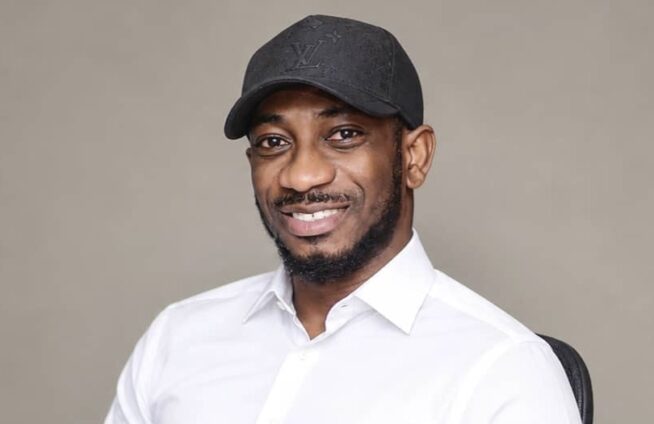
By Philip Nai - Media Executive, Lead Producer at Joy FM .
Latest Stories
-
Photos: IGP engages Okada riders on road safety, registration and crime prevention
15 minutes -
NPA reviewing calls to cushion consumers amid petrol price hikes – Edudzi Tameklo
17 minutes -
Astroturf Exposé: Edem Senanu calls for tougher laws to punish public officials
20 minutes -
US limits visas for South African officials over alleged anti-white discrimination
34 minutes -
Edem Senanu calls for OSP investigation into alleged astroturf procurement breaches
35 minutes -
272 graduates with disabilities being formalised into GES – Gender Minister
36 minutes -
Measure reforms by impact on motorists, not projects completed – Nikpe to DVLA
40 minutes -
Russian drones hit Ukrainian bus and train, killing five, officials say
42 minutes -
China warns US space weapons could fuel arms race
42 minutes -
Mahama eyes national honour for Sentuo chairman
46 minutes -
IFC eyes $1.2bn investment pipeline for Ghana
51 minutes -
September 2026 inflation to remain stable with a slight upside risk – IC Insights
55 minutes -
Africa Nations Volleyball Championship: Ghana’s Black Spikers lose to Tunisia in opener
59 minutes -
Ghana Baptist University College offers 50–100% tuition scholarships to 2026 SHS leavers
1 hour -
Gender Ministry resolves 70% of complaints received through citizens’ engagement service
1 hour