

Audio By Carbonatix
The Chief Executive Officer of Agri-Impact Limited and the Happy Poultry Project, Dr Dan Acquaye, says the proposed Poultry Master Plan is intended to provide a long-term roadmap to make Ghana self-sufficient in poultry production through a phased and coordinated approach.
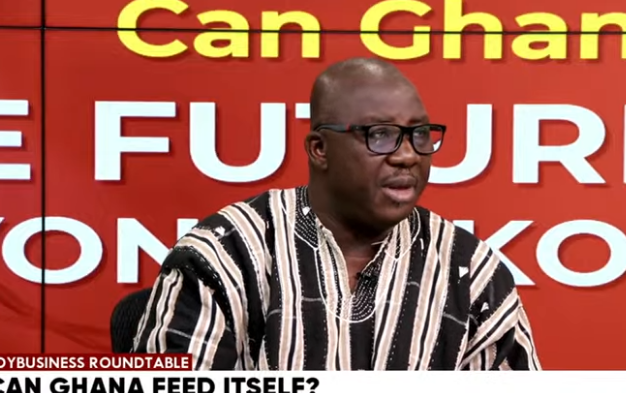
Speaking during a Joy Business roundtable discussion on the theme, "Can Ghana Feed Itself? The Future of Poultry Beyond Nkoko Nkitinkiti," Dr Acquaye said achieving self-sufficiency in poultry production cannot be accomplished within a few years, as it requires sustained investment across the entire value chain.
According to him, increasing domestic poultry production depends not only on producing more birds but also on expanding maize and soya production, improving infrastructure, strengthening processing capacity and adopting better farming practices.
"We can't be self-sufficient in three years. That's almost impossible. We consume over 200 million birds annually," Dr Acquaye said.
He added:
"For us to move, even if we have to increase production by 25 per cent, it's not only about the supply of chicken. It's the maize, the soya, the infrastructure, as well as the production practices."
Learn from past interventions
Dr Acquaye urged policymakers to draw lessons from previous interventions rather than repeating past mistakes.
"A key example is that when we are developing policies, we review previous policies, but we don't always take lessons from those reviews," he said.
"If we learn from previous policies, we will be much more circumspect in the approaches we adopt to implement a policy or strategy. We also have successful models that we can build on."
Aglow-Farm revival shows what is possible
Dr Acquaye cited the revival of Aglow-Farm as evidence that targeted investment and strategic partnerships can transform struggling poultry businesses.
He noted that price comparisons had shown locally produced chicken can compete favourably with imported products.
"We looked at price trends and saw competition between Aglow-Farm and imported chicken. In some cases, Aglow-Farm's prices are lower than imported chicken," he said.
Recalling the company's turnaround, he said:
"In 2023, when Aglow-Impact, supported by the Aglow-Impact Foundation and in partnership with the Ministry of Food and Agriculture, came into the space, Aglow-Farm had closed down. The infrastructure was in ruins, and thieves had even started stealing some of the equipment."
He said that within two years, the company had resumed operations and was now producing more than 300,000 birds a month, while securing a licence to supply KFC.
"That model has helped catalyse poultry processing and demonstrates what strategic intervention can achieve."
Opportunity for jobs and economic growth
Dr Acquaye said expanding the operations of companies such as Aglow-Farm could significantly increase demand for birds produced by local farmers, particularly young entrepreneurs.
"If Aglow expands its market threefold or begins operating under a 24-hour economy with two or three shifts instead of one, its processing capacity will increase substantially.
"Everything it buys from young people producing birds will also increase threefold. That is how the economy grows."
Master Plan to guide sector growth
Turning to Northern Ghana, Dr Acquaye said the region presents enormous investment opportunities despite the challenges facing the poultry sector.
He disclosed that the Poultry Master Plan, being developed in collaboration with the Ministry of Food and Agriculture (MoFA), is intended to provide a structured framework for the industry's long-term development.
"We have worked with the Ministry of Food and Agriculture and a consultant to develop the Poultry Master Plan," he said.
"The purpose of the Poultry Master Plan is to provide a roadmap to make Ghana self-sufficient in poultry production, but through staggered stages."
Scale up successful models
Dr Acquaye also highlighted the success of Lamdi Farm, which has expanded rapidly with support from development partners.
He said the farm, which previously housed about 2,000 birds, now raises around 26,000 birds at a single location after receiving support from the Mastercard Foundation and the Startup Act initiative.
"A place we once considered unsuitable for poultry production is now producing feed about 30 per cent cheaper than feed produced in Southern Ghana because of access to locally grown maize and soya," he said.
He urged policymakers to replicate successful business models rather than persist with approaches that have failed.
"Why don't we scale models like this? We have Rockland here as well—a company that continues to make significant progress in the poultry industry.
"These are the kinds of models we should replicate. We cannot continue to repeat failures. We must learn from them and do better."
Dr Acquaye said a stronger poultry industry would not only reduce Ghana's dependence on imported chicken but also create jobs, particularly for young people and women, while strengthening the country's food security.
Latest Stories
-
Deputy GMA boss denies alleged links with land guards
11 minutes -
DVLA expands nationwide operations with 29 new offices in 18 months
34 minutes -
Ningo Prampram needs jobs, not excuses
40 minutes -
Education Minister hints at possible extension for new SHS students
41 minutes -
Road deaths must no longer be accepted as inevitable – DVLA Board Chairman
51 minutes -
Book and research allowance to be paid by end of September – Education Minister to TUTAG
52 minutes -
Fuel Price Hikes: Ad hoc interventions won’t solve transport fare concerns – Energy analyst
1 hour -
Eight children among 21 killed after war-damaged Gaza building collapses, rescuers say
1 hour -
AFCON 2027Q: Côte d’Ivoire name squad for Black Stars and Somalia clashes
1 hour -
GBA President Efua Ghartey calls for Constituent Assembly to deliberate on 1992 Constitution reforms
1 hour -
Made In Africa: Prof. Douglas Boateng to address the continent’s largest supply chain and industrialisation professional gathering
1 hour -
Rising fuel prices making it difficult for drivers to survive – GPRTU
1 hour -
US accuses Russia of trying to kill Ukrainian allies overseas
1 hour -
GPRTU to maintain 30% proposed fare hike despite latest fuel increase – Deputy PRO
1 hour -
Brutality against journalists is a No-No: Ghana must protect the fourth estate
2 hours